Showing posts with label History. Show all posts

Tuesday, February 22, 2022

What Are the Famous Books of the 1990s?

For the past couple of weeks, I’ve been listening to The Nineties by Chuck Klosterman. I’d never heard of him but the book’s cover caught my attention. Couple that with my son’s musical tastes currently residing in the 1990s and I thought why not take a chance with the new book.
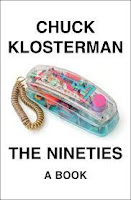
It’s a fascinating read and I thoroughly enjoyed. I annotated my audible file with interesting clips and I’ve got the ebook on hold via my library to potentially re-read some passages.

Klosterman focuses on pop culture, politics, TV, music, movies as a means to explain that last decade of the century. It was only by the end that I realized something: I don’t think he mentioned any books. Which got me to thinking about an obvious question:

What are the famous books of the 1990s?


Okay, do something with me. Think about that decade and see if you can recall any titles or authors but do not use the internet. Heck, don’t even look at your bookshelves. Just see if you can come up with any famous books strictly from your memory. I’ll wait.

Okay, so how many did you remember? Truth be told, as I’m writing this, I have not yet turned to Google. I’ve not even turned my eyes to my various bookshelves. In real time, I’ve been thinking about this question, off and on, for about a day, and only in the last few minutes did I remember an author and book that emerged in the 1990s: John Grisham’s The Firm.

I struggled to even remember many books. I went through my mental Stephen King list but could only remember Bag of Bones from 1998. Grisham’s status as the premier writer of the legal thriller instantly brought his other books to my mind. And I think Midnight in the Garden of Good and Evil was a 1990s book. But those were all I can remember.

So, if you’ll excuse me, I’m going to Google now. I suspect I’ll have more than a few “Oh, right! That book!” forehead slaps but such is my memory.

And I’m back, and I’ve slapped my forehead more than once in the category of “How could I have forgotten that book.” Among the titles that slipped my mind are Jurassic Park by Michael Crichton (1990), The Bourne Ultimatum by Robert Ludlum (1990), Truman by David McCullough (1992; my historian cred just went down the tubes), The Bridges of Madison County by Robert James Waller (1993), Men Are from Mars, Women are From Venus by John Gray (1993), Primary Colors by Anonymous [AKA Joe Klein] (1996), and many books by Danielle Steel and Mary Higgins Clark. I used this site to get the Top 10 books per year and not what someone thinks are the important books.

How many did you remember? More than me? That’s good. Heck, I couldn’t even remember all the Stephen King books of that decade. And how many mystery/thrillers did you recall? The presence of Clark and Ludlum tells me that our genres was at least at the table—as was Tom Clancy (more than once) and James Patterson. 

Update: reader Jeremy sent me an email to remind me that Harry Potter was released in 1997 (UK) and 1999 (US) and publishers spent the next 15 years trying to chase the next big young adult craze. He also mentioned that the first Game of Thrones book was published in 1996. That brought Snow Crash (1992) to my memory although I didn't read it until the early 2000s. Ditto for the Potter books (I read them all in 2007).

Here’s a larger question: how many of those books were influential? How many changed things? I’ll come back to the Truman biography. I was in grad school and in 1992, many of my professors grumbled at McCullough’s book because it was too popular. Like the study of history had to be impenetrable to be good. I, for one, appreciate it when a historian writes a popular enough book that it becomes a bestseller (or a Broadway musical). I saw more history books written in McCullough’s style after 1992 than before.


What is the Nevermind of Books?


What about fiction? Is there a Nirvana moment (there was a Before Nevermind and then there was an After Nevermind) or a Matrix moment (same concept) for books? Historically, I’m guessing something like Agatha Christie or Dashiell Hammett (The Maltese Falcon) or Raymond Chandler’s work (The Big Sleep?) or Mickey Spillane (Mike Hammer’s first book) or Ian Fleming (was he the first huge spy writer?) or Tom Clancy (techno-thriller) or Grisham (legal thriller). I guess Grisham in the 1990s can count as the guy who put legal thrillers back on the map (Erle Stanley Gardner’s Perry Mason was king but I can’t think of any other ones other that Scott Turow’s Presumed Innocent in the interim).

Now, I also admit that I also did a more specific search for mysteries and thrillers in the 1990s. Here is that link. This is likely not an end-all, be-all list, but something is obviously apparent if you scan the list: the large majority of top mystery books in the 1990s involve series characters. I counted twelve out of 100 that were not series related. My guess is that a respective list for the 2000s, the 2010s, the 1980s, will reveal the same thing. Series sell. It’s a testament to a certain type of writer who can publish different stories within a genre and not do a series.

This essay is a thought exercise but also a real question. Were there any truly game-changing books published in the 1990s? Did they influence pop culture? If not, when was the last time a book sat in the middle of pop culture and dominated the national conversation or, at least added to the greater conversation? (I’m mainly talking about fiction because there are certainly non-fiction books that have made their mark on society.)

Sunday, June 6, 2021

Always Try Your Dreams

Every year during the first week of June, my mind drifts back to the first week of June 1944. The week leading up to D-Day. Even now, seventy-seven years later, the magnitude of the courage of the men who stormed those beaches never fails to take my breath away.

There have been many books written and documentaries compiled, oral histories recorded and movies filmed. One in particular is Saving Private Ryan which features a grueling opening segment. As horrific as those opening minutes are, you know it’s all just make-believe and that it’s only a taste of what really went down that morning.

Every year, I also take moments to look at the photos of the Allied troops squeezed into those landing crafts. For that one moment when the cameraman snapped his photo, some of those soldiers smiled. Others didn’t. Both tell the same story: the invasion was necessary and they were called on to do it. That was the nature of their birth and world events.

This week, one of those photos really got to me. I honestly can’t find it. It was part of a meme. But in this photo as in so many others, the faces of those men were young. So young. I often wonder how I would have comported myself if history called on me to do what those men did. My son’s nineteen now and he would be called as well. How would he do?

As thankful as we are for the courage of those men, it’s sometimes difficult not to get emotional when thinking of them as individuals. As regular humans on this earth. They, like all of us, had dreams of what they’d do when they got home. Many soldiers returned home. So many did not. Perhaps the cure for cancer was in the brain of one of those men. Maybe a great baseball player or an engineer who could invent something we would now take for granted here in 2021.

But today, I’m talking about creatives. Imagine the books or the songs not created, the paintings and the sculptures, the plays and the actors that never were created. All gone.

The thing is, those men had creative dreams like we do, and then they stormed those beaches to preserve the dreams for all the survivors. For us. For those that’ll come after us.

Perhaps me getting emotional on this commemoration of D-Day is related to my own recent struggles with my writing, my business, and my ideas about the future. I have grand plans and sometimes, I question myself. Why? What’s the point? Who would care?

Well, I care about these plans. I came up with them, after all. They are, to my mind, good and decent ideas. Why not try?

Try because you want to. Try because it could bring you great happiness. Try even though you might fail, but you can learn from that failure. Try because you could reach someone who will need what you create at a precise moment in their lives.

Try because of what happened seventy-seven years ago this morning and the men who didn’t get the chance to try.

Try your dreams. Always.

Saturday, March 13, 2021

Do We Have Too Much Stuff?

Note: this post uses television as an example, but the same could be said of books, movies, comics, and music.

Most Saturday mornings, I go back in time.

Saturday is the day the rest of the family sleeps in. I do, too, considering my weekday mornings I wake around 5:15 am to write. But on Saturdays, I still wake up at the latest by 7:30. The house is quiet, the coffee's made, and the dogs are fed. I run over to my favorite do-nut shop, Shipley's, a Houston institution I've known all my life, pick up a plain glaze and a cherry filled, and return home to watch Saturday morning cartoons.

Now, it's not always cartoons. I watched WandaVision on Saturday mornings. Ditto for Star Trek: Picard and The Mandalorian. Mostly it's because I have the house to myself but also it's just kind of fun to have that Saturday morning vibe like most of us did back in the day when that was the one day of the week with programming targeted directly at kids.

Another thing that's really helped this vibe is MeTV's broadcast of Saturday morning cartoons. For three hours, they show Popeye cartoons (I'm asleep for that), Tom and Jerry/MGM cartoons (I get half of that because of my wake-up time), and a Looney Tunes block. For the Looney Tunes, they even run the opener from the 1970s, a nice reminder of childhood you don't get when these shows are streamed or on DVD.

For the past few weeks, after that week's WandaVision episode, I've added in an episode from the 1977 New Adventures of Batman. This is the Filmation show featuring the return of Adam West and Burt Ward to the roles they made famous in the 1966 TV show. And yeah, this is the series with Bat-Mite. I have the entire run on DVD. 

This being the 21st Century, historical background for this show is only an Internet search away. Turns out only 16 episodes were made. They were first broadcast from 12 February to 28 May 1977. I remember being very excited about this show. I'd watch every Saturday morning with, you guessed it, Shipley's do-nuts.

The key fact of this series is the number of episodes. Sixteen. But this series ran in some combination until 1981. That's six years of reruns. Six years of wondering which episode would air and, over time, memorizing the events of each episode. Then again, when I first bought the DVD a few years ago and watched the series for the first time in thirty something years, I didn't remember much of it.

By the time Batman: The Animated Series debuted in 1992, there were a couple dozens episodes per season and, while there were some reruns, they were fewer because there were so many episodes. The likelihood of coming across any given episode was much smaller than the 1977 series. Ditto for The Simpsons, Seinfeld, and Friends (although Friends almost gets a pass on this because the show is now broadcast in reruns on multiple channels and you can ingest many more episodes on any given week).

Now our television habits have evolved to streaming services. And boy are there a lot of them. Within most streaming services are smaller niches. Just Brady Bunch or just Perry Mason or just CSI shows. For example, HBO Max has a DC Comics section where you can watch The Animated Series, Batman Beyond, and any number of DC-related films. It's an embarrassment of riches considering that which we had back in the day. In fact, you could mainline any one of these series and watch little else.

But there is so much stuff to watch.

We are not constrained by the sixteen episodes the network broadcast over and over again. If we wanted to watch Batman on TV back then, your options were few. If you want to watch Batman on TV in 2021, you could fill up a few weeks in a row you could fill up watching only Batman. Or Marvel. Or any number of the things we dreamed about when we were kids.

We live in a Golden Age of Television. The content we have is so broad, rich, and with depth. But there is a lot of it. A lot. It's difficult to keep up. I might even go so far as to say almost impossible given how we live our lives nowadays: work, school, family obligations, and everything else. If you're like me and you chat about TV with friends and family, how many times do you arrive at a show you both have watched?

Now, you might think that I'm just a Gen Xer complaining about modern life. I'm not. I'm happy to have all the choices available to us. It's fantastic and there's always something to watch.

But how many of us dig deep into a series like we used to?

Yes, there are some like WandaVision or The Mandalorian or Sherlock or Game of Thrones which get the deep dive. There's probably more I don't watch that have devoted fans that pore over every detail of a show. But I think the casual awareness of shows has dwindled with the rise of cable TV and streaming. With so many choices begging for our attention comes a dilution of common content. Back the day, we all were more or less aware of the exploits of Happy Days, The Simpson, Friends, Grey's Anatomy, Modern Family, and CSI. Now? Not so much, especially if the hot show is on a streaming service you don't buy.

Or maybe all of this is on me. Maybe I'm the oddball now. Maybe I'm the guy who doesn't watch and re-watch the same content all the time because there's always something more to watch. Maybe I've become my parents.

Do you reach an age in which the obsession over a property just wanes or never materializes like it used to? Perhaps, but I think it also boils down to time.

When we were kids, there was loads of time to fill and not a lot of content with which to fill it. Now, kids probably have a similar amount of time to kill but so many more choices. As for us adults, our time has now dwindled to the point where, for me, I'm down to an hour of non-news TV a day on weekdays. And when all my favorite shows are an hour--New Amsterdam, Resident Alien, Prodigal Son, Clarice, Superman and Lois--I'm down to a show a night. So when I'm actually consuming only one show a night, it's difficult to find the time to re-watch a show. Thus, I find myself in a steady stream of one-time viewings. Hard to remember lots of details that way.

I guess that's the main problem. I just don't have the time.

Unless I had a time machine.

Thursday, June 25, 2020

The Reach of Living History

I'd like to call your attention to an article by John Gruber over at Daring Fireball as an example of the reach of living history.

Earlier this month, the last person who was receiving a Civil War pension died. Now, the first thing you might think is "Didn't that war end 155 years ago?"

Yes, it did. So how?

If you read the story, you'll learn that Irene Triplett died this month at the age of 90. Her father was a Confederate and US soldier (yes, both; read the article for the reason). In 1924, her dad, 78, married her mother, aged 27. Her dad died in 1938 (that meant Moses Triplett was 92 so longevity is in the genes). After her mom died, Irene was eligible for the pension, which she received, all the way through May 2020.

Just think on that for a moment. There may be other children of Civil War veterans out there who didn't receive their father's pension, but for all intents and purposes, Irene's death means that last living person with a direct relation to the Civil War (1861-1865) has now passed away.

In 2020.

If you visit the link, the story has a secondary link to something call The Great Span. There is a YouTube video of a 1929 interview with a then 103-year old man. If that man was born prior to July 4, 1826, that meant he was alive...when John Adams and Thomas Jefferson were both alive. James Madison, too. Beethoven was alive. Dickens was alive. 

Go back to Irene Triplett. She was borh when Hoover was president (and Coolidge was still alive), the Great Depression was ongoing, and World War II was still nine years in the future.

I find it utterly fascinating the reach of living history. Even in my own family, my son was born in the 21st Century. I am so last century. 

By the way, the last actual Civil War veteran died...in 1956 at the age of 106. 

Wednesday, June 17, 2020

History Comes Alive With The Lincoln Conspiracy

There's a moment in The Lincoln Conspiracy: The Secret Plot to Killed America's 16th President - and Why It Failed where the President-elect hears dire warnings from two independent sources that his life is in danger and he takes action. He agrees to sneak out of a pre-Inauguration Day party in Harrisburg, Pennsylvania, don a disguise, and be whisked away by train, all in an effort to thwart the plot to kill him in Baltimore. That moment consists of me breathlessly wondering: Is he gonna make it?

It's been 155 years since his death. There's a giant statue of President Lincoln in Washington, He's on the penny. He's one of the most famous Americans of all time. He might be recognized in nearly every corner of the world here in 2020. Of course he makes it.

But that's the testament to the writing skill of Brad Meltzer and Josh Mensch: they weave the story and the details in such a way as to make history read like a thriller. And dang if this story won't thrill you.

We all know Lincoln's ultimate fate on Good Friday, 1865, but few know of the first plot to kill him before he even took office. I'll admit I learned about it back in grad school at the University of North Texas but it was only in passing. I knew it was foiled and that private detective Allan Pinkerton played a key role. But I never knew the details that fill over 350 pages in this remarkable book.

Much like they did with The First Conspiracy: The Secret Plot to Kill George Washington (2019), Meltzer and Mensch dig deep into the details of this 1861 plan hatched by a cabal of Southern loyalists. They didn't want the president-elect—who carried no slave-holding states in the recent election—to take his place in the White House. At the time, the Republican Party was against the institution of slavery even if Lincoln himself tried to steer a narrow line between free and slave.

Following a tradition dating back to America's first president, Lincoln traveled from his home in Springville, Illinois, to Washington, D.C., in the weeks leading up to his inauguration. Two things gave the Southerners fuel for their plot: Lincoln's itinerary was published in many papers and the rail-splitter from the west would have to change trains in Baltimore. What made this transfer problematic was not only was Maryland a slave state, but the transfer wasn't merely changing trains in a single station. No, this change from one rail line to another involved literally moving a train car about a mile from one station to the next. In that time, with the expected throngs of Southern sympathizers clogging the streets, the president-elect's life would be in jeopardy.

Hired by one of the railroad men to protect threats against the railroad, Pinkerton and one of his agents, Kate Warne, uncovered the real plot. It was then Pinkerton urged Lincoln to change his plans. The new president demurred until a fateful night when word of the plot arrived from his recent rival and future Secretary of State, William Seward. Convinced of the threat, Lincoln finally allowed himself to be disguised and sneak into the nation's capital under the cover of darkness.

Like they did with their Washington book, Meltzer and Mensch write their prose in the present tense. It gives the story an immediacy, a will-he or won't-he vibe that's pretty darn exciting. Often, they'll recount a scene and then cut to a contemporary scene in another part of the country. You really get a bird's eye view of the whole situation.

If you are a fan of audiobook, preeminent narrator, Scott Brick, reads the book. He could read the phonebook and I'd pay to hear it. He narrates everything he does so well, and I especially like the timbre of his voice as he reaches the end of the book and reads the last lines from Meltzer and Mensch.

History isn't just names and dates, laws and wars, pop culture and events. It is people, real people, living their lives and making decisions based on the best knowledge they have at any given time. Some decisions are momentous: the outcome of the 1861 election, the secession of the Southern states, the foiled assassination in 1861 and the successful one four years later. This book peels away some of the veneer Lincoln now lives with in the American imagination in the 155 years since his death, showing us a real guy, beset by personal and national tragedy, who is doing the best he can. Ditto for Pinkerton, Warne, and the Southerners.

Books like these breathe life into history, and as a historian, we need more books like this so folks in the 21st Century can be entertained and learn a little something along the way.

Highly recommended.

Friday, May 29, 2020

Grant the Mini-Series – A Popular Reassessment

As soon as I saw the commercials for History TV's mini-series, “Grant,” I knew I wanted to watch it. The big name attached to the project—Leonardo DiCaprio—wasn’t the draw. For me, it was the sight of actor Justin Salinger dressed as Ulysses S. Grant. From just the commercial, it felt like the 18th President was again alive.


The excellent casting was a harbinger of how good this documentary is. Based on Ron Chernow’s 2017 biography, Grant, the six-hour mini-series examines the life of the hardscrabble man from Ohio via a series of on-camera historians discussing various aspects of the man and reenactments featuring Salinger. The high production values are on full display for most of these reenactments, especially the one involving the Civil War. It makes you want more. I could have easily watched another six hours.

The vast majority of the six-hour running time naturally is devoted to the war. What I especially appreciated was the reassessment of Chernow’s biography on full display here in this mini-series—not surprising considering he wrote the screenplay. I’m a degreed historian who wrote a thesis about the Civil War, but even I didn’t remember all the modernity Grant brought to bear when he assumed command of the Army of the Potomac in 1864. As Chernow and the historians note, Grant was the first modern general, one who could see the entire battlefield (nearly encompassing half a continent) and act in concert. I’ve often thought that had some of the generals from World War I learned lessons from the American Civil War, fewer soldier would have died in The Great War.

Winston Churchill remarked once that Americans can be counted on to do the right thing after every other option failed. Chernow made the point that Grant, having been a failure in his early military life and his civilian life before 1861, was almost the perfect choice for Abraham Lincoln. Unlike other generals, Grant had the fortitude to try something. If it failed, he tried something else. But at least he tried. True, failures from a general meant death, but it was war after all. I found it a nice reminder that for all the talk of Grant being a butcher, his losses often were less than Robert E. Lee’s.

As interesting as his war years are, I would have enjoyed more from his presidential years. That’s the forgotten part of Grant’s history. So many of us—if we remember Grant’s two-term presidency at all—think of the scandals, but there was so much more to it than that. The historians touched on major points, but I wanted more. Which, naturally, led me back to Chernow’s book. If you are reading this on the day I post this (29 May 2020), the Kindle edition is only $1.99. That’s two bucks for a thousand page biography.

But as the show ended, a remarkable thing occurred: I grew sad and somber. Mixed with Grant’s heroic struggle to keep the cancer at bay while writing his memoirs, the historians discussed how Grant’s admirable personal reputation has been diminished—sometimes actively—in the century and a half since Appomattox. I’m not sure why and how Chernow selected Grant as his subject, but I’m very appreciative that a reassessment has started.

And this mini-series is broadening the audience. It’s very well done and highly recommended.

Saturday, March 28, 2020

Year of an Indie Writer: Week 13 AKA Be a Historian

Well, how's everyone doing?

So far, my family has heeded the local directive to stay home and stay safe. It seems like such a small thing, but it's really something giant.

Consider voting. It's our duty and honor to vote, but when we do it, the action itself is small. Here in Houston, we have voting machines that include a scroll wheel. Back in the day, I'd go with my parents into those voting booths with the curtains and the levers. No matter how we do it, casting a vote is a small, simple action on an individual level but can have sweeping power when counted all the other votes.

The same is true for our various stay-at-home orders. My family of three is safe here in the house. The virus--we hope--is outside and we are inside. I've only ventured out last weekend to go to the grocery store and the hardware store. That's it. As of last night, we've eaten take out only twice, both times on Fridays. That's now become the thing we look forward to doing.

We took some extra precautions last night with the food: we used our patio table as a staging area. We emptied the Italian food out of the to-go containers and into clean plates from inside. The plastic containers remained outside until I used a plastic grocery bag to take them to the outside trash can.

I'll admit: it was a little weird going into the restaurant. It was bustling and busy, but I just didn't want to touch anything. I didn't. I had my protocol in place: credit card already removed from my wallet, my own pen, plastic gloves, and a paper bag in the car on which to set the food (and throw away later). Overkill? Nope. Not in this environment.

The New Normal


Speaking of environment, this is still a writing blog and I do have a few writing things I read this week.

Kristine Kathryn Rusch published the second of two business-related post on what she is calling The Waiting Game. In these posts, she discusses how we writers can weather this black swan event and emerge on the other side ready to face the new normal. Because that's what is going to happen: there won't be the old normal. There will only be post-Coronavirus normal. It's best we prepare for it.

Speaking of the new normal, yesterday, writer Kevin Tumlinson published a fantastic series of tweets on his Twitter account (@KevinTumlinson) about the new normal. In his series, he posits that YouTube is well positioned to become the go-to location for on-demand entertainment. Most of us already know this, but not as many writers are there. Our own Beau Johnson does his posts via video on Fridays. Ironically it was something I had considered in 2019, but pushed aside for reasons I can't remember.

Anyway, back to Kevin's thread. Just read it. There is lots of good information in here, and it really makes you think differently about the future.


Be a Historian


The historian in me continues to be fascinated at some of the parallels that 2020 is reflecting. The obvious is the Spanish Flu of 1918-19. Another is The Battle of Britain, 1940, as the folks in England hunkered down every night for nearly three months and endured the constant bombing.

But another is the sacrifice folks made who survived the Great Depression. For most of my 51 years, I looked back at those times with awe and reverence at how everyday citizens survived the greatest economic disaster of the Twentieth Century.

One of the things that lets us know what life was like back in history are personal letters and journals. When I conducted research for my Masters thesis, I studied the 14th Texas Infantry in the Civil War. A key document was a journal of one of the captains. It gave me a first-hand account of camp life, and even provided me with a title.

I encourage everyone to keep records of this time. Write a daily journal, or jot down your thoughts and fears and expectations and the little things you are doing now to get through each day. Save emails in a special folder. I've already got my "Coronovirus" folder in gmail. Write it all down to help you remember.

I used to ask my grandparents what it was like in the Great Depression and World War II. Those questions started in the 1980s, forty years after the fact. Sure, their memories were fine, but imagine if they had kept a journal.

Decades from now, it'll be our grandkids who ask us what it was like to live through 2020 as the Coronavirus inexorably swept across the world. All the events we haven't experienced yet might color our memories. Now, those future memories are real life.

Write them down and remember.

Stay safe, my friends.

Friday, September 6, 2019

Interview with Don Price of Son of Houston-Con: Part 3

Son of Houston-Con IV (2019) starts tomorrow and I've been running a lengthy interview with Don Price.

In Part 1, Mr. Price discussed his origins as a comic book reader and him attending the early conventions. In Part 2, we discussed what he's had to do in order to host the four Son of Houston-Cons and the featured guests this year.

Today is something special. It is only one question, but as you will read in Mr. Price's opening statement, "Hold on to your hat."

Be sure to read to the end, because Mr. Price sums up his outlook on life that I appreciate and to which I subscribe.

Note: Son of Houston-Con IV (2019) will be held this Saturday and Sunday, 7-8 September, from 10:00 am to 5:00 pm at the Wyndham West located at 14703 Park Row. Tickets are only $5.00. Here is a Facebook link with more information.

You seem to be a part of several very uniquely Houston communities.  Would you care to share a bit about what this city means to you and how you've seen it change over the last 60 years?


Hold on to your hat. So I was an Air Force brat who moved around a lot, and then it became a “broken family” when my mom and dad divorced (before that was common.) So it took me eight different schools to get through 12th grade. They were: Jim Bowie in Baytown for 1st and 2nd grade, Shearn and Red elementary schools. Jonston Jr. High, then Lanier Jr. High for what is now called “middle school.” Then I had one year at HSPVA [High School for the Performing and Visual Arts], and then finished high school at Lamar.

I had to decide whether I wanted to stay an introvert or forge ahead and make new friends everywhere I went. It used to drive one of my bosses crazy when “important” video clients when come in and I would treat them as if we knew each other all our lives. My philosophy became, “I never met a stranger.” I met have met plenty of stuck-up people with more reserve than was called for, but no real strangers, other than maybe the creepy Serial Killer I met when I was hitch-hiking in the 70s. For real!!!

But I always attributed it to the social skills I developed as a survival technique from moving so much and maybe the Officers’ gene I inherited from my dad that I have variously been the President of the Jaguar Club of Houston (I have a 1952 XK-120 and a 1962 XK-E) and a Wing Leader in the Commemorative Air Force.

I am putting on my fourth Son of Houston-Con now. This is in addition to the fact that I still play original music live, and have played coast to coast. I played the opening night of infamous “The Island” on Main Street. Later on our beautiful lead singer was accepted to Columbia University and we wound up following her up for visits and have played New York City multiple times. And when she got busy we booked into clubs with what I call “The Houston Band” and were well received. When my nephew Matt moved to Seattle we wound up using his place as a base to play there. And Austin is just down the road by comparison. Let’s save the stories about when I used to choreograph, teach and perform dance for another article.

But Legacy? I have been in Houston through the days when it mushroomed in size. The 610 Loop was not built yet when we moved here in 1964. It was started, but nowhere near complete. The city has always had an inferiority complex, even when we had one of the largest conventions in the country. There was no Comic Con in San Diego, or at least it was not the mammoth it was to become. And because of its growth, everyone seemed to be from someplace else, so it was easy to sit back and let the rest of the country bash us!

But things changed in Houston’s self-confidence. I think NASA’s achievements started that, but that was shared across the nation and the world. The Houston Rocket’s winning back-to-back championships did TWO things. It showed that Houston sports teams COULD win championships, especially after the Oilers had been screwed over. But it also showed how much the power centers of the East and West Coasts hated us when they ignored the Rockets on such venues as Sports Illustrated and then ignored the rules to avoid a three-peat.

Stick with me. Pop Culture matters! And sports is part of it for a city’s group gestalt. So my opinion is that things are getting a LOT better in Houston. Now the Astros won a championship and you could see people perked up. Of course the “I hate sports” curmudgeons are snorting, but you could see it when the basketball and baseball teams won.

What has that to do with comic book conventions? Well Houston already proved it could put on some of the best conventions in the country. And as far as Airshows go, Wings Over Houston rightfully claims to be one of the top air shows in the nation. But comic books and airplanes are on the fringe: Geeky fringe in the case of comics and hardcore aviation in the case of Wings Over Houston.

My little show is a start and I am getting some help. Will it grow to the scope of the original Houstoncons? Not without some more help and support. The OLD Houstoncons stopped when people started moving away and having life distractions. But the potential is there. Of course the elephant in the article is Comicpalooza. It is proof that the fan base is there and willing to pay $35.00 a day to walk miles through a convention center that is filled more and more with things that have less and less to do with comic books. But SOMETHING is there in the comic book industry. The fresh creativity to generate projects that start on cheap paper and wind up multi-million dollar movies and spawn whole franchises.

And then there was “The Big Bang Theory.” Suddenly Geek became chic. Who knew? Amazingly enough Bedrock City provides all the proper comic books for “Young Sheldon.” So the same Richard Evans who owns Bedrock City was in Roy’s Memory Shop rifling through bins and stacks of comics when I was riding my 10-speed over and he was at the same Houstoncons when I was getting lost on the way home on that same bike. Until some bastard stole it from my back porch at La Fonda Apartments, long since torn down but proudly decaying over by the Summit, where the Rockets won back-to-back championships.

But most of all, REMEMBER THIS: “These are THE Good old Days!”

Thursday, September 5, 2019

Interview with Don Price of Son of Houston-Con: Part 2

Yesterday, Don Price talked about his early life as a comic book reader and collector and those first conventions here in Houston. Can you believe the story about Batman #1?

Today, we're focused on the four Son of Houston-Cons Mr. Price has sponsored, the challenges faced and overcome, and the guests of this year's convention. If the weather forecast is accurate, at least it won't rain this year.

Note: Son of Houston-Con IV (2019) will be held this Saturday and Sunday, 7-8 September, from 10:00 am to 5:00 pm at the Wyndham West located at 14703 Park Row. Tickets are only $5.00.

In the beginning, did you have a plan to turn Son of Houston-con into an annual event? 


I had no idea whether I would ever do another one. This year is my fourth show, and believe me, a fifth is still up in the air.

The first show in 2012 was basically a ten-table swap meet at a La Quinta and I didn’t even charge admission, but I charged the dealers just enough to cover the rent. And it rained! The room was so small that if ten “civilians” were inside the room, it seemed packed.

So in 2013 I got ambitious and moved it to the Hilton on the Southwest freeway, which was near where the long since torn down Royal Coach Inn was. And it rained! I almost made money on that show until the Hilton came up with certain post-show room fees that made it basically me throwing a comic book party.

Then I became Wing Leader of a Commemorative Air Force unit that was restoring a B-17 bomber to flight and “funny books” had to be put away for some real life adventures. Then I had back problems that resulted in two surgeries, but all the while friends and cohorts were asking me, “When are you going to do another one?” Finally in 2017 I did the Return of Son of Houston-con III and, lo and behold, Hurricane Harvey came to town the week before.

When I attended the Son of Houstoncon show in 2017, one of the things I noticed was your program from the 1971 Houstoncon with original big screen Superman Kirk Alyn the featured guest. How did that booking come about? 


You’ll have to see Clayton Thorp’s article [in the program for Son of Houston-Con IV for the cost of $5.00 for both days]. I was too young to know ANY of the backstory on that.

This year's convention is officially Son of Houstoncon IV. What made you resurrect and create Son of Houstoncon? What were some of the challenges?


Why resurrect the name is easy. The Houstoncon association has so many great memories for those of us that are still around. And the vacuum that there is in Houston for what would be a “medium”-sized show that concentrates on older books, for the most part, was waiting to be filled.

The psychological hurdle of calling something starting so small Houston-Con (hyphenated) when Houstoncon (un-hyphenated) was so large is one thing. Another thing is the old-timers lurking in the weeds. I know somebody else owns the un-hyphenated name, but no one is doing anything with it.

Now that we're gearing up for Son of Houstoncon 2019, was the process easier? Did you have more response based on the success of the 2017 con? 


Son of Houston-Con 2017 was a bear! It was one week after Hurricane Harvey and I had at least three dealers bow out because they had lost their homes. I asked some for the larger dealers like Bedrock City and Richard Evans was of the opinion that whoever COULD make it needed the distraction. By that point, everybody knew someone who had gone through the worst experience of his or her lives. I lost a little money as the producer of that Con, but it was more than worth it to see people jazzed.

As for 2019 getting easier? No!!! That was why there wasn’t a 2018 conventino. All the hotels seemed to have raised their rates and it was touch and go for putting on the 2019 Number IV. I did have a steady stream of vendors after me to put on another show. If the stars had not aligned and the rent been right for the space at the Wyndham, it might have slipped another year. I cannot say enough about the help I have had this year from Clayton Thorp and Angelo Juarez. It makes a real difference to have people in your camp actually doing leg work and providing encouragement.

How do you feel about fandom in Houston today?  It's certainly larger, but does it feel closer than it did in the 60 and 70s?  Is there anything you would like to see change about it in the future?


What Son of Houston-Con is ALL about is connecting the younger fans with the classic material that was before MY time. I love Golden Age books, and am glad I got them when they were “affordable.” I say that in quotes on purpose. But the thing is—I got into those books because of the reprints that Marvel and DC did of their own books AND shops like Roy’s Memory Shop and Roy Bonario extolling the coolness of certain books and movies and serials. I even put out an email to my dealers in 2017 asking them to ask the younger fans what they thought was cool and to show them what us older geeks thought was the best. If that doesn’t happen it is going to be BAD for comic collecting in general.

Who are the guests for Son of Houstoncon 2019?

Doug Hazlewood—Longtime artist for Marvel and DC comics at various times.

Anthony Tollin—Colorist for DC (on some Major books) and publisher of several books on The Shadow and other Pulp heroes.

Jim Newsome—artist who provided a lot of fan art for HCCA and went on to have work published in the seminal Rocket’s Blast/Comic Collector as well as Marvel.

J. David Spurlock—Author and publisher of several books on comic book greats and representative of the Wallace (Wally) Wood estate.

Paul Pearson—Fanzine and blog writer

Writers—Greg Kelso and Shane Lassetter

Upcoming Artists—Shawn Machie and Perry Edwards.

Remember: Don Newton was showing up as barely established when he took Houstoncon by storm. Doug Hazlewood won a tryout for amateur artists with Marvel. Everyone starts SOMEWHERE and for some of them Houstoncon played a big part!

There wouldn't be a Son of Houston-Con without people like Richard Evans of Bedrock City Comics and Roy Bonario of Roy's Memory Shop supporting and encouraging me.

Continue on to Part 3.

Thursday, August 1, 2019

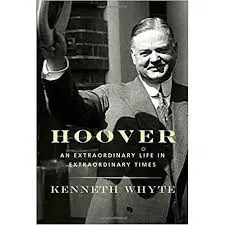
Hoover by Kenneth Whyte

Even to a historian, Herbert Hoover was a mystery.

Before reading Kenneth Whyte’s new biography of our 31st president, Hoover: An Extraordinary Life in Extraordinary Times, I knew three general things about Hoover. After World War I, he was instrumental in helping Europe feed itself and get back on its collective feet. As Secretary of Commerce from 1921 to 1929, he helped steer the American economy to high levels before the Stock Market Crash of 1929. And, as president, he was unable to stem the tide of Depression. On that last point, I had the general impression Hoover did little other than to say the Depression was just the way of business. It was only when Franklin Roosevelt came into office that the American government possessed a man willing to try anything to help.

But as I listened to the book and read about his energetic performance in just about everything he put himself into, a question began to form: what went wrong during his presidential administration? That is, didn’t Herbert Hoover try to help people?
When one reads a biography of a famous figure, generally you find things you like and can admire. Funny thing with Hoover: he was a peculiar man and, at least until his later life, an almost shy person who didn’t always enjoy the company of some people. In fact, during the early years of this biography, I got to thinking Hoover wouldn’t always be a guy with whom you’d want to just hang out. He was just peculiar. Even his marriage seemed rather perfunctory. The more the biography went on, the more it seemed, as the author noted, Hoover was a mere spectator of his own family.

Yet his engineering mind was fantastic. He worked all over the world which gave him a global perspective on things. In one of the more remarkable events I admired, it took Hoover, then living in London, barely a day to start setting up a group to help stranded American caught unawares at the outbreak of World War I. Many folks were stranded with no means to obtain money to buy a ticket back to America. Hoover started up a committee and did the thing he almost always insisted on: make him the one decision maker and leader. In this capacity, he was able to direct resources where needed and helped get over 100,000 Americans back home.

He repeated the feat during the war as he headed another committee to aid in relief of hungry Belgians. What I found fascinating was Hoover’s group, The American Relief Administration, was the only group recognized by both sides of the war. Each side allowed Hoover’s ships—flying its own flag—through enemy lines.

He was a data-driven man in an era just beginning to understand what data was and how it could be used. As Secretary of Commerce (and “under-secretary of everything else” as his detractors said), Hoover took an activist role in government. President Harding encouraged this and, when Coolidge assumed the office, kept Hoover on. He was in prime position to bring his expertise to American when the Mississippi River flooded in 1927. There Hoover was, on the ground, doing what he was most able to do: harness the goodwill of people and direct it to those in need.

He was a logical choice as the Republican nominee in 1928, and he won easily. His help to the poor in 1927 brought a large majority of Americans to his side in addition to the typical GOP voter. In an era of the Roaring Twenties, everyone seemed to like Hoover. Yet the man himself saw the warning signs looming on the horizon. He tried to thwart a potential downturn as Commerce Secretary, but others didn’t share his views. When the crash arrived, Herbert Hoover did what he had always done: gather a team with mounds of data and attack the problem.

It was here where I had my eyes opened. Rather than be the man who seemed to sit idly by waiting for the market to correct itself, Hoover actively pursued solutions. Sure, his personality wasn’t suited to leading the country in its most dire time before World War II, but he wasn’t a bystander. True, he preferred the government not to actively intervene if at all possible. He extolled the virtues of volunteerism, by individuals as well as businesses, seeing it as the best way for Americans to get back on their feet. But when businesses didn’t respond, he led the way. Not all his policies worked—the notorious Smoot-Hawley Tariff being the most famous example—but it is easy to see how Hoover paved the way for the direct government intervention of the Roosevelt years.

It is a rare figure where both sides of the political spectrum can claim a man as their own. The Progressives saw in Hoover a man willing to try things and have, as his ultimate aim, the betterment of his fellow Americans (and humans, as per his work prior to his government service). At the same time, the modern conservative movement can also claim Hoover as their own. After his defeat in 1932, he became a critic of what he saw as the overreach of FDR, and laid down a philosophy picked up by other conservatives in the 1950s and 1960s.

Herbert Hoover was a complicated man, yet there was more to him than meets the eye (or is contained in a Wikipedia article). He was certainly far from perfect and Americans needed a leader more personable than him during the Depression, but Hoover was a more-than-capable man who stands as a unique member of the American presidency. Whyte’s new biography is a fascinating exploration into a man hard to pin down, but is well worth the time.

Monday, July 22, 2019

Apollo 11 (2019 documentary)

It really is just like you were there.

On Saturday, CNN broadcast the 2019 documentary "Apollo 11" by Todd Douglas Miller. This was the film I had heard about earlier this year, but never got around to seeing in the theater or on IMAX.

Big mistake.

Miller uses recently discovered archival footage, much of which is in color and 70 mm, and creates an immersive experience. With no modern voice over, the only dialogue comes from Walter Cronkite, but only when the astronauts on readying for their flight. Other than that, all the voices are contemporary to 1969.

One of the best things was the footage of all the folks who lined the roads and parking lots in Florida that July day to watch the Saturn V rocket blast off. Families eating and playing together, couples lying on the beach, folks crowding the balconies of a motel, all angling to get a good look. You really get the vibe of a day-in-the-life of the summer of 1969. The clothes, the cars. One of my favorite things during my graduate research via microfilm--and the thing that always sidetracked me--was the newspaper ads. You get a good glimpse into what people bought and sold. Same thing here. I especially loved all the folks watching the launch through their own individual camera lenses. Just like modern concerts and smart phones.

The space flight itself was also cool. There's the moment after Apollo 11 has left Earth orbit where the crew have to maneuver the command module around, dock with the lunar lander, then rotate again, and fire the rockets. The camera follows in real time as Michael Collins pilots the command module in the docking. Look, it happened fifty years ago. I know it was successful. But I still found myself breathless, hoping nothing would go wrong.

Yeah, it's that kind of film.

The actual walking on the moon footage is something special, too. It's not the typical black-and-white image from the side of the Eagle lander. It's from Buzz Aldrin's point of view. You get a top-down view of Neil Armstrong as he descends the ladder and steps foot on the moon.

Also exciting is the liftoff of the lander from the moon to re-dock with the command module. The filmmaker does a repeat of the docking sequence. What surprised me was NASA talking to Collins who orbited the moon while Armstrong and Aldrin walked the moon. Collins didn't see it live. He was on the far side when it happened.

The film started at 8 pm on Saturday. I watched it in a different room while my wife watched another program for an hour. She would then pick up Apollo 11 at 9 pm, watch to the end, then catch the first hour on the re-broadcast. I ended up watching the whole thing all the way through again.

Loved it.

If you haven't seen Apollo 11, the 2019 documentary, I highly recommend it. Now, I'm going on the hunt for Miller's other documentary about Apollo 17 called The Last Steps.

Saturday, July 20, 2019

Year of an Indie Writer: Week 29

Another really slow week for me, creatively. Finished reviewing the new novel's opening chapters and planned for the next few scenes. After writing into the dark for the previous six novels, I'm doing a hybrid for this new one. Yes, writing into the dark, but there are scenes and guideposts I intend to hit.

There is another new project going on that I've been working on for about a month now, but I don't want to reveal what it is just yet. Why? Because what I'm doing is something I want to do without any or much feedback. Well, that's a bit crappy of a....what's the term when creatives say a thing but never reveal said thing? Can't remember, so let me a bit more direct.

There is a series of movies many in the world have watched and I've never seen. Just last month, I decided to watch them all in order and write reviews about them. I've now watched and reviewed six of the films. My reviews have added up to over 10,000 words so far, and I've still got a few movies left to go. The reason for my comment above about feedback is that these movies have passionate fans and I don't want to get some feedback before I actually watch the movies on my own.

Anyone care to guess?

The Moon Landing at 50


Today is the fiftieth anniversary of the Apollo 11 moon landing! It's been great living in Houston this week and just about every TV station has a special or two. Even the networks are getting in on it. On Tuesday, CBS moved Blood and Treasure up to 8 pm, making me miss it when I tuned in at nine. But there was an Apollo show so I was assuaged.

I finished AMERICAN MOONSHOT by Douglas Brinkley this week. It's a political history of the moon landing through the prism of John Kennedy's evolving philosophy about the validity of the moon shot. Good book. Here's my review.

For those of y'all old enough to remember, what was it like living through that momentous time? What was it like going through your daily life knowing Apollo 11 was flying to the moon? I'd love to hear your reminiscences.

Oh, and if you've not already discovered it, you can follow everything that transpired fifty years ago at https://apolloinrealtime.org/11/. It is exactly what you think it is. Everything that was said back and forth, photos, elapsed time, all in one great website. I joked with a co-worker earlier this week that if you were a space junkie and had some sort of recuperation that involved you laying in bed for days, this would have been a neat way to pass the time.

The actual landing was 20:17 UTC. You'll have to do the math to figure out what you're local time is. For us in Houston and the Central Time Zone, that will be 1:17 pm today. I've already set my alarm on my phone so I can return to the website listed above and scan some TV channels to see if anyone is doing a "live" broadcast. Hope so.

Enjoy the week, and enjoy the moon landing fifty years on.

Friday, July 19, 2019

American Moonshot: John F. Kennedy and the Great Space Race by Douglas Brinkley

I am a degreed historian with a knack for remembering dates of historical events. As 2019 dawned, I knew we'd hit the fiftieth anniversary of the moon landing this summer. Tomorrow. I also knew there'd be a slew of new historical accounts published to commemorate that momentous giant leap for mankind. Which one to read? When I saw noted historian Douglas Brinkley's name among the list, I made my decision.

American Moonshot: John F. Kennedy and the Great Space Race isn't necessarily a play-by-play of all the steps the United States took to land Neil Armstrong and Buzz Aldrin on the moon fifty years ago. Instead, it is more a political biography of two men--John Kennedy and German Wernher von Braun--as they both came of age in Depression and war. Most of us know the basics of Kennedy's life history, but Brinkely zeroes in on space and the filter through which he described Kennedy's life. What did he think about Sputnik? Where was he when Yuri Gagarin was the first man in space? What did Kennedy really think about space?

Which made for a fascinating way to examine Kennedy's experiences and how he came around to seeing the moonshot as a Cold War technique to use against the Soviet Union. Late in the book, Brinkley wrote one of Kennedy's defenses of the massive amount of money spent to land men on the moon was worth it considering the alternative--a shooting war against the Soviets, if not nuclear war itself--was too horrible to contemplate.

Von Braun, on the other hand, was more of a mystery to me. I first read about him in James Michener's novel, Space (1982), and again earlier this year when I read Apollo 8: The Thrilling Story of the First Mission to the Moon by Jeffrey Kluge. His story was a troubled one. With eyes on the skies and dreams of sending rockets and men to the moon, von Braun, in Brinkley's words, made the Faustian bargain in World War II, to build the V-2 rockets with slave labor, the end results of which were the deaths of civilians when those rockets were launched against England. Sure, von Braun was a crucial member of the NASA team in the 1960s to engineer the Saturn V rocket and an constant cheerleader for the importance of the moonshot, but at what cost? Did it even out his activities in the war? Should it? Still, it was interesting to learn more about him and the relationship he and Kennedy formed.

Speaking of relationships, what I most enjoyed was the descriptions of the camaraderie Kennedy formed with the Mercury 7 astronauts. I had always seen photos of him with them, but never knew how close some of them became with the president. Which made his assassination much more personal. Brinkley described where each of the astronauts were when they learned of Kennedy's death. For most of them, it was the radio.

As a native of Space City, USA, I have always been keenly aware of the role Houston played in the history of NASA and space exploration. Some of my favorite parts of Brinkley's book was the discussion of Houston and the surrounding areas during the 1960s. If Armstrong took the one giant leap for mankind, then the manned space program was Houston's leap forward.

Brinkley went on to write the great irony of Kennedy's death helped NASA get the funding it needed to land Armstrong and Aldrin on the moon in 1969. President Lyndon Johnson felt no problem with using Kennedy's vision, as set forth in a pair of 1961 speeches, to get the money. Was it worth it? Johnson himself, as vice president, delivered a report which laid out all the ancillary benefits humankind could reap as a result of doing what it took to put men on the moon.

Think about this: the device you're using to read this review is likely a cell phone. That computer-in-your-palm is exponentially more powerful than the computers used to shepherd Apollo 11 to the moon. The GPS system we all use to get us to where we want to go is a result of the space race. Might we have eventually got to the moon and invented all this technology without the great race? Most likely, but the pace would have been much slower.

There are lots of books that discuss the engineering feats needed to land the Eagle in the Sea of Tranquility fifty years ago tomorrow, including all the intricate details of all the various Mercury, Gemini and Apollo missions. But if you want the political version of that story centered on one man who saw the potential of a victorious moon landing for us here on Earth, then American Moonshot by Douglas Brinkley is a good recommendation.

Thursday, June 6, 2019

D-Day at 75: News from the Radio

There are countless things to read and watch and listen to today to mark the 75th anniversary of D-Day. I've been enjoying Time magazine's D-Day: 24 Hours That Changed the World all week long. 

But what has fascinated me for a few weeks now are the actual radio recordings of how the new broke on 6 June 1944. In our age of 24/7, wall-to-wall news coverage featuring video, the radio was the only source of instant communication. 

Here is a link to the real-time radio broadcasts as sponsored by the World War II Foundation. Spend some time listening today and imagine what it was like to have news break in, mention the invasion, and then back to regularly scheduled programming. Hard to do, huh?

Sunday, March 24, 2019

Happenstance TV Watching

Recently, a Facebook friend of mine posted the following update:

That moment when you spend two hours scrolling thru Netflix and Hulu looking for something to watch... half watch a few things... scroll some more... end up watching a depressing episode of Black Mirror... yeah... and then you think... I should have listened to the end of that podcast that I was listening to yesterday on the way home from work.

I'm a Gen-Xer. That means I grew up with antenna TV broadcasting three networks, PBS, and a handful of UHF channels. Here in Houston, we had only channel 39 and channel 26 until channel 20 showed up in the early 80s. Unless it was approximately one or two in the morning, all the networks broadcast material. You may have not liked what they were broadcasting, but you ended up on something.

Yes, the choices were predetermined for you, but there was always something *on.*

With on demand television, you are the network.

Yes, you don't have everything you might conceivably want, but there is so much content, you cannot possibly consume everything. One might argue that there is too much content, but that's merely a personal preference. Even back in the day, with only, say, the six TV channels Houstonians had by 1982, you couldn't watch everything on those six channels. Even with a VCR. Now with the advent of on demand TV watching--a wonderful concept especially, when two shows air at the same time--you can watch TV exactly when you want to.

But there's a trade-off.

What you don't get with on demand TV is happenstance watching. I'm still a cable subscriber so I have way more channels than I truly need. But it's always on. When I channel surf--rare these days because my TV consumption has shrunk considerably--I flick channels until I find something I want to watch. But along the way, I see all the other things being broadcast. I might note Raiders of the Lost Ark is on TBS and just stop to see what part they're up to. Or slow and see what episode of Family Ties or Friends is being shown at that moment. Or, because I'm a historian, watch a few minutes of some World War II documentary.

And I've been known to think I wanted to watch one thing, but then get sucked into something completely different just because I happened to see it was on.

You get the idea. Where there's always something on and you merely have to find it. You have the opportunity to stumble onto something you likely would not have selected had you been on one of the on demand streaming services.

Shrug. I know this is all personal preference, but my friend's Facebook post just got me thinking.

What about y'all? Do you prefer the modern on demand experience, happenstance TV, or a mixture? Despite the tone of this piece, I'm quite happy with the mixture.

Wednesday, February 6, 2019

History in the Present Tense: THE FIRST CONSPIRACY by Brad Meltzer and Josh Mensch

Never forget: We know what happened. We know how the story ends. We’re living in the story today. Yet there are stretches in THE FIRST CONSPIRACY: THE SECRET PLOT TO KILL GEORGE WASHINGTON when you breathlessly await the next chapter, wondering if the general of the American army in the Revolution will live or suffer a more dire fate.

That’s the beauty of this book by thriller and comic book writer, Brad Meltzer, and his co-author, Josh Mensch. Meltzer and Mensch weave together the various plot threads in such a way you are sucked in from the first page and the story never lets go. It is paced and structured like a thriller, with short chapters, but there is one crucial thing they did that brought this story to life.

The words, the entire book, were written in the present tense.

I listened to the audiobook, narrated by the brilliant Scott Brick, and it took me a minute or so before I realized the prose was not changing. As a historian, I’m used to reading and writing about history all in the past tense because, well, it all happened in the past. It’s over. It’s done. But with this one stylistic choice, Meltzer and Mensch take you on a journey into a little-know pocket of American history. I hold two degrees in history and even I barely knew this tale.

In the spring and summer of 1776, the Revolution is still not quite that. The Declaration of Independence isn’t even written yet. Its author, Thomas Jefferson, doesn’t even step foot onto the stage of this book until close to the end. The person on the main stage is the man in the sub-title, America’s first president, George Washington. But when we see him at first, he’s still only a general of the Continental Army, the literal ragtag group of soldiers from far and wide, who were poorly trained, poorly equipped, poorly paid, and poorly fed. It was Washington’s job to lead them, to bring them together into a semblance of a fighting force, to stand toe-to-toe with the largest and best trained military force in the world at that time, the British Army.

We stood no chance.

And thus is one of Meltzer and Mensch’s gifts. They reveal the ground level nature of what it was like to be Washington, some of his officers, and the various people in and around New York City who were involved in this conspiracy. The authors describe the smell, the food, the paranoia about who was a Loyalist and who was a Patriot. All the while, there is a great presence approaching: the British navy. Everyone knows the British are coming to New York. The only question is when are they going to get there.

Like any good story, the hero needs a villain. Here, it is Royal Governor William Tryon. The historical record seems to show it is Tryon, who flees the city and takes up residence on a British warship anchored on the river who hatches the plot to kill Washington. Not only that, the governor recruits spies to recruit additional colonists to turn on their fellows and fight on the side of the crown. Some of those recruits are part of the Continental Army.

In addition, Tryon’s plan is scheduled to launch just as the masts of the British Navy appear on the horizon.

You see? Sometimes history really is just as good as an action/adventure novel by Clive Cussler or the latest summer popcorn movie.

That, my friends, is exactly the point of THE FIRST CONSPIRACY. Meltzer loves stories. His thrillers like last year’s THE ESCAPE ARTIST proves it. So does his series featuring the Culper Ring. But sometimes, the truth is more exciting than fiction, especially when it comes to our own American story.

I was in graduate school when David McCullough’s TRUMAN biography was published. It was a bestseller. I read it and it’s utterly engrossing. But that book read like a novel, and some students and faculty seemed to dismiss the book as popular history.

What’s the problem with that? You want Americans to learn about history, why not make it more accessible? Why not write a book detailing something so extraordinary like this conspiracy to kidnap or kill George Washington in a manner folks will actually enjoy reading?

For that’s what Meltzer and Mensch have done. They have taken a small fragment of the life of one man and put it under the microscope and examined it from every angle. Along the way, you learn just how tenuous America’s struggle for independence truly was. It wasn’t the foregone conclusion we think of it today. It was harder than we could possibly imagine. And if it wasn’t for George Washington and what he did back in 1776 when he discovered the truth about the conspiracy against his life, then the world would be a very different place.

THE FIRST CONSPIRACY does all of that in a remarkable book that has my highest recommendation.

For other books in Barrie Summy's Book Review Club, click the icon.


Click icon for more
book review blogs
@Barrie Summy

Tuesday, August 14, 2018

Hoover by Kenneth Whyte

Even to a historian, Herbert Hoover was a mystery.

Before reading Kenneth Whyte’s new biography of our 31st president, Hoover: An Extraordinary Life in Extraordinary Times, I knew three general things about Hoover. After World War I, he was instrumental in helping Europe feed itself and get back on its collective feet. As Secretary of Commerce from 1921 to 1929, he helped steer the American economy to high levels before the Stock Market Crash of 1929. And, as president, he was unable to stem the tide of Depression. On that last point, I had the general impression Hoover did little other than to say the Depression was just the way of business. It was only when Franklin Roosevelt came into office that the American government possessed a man willing to try anything to help.

But as I listened to the book and read about his energetic performance in just about everything he put himself into, a question began to form: what went wrong during his presidential administration? That is, didn’t Herbert Hoover try to help people?
When one reads a biography of a famous figure, generally you find things you like and can admire. Funny thing with Hoover: he was a peculiar man and, at least until his later life, an almost shy person who didn’t always enjoy the company of some people. In fact, during the early years of this biography, I got to thinking Hoover wouldn’t always be a guy with whom you’d want to just hang out. He was just peculiar. Even his marriage seemed rather perfunctory. The more the biography went on, the more it seemed, as the author noted, Hoover was a mere spectator of his own family.

Yet his engineering mind was fantastic. He worked all over the world which gave him a global perspective on things. In one of the more remarkable events I admired, it took Hoover, then living in London, barely a day to start setting up a group to help stranded American caught unawares at the outbreak of World War I. Many folks were stranded with no means to obtain money to buy a ticket back to America. Hoover started up a committee and did the thing he almost always insisted on: make him the one decision maker and leader. In this capacity, he was able to direct resources where needed and helped get over 100,000 Americans back home.
He repeated the feat during the war as he headed another committee to aid in relief of hungry Belgians. What I found fascinating was Hoover’s group, The American Relief Administration, was the only group recognized by both sides of the war. Each side allowed Hoover’s ships—flying its own flag—through enemy lines.

He was a data-driven man in an era just beginning to understand what data was and how it could be used. As Secretary of Commerce (and “under-secretary of everything else” as his detractors said), Hoover took an activist role in government. President Harding encouraged this and, when Coolidge assumed the office, kept Hoover on. He was in prime position to bring his expertise to American when the Mississippi River flooded in 1927. There Hoover was, on the ground, doing what he was most able to do: harness the goodwill of people and direct it to those in need.

He was a logical choice as the Republican nominee in 1928, and he won easily. His help to the poor in 1927 brought a large majority of Americans to his side in addition to the typical GOP voter. In an era of the Roaring Twenties, everyone seemed to like Hoover. Yet the man himself saw the warning signs looming on the horizon. He tried to thwart a potential downturn as Commerce Secretary, but others didn’t share his views. When the crash arrived, Herbert Hoover did what he had always done: gather a team with mounds of data and attack the problem.

It was here where I had my eyes opened. Rather than be the man who seemed to sit idly by waiting for the market to correct itself, Hoover actively pursued solutions. Sure, his personality wasn’t suited to leading the country in its most dire time before World War II, but he wasn’t a bystander. True, he preferred the government not to actively intervene if at all possible. He extolled the virtues of volunteerism, by individuals as well as businesses, seeing it as the best way for Americans to get back on their feet. But when businesses didn’t respond, he led the way. Not all his policies worked—the notorious Smoot-Hawley Tariff being the most famous example—but it is easy to see how Hoover paved the way for the direct government intervention of the Roosevelt years.

It is a rare figure where both sides of the political spectrum can claim a man as their own. The Progressives saw in Hoover a man willing to try things and have, as his ultimate aim, the betterment of his fellow Americans (and humans, as per his work prior to his government service). At the same time, the modern conservative movement can also claim Hoover as their own. After his defeat in 1932, he became a critic of what he saw as the overreach of FDR, and laid down a philosophy picked up by other conservatives in the 1950s and 1960s.

Herbert Hoover was a complicated man, yet there was more to him than meets the eye (or is contained in a Wikipedia article). He was certainly far from perfect and Americans needed a leader more personable than him during the Depression, but Hoover was a more-than-capable man who stands as a unique member of the American presidency. Whyte’s new biography is a fascinating exploration into a man hard to pin down, but is well worth the time.

Tuesday, March 20, 2018

A Thriller with a Historical Twist: The Escape Artist by Brad Meltzer

Sometimes, a little known fact in history can spark an entire story.

THE ESCAPE ARTIST is the latest novel by Meltzer, a man who has a healthy respect, understanding, and love of history. If you haven’t read any of his books, you might know him from his TV shows “Decoded” and “Lost History.” He first came onto my radar when he wrote “Identity Crisis” for DC Comics, a graphic novel that shows actual death in the DC Universe and how it affects the characters. The ending of that story reverberated through the comics for years after, and it’s still unnerving. I read his Culper Ring Series featuring Beecher White, an archivist at the National Archives. Any author who can make an archivist a hero is a good writer. I earned two degrees in history and while I may have soured on the political aspects of being a professional historian, I still retain the passion. It’s a passion Meltzer shares and it’s why I enjoy his novels. And don’t’ even get me started on his awesome series of kids’ books focusing on heroes for his son and his daughter.

In the weeks leading up to the book’s release, Meltzer’s excitement for THE ESCAPE ARTIST was palpable. His social media and his newsletter was filled with anticipation that we would soon meet Nola Brown. She is one of the two protagonists in the new book. Taking a page from lost history, Meltzer made Nola the official painter of the US military. Ever since World War I, the military have hired a painter to capture things a photograph cannot: the anguish of war and what it really means. She doesn’t show up for a little while in the book, but her presence does.

The opening chapter shows a military plane taking off from somewhere in Alaska. Soon thereafter, it crashes, but not before the unnamed female character has a chance  to write a last message. The message is received by the other protagonist, Jim “Zig” Zigarowski, a mortician who works at Dover Air Force Base. This base is where all our fallen soldiers arrive after they die in service to our country. Zig and the other morticians help to give families closure by fixing up the dead. When the name “Nola Brown” comes across the big board, Zig personally takes it upon himself to work on her corpse. You see, Nola helped saved the life of Zig’s daughter back when they were Girl Scouts. It doesn’t matter that his daughter died a year after that; Nola gave Zig the extra time, and for that, he’ll pay the debt. But the woman identified as Nola Brown is, in fact, not Nola at all. Zig would know because of a particular physical mark on the real Nola. This unidentified woman’s identity is specifically being targeted so as to wipe away Nola’s existence. What gives Zig even more pause is the note he finds in the most unlikely of places: on a piece of paper in the dead woman’s stomach.  You see, if a person wanted to pass along a message in the seconds before a disaster strikes (like a plane crash), the person can write a note and swallow it. The stomach acids will preserve the paper and the message. It happened in real life on 9/11with one of the people on the plane that crashed into the Pentagon. Meltzer took that unknown piece of history and wove it into a spectacular story.

The narrative is divided into two main POVs: that of Zig and Nola. Often, we get “This is Nola at age sixteen” or “This is Nola at age ten” segments where a particular moment of his life is revealed, giving us a greater understanding of what makes her tick. I listened to the audio with my favorite narrator, Scott Brick, is teamed up with January LaVoy who reads Nola’s parts. The combination is fantastic.

As is the story. There are too many layers to note here without spoiling the fun of this book. In January, I discovered THE SHADOW novels from the 1930s and thoroughly devoured all that were available on Audible. Now, I’ve moved on to the reprints in my library. In breathless prose, Meltzer’s writing is clean and precise as always, delivering a bonanza of excitement that would have been right at home in the heyday of pulp fiction, with a heroine who can stand alongside The Shadow himself.

Monday, June 13, 2016

Hamilton Wins Big

A1Ft9MsmP3L._SY355_Sometimes, the best way to teach the American public history is not in a classroom.

Back in December when I first became aware that there was a Broadway play called “Hamilton,” I was both excited and skeptical. You see, I’m a history major and hold both a Bachelors and a Masters degree. Teaching history was something I wanted to do before I changed my mind and became a technical writer. Now, as an author, I get the chance to ‘teach’ history but in a different venue.

I love musicals. Always have. The Music Man was always my favorite until The Lion King. That show is so much more than the sum of its parts. I actually had the opportunity to travel to New York back in 1998 to see TLK because I didn't think it would ever tour.

I saw a second show on that New York trip: a revival of 1776. Now I only became aware of 1776 in graduate school and the idea that the Founding Fathers would be singing was, well, weird. Until I saw it, the movie that is. While it took me a little time to get behind John Adams singing, I quickly grew to love the songs not only as Broadway pieces but as pseudo history classes. Want to know how the Declaration of Independence was written? You could do worse than listening to the "But Mr. Adams" song. It soon became clear that a two-hour musical could deliver history to folks who hated history in high school.

So when I learned about Hamilton, I was both excited and skeptical. Excited for the potential a show like this to educate viewers about America's first Treasury secretary. Skeptical for how the music would be presented. I figured it would be good, but I needed to give it a listen.

NPR put up the cast soundtrack on its First Listen program. I gave it a ‘spin.’ I was mesmerized. Not only was the music hip-hop (hip-hop!) but the words coming out of the singers’ mouths were chock full of historical goodness. Songs like “Alexander Hamilton” and “My Shot” are history textbooks condensed and full of life. Spectacular!

I’m so glad the musical has become a national phenomenon. I’m glad its success has, apparently, kept Hamilton on the ten dollar bill. I’m glad that Ron Chernow’s original biography is now likely experiencing a resurgence in popularity. (It’s a great bio, BTW.) I’m glad that the musical took hom 11 Tony awards last night. Well deserved.

But I’m really glad that history—the subject for which I have a passion—is now getting ‘taught’ to folk who didn’t really think they loved history until it was presented in a different format. If it takes a musical to ignite a drive to learn more about our history, so be it.

“How lucky we are to be alive right now!”

Wednesday, February 1, 2012

Book Review Club: Bury Your Dead by Louise Penny

(This is the February 2012 edition of Barrie Summy's Book Review Club. For the complete list, click the icon after this review.)

When you get right down to it, Louise Penny's novel rests on a single question. Ironically, I arrived at Bury Your Dead also by asking a single question.

My question was more mundane: what are some good modern titles and authors that follow in the traditional mystery style? Fellow Do Some Damage alumnus, John McFetridge, mentioned Penny's name as a good student of the Agatha Christie School of Mystery. Knowing my penchant for starting a series at the beginning, I junked that in favor of starting with the award-winning sixth book in the Chief Inspector Armand Gamache series.

Gamache works for the Surete du Quebec, the police force in Quebec. As the story opens, Gamache is recovering from wounds suffered during a police action. As a means to combat the memories and recover, Gamache is spending time with his old, retired mentor, Emile, and studying the circumstances surrounding the life and death of Samuel de Champlain, the founder of Quebec City. At the same time, Gamache is troubled by a past case. Based on the one question asked by a participant of this previous case--Why would Olivier move the body?--Gamache thinks he may have reached the wrong conclusion. If so, an innocent man sits in jail. To follow up on his hunch, Gamache sends his fellow officer, Jean Guy Beauvoir, also wounded in the same police action, to look into things in an unofficial capacity.

Naturally, Gamache finds a case of his own. Augustin Renaud, an idiosyncratic "historian" devoted to finding the lost burial site of Champlain's body, is found murdered in the basement of the Literary and Historical Society. Fearing that the death of an Anglo searching for the Francophone father of Quebec would raise too many eyebrows, Gamache is coerced into helping the local police search for the killer. Intertwined between the two cases Penny slowly reveals the true nature of the police action that wounded Gamache, Beauvoir, and others.

Penny weaves these three storylines effortlessly and with complete command of pace and prose. I found Bury Your Dead utterly compelling. It's an old-fashioned mystery, updated, but without the fast-paced trappings of conventional thrillers. There isn't a serial killer stalking poor victims with a dead body every forty pages. There is a death (Renaud) that is present, but the rest of the deaths appear off screen. I enjoyed that quite a bit. It left time for Penny to explore both Gamache and Beauvoir, their methods of investigation, and how each man copes with the aftereffects of the police action.

One of the tropes of the writing profession is that characters matter. You get a bunch of characters together, each with their own motivations, and have them bump into each other, conflict emerges and, with it, a good story. Penny does a remarkable job of giving the reader interesting, believable characters each with their own beliefs. As the story progressed, I started trying to guess the culprits because, you know, that's what's fun about a mystery. It's a testament to Penny's skill as a writer that she keeps most of her cards secret until the end.

I'm a historian and I really enjoyed the fourth thread of this story, the history of what happened to Champlain and the history of Quebec. Yes, it's mostly fictional, but it's presented in an understandably way. Loved this. That Gamache loves history pretty much guarantees that I'll be reading more of his stories in the future.

I so enjoy finding a new author or an author new to me. There's that first blush of discovery no wholly unlike the opening of a new relationship. I am happily excited to report that I have a new author to read and follow who writes an interesting character in Gamache--and Beauvoir as well. A new year dawns, a new author discovered. Wonderful way to start 2012.


Click icon for more
book review blogs
@Barrie Summy