Tuesday, April 12, 2022
End of an Era: The Final Print Issue of Entertainment Weekly
I can’t say with any certainty if I purchased the debut issue of Entertainment Weekly in February 1989, but I know I began reading the magazine that year. In those pre-internet days, Entertainment Weekly featured writing like my friends and I talked. The stories were encyclopedic, the authors were folks like me (geeks if you will), and the sections became go-to sources of information.
It wasn’t long before I started subscribing as a means to avoid the vicissitudes of magazine stands and delayed delivery. I needed my entertainment fix every week.
The interviews were always in depth and interviewers mostly asked the same questions I would have asked were it me in front of a celebrity with a notepad and pen. It wasn’t long before I grew accustomed to the Top 10 Must List of the week, always cheering when a thing I loved landed on the list.
In those pre-internet days, Entertainment Weekly pretty much kept up with the times. The periodical evolved as the 1990s evolved and shaped and reshaped popular culture. I always looked forward to the big issue showcasing the fall TV shows (although those usually were double issues and I’d have a week without a new issue) or the summer blockbusters or the big music issues. When mega events like the relaunch of James Bond with Pierce Brosnan or the release of the first new Star Wars movie, I could not wait to read the content. The issues were mostly devoured in one sitting, maybe two. It was a rare weekend that ended when I hadn’t read Entertainment Weekly from cover to cover.
I moved from Austin to Denton, Texas, to Kent, Ohio, back to Denton and then back to my hometown of Houston. I carried the subscription with me everywhere I went. When my wife and I married, we discovered we both subscribed and we joined our subscriptions into one. When we moved to the Houston suburbs, Fridays were still a wonderful day when EW would arrive in the mailbox. I would usually consume the Must List between the mailbox and the front door, and, if the cover was particularly important, show my wife as I walked in the door.
A particularly great time to subscribe to EW was during the time when “Lost” was on TV. Every Wednesday, we’d get a new episode. Every Thursday, the folks at the office would hang out in the hallway and talk over what happened. But come Friday, I’d get the latest issue of EW. In it, Jeff Jenson, senior writer and “Lost” guru would recap the episode and deliver in-depth analysis of all the things in any particular scene, be it a book on a shelf or whatever might’ve been in the background. It was essential reading and I always enjoyed Mondays when I could bring Jeff’s wisdom back to the office.
Needless to say, Entertainment Weekly has been with me most of my adult life. I’ll admit I was sad when EW went from being published weekly to only coming out monthly. I’ll also admit I never understood why they didn’t just change the name to Entertainment Monthly. Why not?
But now, in April 2022, the 1,630th issue of Entertainment Weekly arrived in my mailbox, and it is the last one. The last print issue. EW.com has been a thing for I don’t know how many years, but now it’ll be the only thing. If EW could read the writing on the wall, realizing that just about everything is fast and digital and on the web, and shift to a monthly rate, then the shift to an all-digital format was also easily predicted.
Yeah, I’ll keep going to EW.com because the same content by the same writers is there. There’s even the same font for the various sections. And while I’m fully aware that my next statement will make me sound old, I’ll miss holding the printed magazine in my hands, getting the ink smeared on my fingers if I’m enjoying a cold drink while reading, and circling things with a pen to go and buy later.
The older one gets, the more one values things that have just always been there. And for 33 years, the printed version of Entertainment Weekly has been there with me, chronicling the pop culture events of my life, from my time as a college student to the middle-aged man I am today.
So long, old friend. Thanks for making the journey with me.
Thursday, March 31, 2022
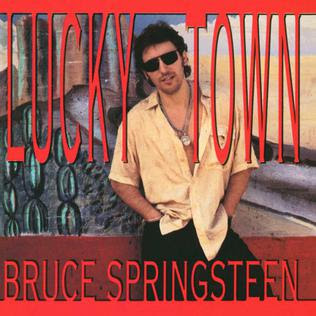
The Specialness of Firsts: Human Touch and Lucky Town at 30
Background
In 1984, at the height of the Born in the USA frenzy, I flat out didn't like Springsteen. That was the only album I knew of him, and then, only the radio songs. But those tunes were everywhere, yet I hadn't figured out Bruce, who he was or what he was trying to say. Dancing in the Dark was okay, but that title track, with the bizarre decision to overlay the studio song on the music video from his live performances (thus, making them out of sync), was a song I enjoyed hating and mocking. Yet I never bothered to read the lyrics.
Cut to 1987 when I discovered Stephen King, starting with Pet Semetary. This was the spring, my senior year in high school, and college life beckoned. Many times, King quoted Springsteen's lyrics. Seeing the words in text without Bruce's singing, I took a new interest in them. Not the music, mind you, but the lyrics.
When Bruce's 1987 album Tunnel of Love came out, lead single "Brilliant Disguise" turned out to be...not bad. In fact, I kind of liked it. Then, a friend gave me a cassette copy of that album (it was one of those 12-albums-for-a-penny things from Columbia House). I listened, and I liked. With open eyes and a more mature sense of music, I circled back to Born in the USA.
Whoa. This is actually pretty good, lyrics and music combined. Sure, Born in the USA was still a fun song to mock, but I slowly worked my way through the back catalog, mostly in reverse order. I quite liked The River, especially the live version with that extended introductory story Bruce relates on the box set. Took some time to get used to Nebraska, and I think I stopped at Born to Run, letting those first two Springsteen albums be that last old ones I discovered. And just like that, I was a Springsteen fan.
The Spring of 1992
It took me five years to get through college (by choice; double major) so by the spring of 1992, my eyes were focused on grad school, ideally at a university in close proximity to where my then-girlfriend would be attending medical school. I had already dipped my toe in the wonder of all those non-album tracks. I stumbled onto his song from the We Are the World album because I had already bought it for the non-album song by Chicago. My one and only time I ever called a radio station and asked about a song was when KLBJ, the local rock station in Austin, Texas, played "Roulette" and I simply had to know the song title and then go buy the CD single of the then-current song "One Step Up" to get it.
When you're graduating from college, one phase of your life is ending. Granted, I'd spend the next six years in grad school but I didn't know that in the spring of 1992. I was growing up. I was in my early twenties. My entire life was before me and I was ready for it.
Turned out, Springsteen himself was entering a new phase of his life as well. After the much-publicized marriage and divorce to Julianne Phillips, Bruce had fallen in love with Patti Scailfa, a singer in his band. I barely knew about this having never seen him live at that point and, well, no internet. Be that as it may, his new love and new status as a father permeated all the new songs he wrote during the time after Tunnel of Love. Finally, when the news broke that there was going to be new Springsteen music released, imagine my overwhelming joy to learn there would be not one album, but two.
The Albums
Two albums of material. Twenty-four songs: fourteen on Human Touch and ten on Lucky Town. On that bright spring morning thirty years ago, I woke, drove to the record store, bought the CDs, and quickly returned to my apartment. I saw in front of the stereo and just listened.
The cool sounds of Human Touch washed over me. Frankly, the title track sounded like he had not missed a beat from the sonic tapestry of Tunnel of Love. The second track, "Soul Driver," seemed to be a kindred spirit from "Cover Me." "57 Channels" was interesting, to be sure, and has reached ironic status in the age of multiple streaming channels here in 2022. "With Every Wish," with it's muted, soaring trumpet, and evocative, storytelling lyrics, has always been a favorite, and the theme of the song-With every wish, there comes a curse-is always good to keep in mind. "Roll of the Dice" and its glockenspiel is the first old-school Springsteen song of the entire record. And "I Wish I Were Blind" is a gorgeous ballad tinged with the anguish we all feel when we see an ex with someone else. If Springsteen ever records an album with an orchestra, I hope this one is in the setlist.
Human Touch is not without its weak songs. I rarely listen to album closer "Pony Boy." While "Real Man" may not be his best song, the pure joy in his words and voice is palpable. I appreciated it at the time, and very much appreciate it now.
If you assume that "Born to Run" is the best song Springsteen ever wrote, then Lucky Town opens with what has become my favorite song: "Better Days." Its exuberant optimism in where he finds himself is tempered only by the scars it took to get there. This song is one I have never forgotten, and turned to its lyrics over the years as my own life has gone through its ups and downs. In fact, verse 3 contains some of my favorite poetry Springsteen has ever penned, especially that last couplet.
Now a life of leisure and a pirate's treasure
Don't make much for tragedy
But it's a sad man, my friend, who's livin' in his own skin
And can't stand the company
Every fool's got a reason for feelin' sorry for himself
And turning his heart to stone
Tonight this fool's halfway to heaven and just a mile outta hell
And I feel like I'm comin' home
The words of "If I Should Fall Behind" resonate constantly, especially in the shows from this century when all band members take a turn at singing various lines. "Leap of Faith" is a great song anyone pondering big life decisions when dealing with a potential spouse and those wondering thoughts of whether or not you're making the right decision ring in your head. Ditto for parenthood in the lyrics of "Living Proof" and the realization that so many of the things that hold us back are self-inflicted.
You do some sad sad things, baby
When it's you you're tryin' to lose
You do some sad and hurtful things
I've seen living proof
But he returns in the very next verse to show a way out:
You shot through my anger and rage
To show me my prison was just an open cage
There were no keys, no guards
Just one frightened man and some old shadows for bars
What also runs through both of these albums is the redemptive power of love and music. I'm no deep Springsteen scholar but I think it's with these two albums that the spiritual language Springsteen now uses to great effect started. "The Rising" carries it forward (that's my third favorite song of his) and it keeps going through the Pete Seeger album, Western Stars, and Letter to You.
What the Albums and Era Mean to Me
I listened to those albums constantly back in 1992 and the years after. While I was driving by myself on the highways of central Texas, visiting potential schools to start my graduate studies in history, it was these twenty-four songs I blasted from my car, windows down, hair blowing in the wind. These songs had me constantly looking to a bright future, but they also foretold the inevitable: life is never straight with zero potholes. It is a jagged road, with the highest of highs and the lowest of lows. It is fraught with everything you might imagine-and some you couldn't.
In the past thirty years, these albums have fallen out of favor by Springsteen fans and Springsteen himself. Famously, he lamented that when he tried to write happy songs, it didn't go over well, which always struck me as odd. Don't we want our musical heroes to be happy and write songs in that vein? In fact, "Happy," a song from the Lucky Town sessions that didn't make the album, has also become one of my favorites, even making its way onto the playlist of songs at my wedding reception.
But Human Touch and Lucky Town have never lost their luster with me. I'll admit that had Springsteen whittled down the twenty-four songs to a single, albeit long, album, the result might've been stronger. But I didn't care then and, frankly, don't really care now. I gravitate to Lucky Town a tad more, but I always bring in more than half of Human Touch's songs into various playlists over the years.
It's not lost on me the place Human Touch and Lucky Town have in my Springsteen fandom. I'm the oddball. When I witnessed my first Springsteen show in December 1992 in Dallas with a couple of fellow grad students, they told tall tales about the 1984 and 1987 concerts. All those stories sounded great-and I've since discovered them and have come to enjoy those shows-but the Human Touch/Lucky Town Era is special. It's where I officially joined the entourage of Bruce's loyal fanbase. I've stayed with him ever since.
Sure, there are albums I rarely listen to-The Ghost of Tom Joad and Devils and Dust-but I bought them on day one and spun them. I was ecstatic when 1998's Tracks came out and I had four new-to-me Springsteen albums to hear. And I finally got what it was like to have the E Street Band backing him with all the hoopla surrounding The Rising when Bruce was everywhere on TV. We got the sublime Western Stars and the poignant Letter to You and, with Springsteen, you know there will likely be a new album, maybe even this year.
But on the thirtieth anniversary of Human Touch and Lucky Town, I think back to the young man I used to be, hearing these songs for the first time, and the middle-aged man I am today, when these songs have embedded themselves in the fabric of my being. Both versions of myself love and appreciate these two albums, but for different reasons. The younger me found himself inundated with joyous songs of love and redemption, with his life unfolding before him, little knowing it was about to change. The middle-aged me, the me who is about a decade older than Springsteen was when he wrote these songs, the me who is a father and husband, feels these songs differently. He's lived them, through thick and thin, and come out okay.
With lifespans being what they are, I'm more than halfway to heaven. But the music of Bruce Springsteen, and specifically Human Touch and Lucky Town, have been with me for thirty years now, and I'm so thankful for their companionship.
Tuesday, March 15, 2022
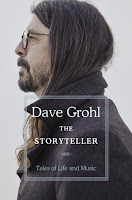
Thoughts and Inspiration from Dave Grohl’s The Storyteller
The urge came out of nowhere. Somehow, last year, I had the overwhelming desire to buy the new Foo Fighters album, Medicine at Midnight. That was odd considering I’d never purchased any of their albums up to that time. Heck, I knew only a handful of their songs and one main video, but buy the record I did and it became my favorite album of the year.
So when Dave Grohl, the founder and front man of the band, published his memoirs, The Storyteller: Tales of Life and Music, in the fall of 2021, I was primed and ready for it.
But I wasn’t ready for what it did to me.
A Parallel Life
With my newfound interest in all things Foo and Grohl, I learned Dave was only five weeks younger than I was. Back in 1991, when Nirvana released their seminal album “Nevermind” and set a dividing line in the history of rock music—there was a Before Nevermind and an After Nevermind—I probably knew that the trio were my age, but it didn’t register. Bands who made records I could buy were always older than me, right? Turns out, Dave was the youngest. He was like the younger brother of one of the two other guys in the band, brought along on account of his ferocious drumming style. I think we all know that Dave was at the right place at the right time, just before Nirvana blew away the general public with their sound.
But Dave was already a veteran of that scene. He had been intoxicated with the punk rock sound of Washington DC even though he was a suburban kid from Virginia. Even without a proper drum kit (he used pillows), the music flowed through him and he practiced and practiced the drums and well as strumming and picking out songs on his guitar.
Good fortune, luck, whatever you want to call it arrived one day when Dave, the seventeen-year-old struggling high school student, was given the chance to audition for the punk rock band Scream. He nailed the audition and, when invited to join the band, lead singer Peter Stahl finally thought to ask the young man his age. Naturally, Dave lied. “Twenty-one.” Peter and the other members of Virginia-based Scream accepted Dave’s word and Scream had a new drummer.
But Dave had one crucial thing to do, and even as I listened to Dave recount the story via the audiobook, fully knowing how it would turn out, it was a tense moment. Dave had to talk with his mother, a public school teacher, and convince her to let him drop out of school and tour with the band. Her words were surprising: “You’d better be good.”
As a listener to Dave’s journey, I found myself joining in his long days of traveling the country in a van, stretching out pennies per day on food, sleeping like sardines in said van, only to explode for an hour a day on stage. As a parent myself, however, I found Virginia Grohl’s faith in her son heart-warming yet also inspirational. The main job of a parent is to raise our children to be good, functioning, adults capable of holding down a job and making it on their own. She must have recognized that Dave was not going to be a typical nine-to-five kind of person and let him go. Even though my son is now twenty, I think back to when he was seventeen and ask myself if I could have let him go.
Turning it back on myself, however, I thought back to when I was seventeen. I was a junior in high school, just like Dave was. Could I have left the comfort of my suburban Houston home to tour with a rock band? Would my parents have let me? The answer to both is no.
That Guy From Nirvana
The four-year stretch when Dave toured America and Europe with Scream on less than a shoe-string budget helped forge his character into what he would become. His frugality he learned from his single mother, who raised Dave and his sister via her public school job and other jobs she took to make ends meet. He learned to make do with less and be happy about it. I found it telling that when he received his first check after joining Nirvana—an astounding-for-him $400—he blew it on a Nintendo and other assorted things he didn’t really need. Soon, he was back to scraping by, barely choking down the three-for-a-dollar corn dogs from a gas station. Still, he learned his lesson.
It’s common knowledge that Dave auditioned for Nirvana at a time when Scream was a slowly sinking ship. He joined the band with Kurt Cobain and Krist Novoselic and set to work on Nirvana’s sophomore album, Nevermind. It was great to hear Dave’s thoughts and memories about Kurt, especially how unprepared the trio was for the instant international fame they garnered with that fall 1991 album and, most importantly, the “Smells Like Teen Spirit” music video. Soon, the very people who poked fun of Dave in high school were now attending Nirvana shows. The alternative, punk rock mentality in which Dave and Kurt and Krist thrived was being co-opted by the mainstream. Dave struggled with it, but he managed to get through the deluge while Kurt did not.
I made the choice to listen to this book because Dave narrates his own story, and it is exactly the way to consume this book. You get Dave’s snide tonal shifts depending on if he’s talking about a funny memory, but you can also hear his somber voice as he talks about how Kurt’s death affected him. In interviews about this book, Dave mentioned he wrote the passages about Kurt last. I wonder if he recorded them last as well.
The Indie Spirit of Foo Fighters
In the immediate aftermath of Kurt’s death, Dave left music. He didn’t even listen to the radio. The very thing that pumped in his veins, that compelled him to become a high-school dropout was now the same thing he couldn’t endure. He wanted to distance himself from Nirvana, from Kurt, and, as he came to realize, from himself. After nearly picking up a hitchhiker in Ireland—the young man was wearing a Kurt Cobain t-shirt, the sight of which caused Dave to duck his head and pass by—Dave knew he must return to music.
As an indie author, I enjoy performing all aspects of writing and publishing myself. True, some tasks are more mundane than others, but that is the price I’m willing to pay. I knew about Foo Fighters back in 1995 but never bought the debut record. What I truly never understood, however, was that, save for a single guitar part in one song, Dave wrote and performed every bit of that twelve-song debut. And he did it all in six days in the studio. That astounded me, but what I really latched onto was how that creativity in the wake of Kurt Cobain’s suicide was Dave’s road out of his depression.
You see, I’ve been struggling with my own career as a writer, wondering if it is all worth it or if I should just hang it up. Why bother, I’d tell myself. No one cares if I write or don’t. In fact, those thoughts have so permeated my thinking that I actually have stopped. It’s been a month since I last wrote new words on anything other than blog posts.
But I have spent countless words on examining myself, and in this time of re-examining what kind of fiction writing career I want, I listened to Dave’s book. I hear him talk about his own struggles, his own doubts and fears, how he, even to this day, still struggles and wonders if he’s good enough.
Dave is a wonderful storyteller, weaving in and out of various tales from the road. All are remarkable and all had me questioning myself and my creative life choices. Late in the book, he described the feeling of being invited to perform—solo—at the Oscars. And it was the Beatles’ “Blackbird.” So, no pressure, right? He was scared, so scared that he nearly declined. But he and his daughter, Violet, had recently performed the song at her school talent show and she encouraged him to do the song. You see, she was scared to perform but she overcame her fears and knocked it out of the park. The child served as inspiration for the father.
In concluding this story, Dave wrote the following:
"Courage is the defining factor in the life of any artist. The courage to bare your innermost feelings, to reveal your true voice, or to stand in front of an audience and lay it all out there for the world to see. The emotional vulnerability that is often necessary to summon a great song can also work against you when you’re sharing your song for the world to hear. This is the paralyzing conflict of any sensitive artist, a feeling I’ve experienced with every lyric I’ve sung to someone other than myself. Will they like it? Am I good enough? It is the courage to be yourself that bridges those opposing emotions, and when it does, magic can happen."
Dave’s book arrived at the perfect time in my life and the inspirational journey he went on and continues to undertake hit me in the exact place I needed it: my creative spirit. It needed a jolt to get me out of the doldrums. My spirit needed to come around and be reminded that every single creative person—whether an indie writer, a rock star, or anyone in between—has moments of doubt. But if we just keep going and keep making our art, magic can happen.
It is remarkable to get an inside look at an established and famous rock star who is my age. The bass player, Nate Mendel, is four days older than me so I should have been a Foo Fighters fans from the jump. But I wasn’t. Instead, it took me twenty-seven years to come around.
Now, I’m there and not only am I on YouTube watching tons of videos but I’m rummaging through my wife’s CD collection and pulling every Foo Fighters album she has. The music is fantastic, but Dave Grohl’s message is even better.
Tuesday, February 22, 2022
What Are the Famous Books of the 1990s?
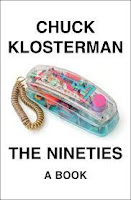
For the past couple of weeks, I’ve been listening to The Nineties by Chuck Klosterman. I’d never heard of him but the book’s cover caught my attention. Couple that with my son’s musical tastes currently residing in the 1990s and I thought why not take a chance with the new book.
It’s a fascinating read and I thoroughly enjoyed. I annotated my audible file with interesting clips and I’ve got the ebook on hold via my library to potentially re-read some passages.Klosterman focuses on pop culture, politics, TV, music, movies as a means to explain that last decade of the century. It was only by the end that I realized something: I don’t think he mentioned any books. Which got me to thinking about an obvious question:
What are the famous books of the 1990s?
Okay, do something with me. Think about that decade and see if you can recall any titles or authors but do not use the internet. Heck, don’t even look at your bookshelves. Just see if you can come up with any famous books strictly from your memory. I’ll wait.
Okay, so how many did you remember? Truth be told, as I’m writing this, I have not yet turned to Google. I’ve not even turned my eyes to my various bookshelves. In real time, I’ve been thinking about this question, off and on, for about a day, and only in the last few minutes did I remember an author and book that emerged in the 1990s: John Grisham’s The Firm.
I struggled to even remember many books. I went through my mental Stephen King list but could only remember Bag of Bones from 1998. Grisham’s status as the premier writer of the legal thriller instantly brought his other books to my mind. And I think Midnight in the Garden of Good and Evil was a 1990s book. But those were all I can remember.
So, if you’ll excuse me, I’m going to Google now. I suspect I’ll have more than a few “Oh, right! That book!” forehead slaps but such is my memory.
And I’m back, and I’ve slapped my forehead more than once in the category of “How could I have forgotten that book.” Among the titles that slipped my mind are Jurassic Park by Michael Crichton (1990), The Bourne Ultimatum by Robert Ludlum (1990), Truman by David McCullough (1992; my historian cred just went down the tubes), The Bridges of Madison County by Robert James Waller (1993), Men Are from Mars, Women are From Venus by John Gray (1993), Primary Colors by Anonymous [AKA Joe Klein] (1996), and many books by Danielle Steel and Mary Higgins Clark. I used this site to get the Top 10 books per year and not what someone thinks are the important books.
How many did you remember? More than me? That’s good. Heck, I couldn’t even remember all the Stephen King books of that decade. And how many mystery/thrillers did you recall? The presence of Clark and Ludlum tells me that our genres was at least at the table—as was Tom Clancy (more than once) and James Patterson.
Update: reader Jeremy sent me an email to remind me that Harry Potter was released in 1997 (UK) and 1999 (US) and publishers spent the next 15 years trying to chase the next big young adult craze. He also mentioned that the first Game of Thrones book was published in 1996. That brought Snow Crash (1992) to my memory although I didn't read it until the early 2000s. Ditto for the Potter books (I read them all in 2007).
Here’s a larger question: how many of those books were influential? How many changed things? I’ll come back to the Truman biography. I was in grad school and in 1992, many of my professors grumbled at McCullough’s book because it was too popular. Like the study of history had to be impenetrable to be good. I, for one, appreciate it when a historian writes a popular enough book that it becomes a bestseller (or a Broadway musical). I saw more history books written in McCullough’s style after 1992 than before.
What is the Nevermind of Books?
What about fiction? Is there a Nirvana moment (there was a Before Nevermind and then there was an After Nevermind) or a Matrix moment (same concept) for books? Historically, I’m guessing something like Agatha Christie or Dashiell Hammett (The Maltese Falcon) or Raymond Chandler’s work (The Big Sleep?) or Mickey Spillane (Mike Hammer’s first book) or Ian Fleming (was he the first huge spy writer?) or Tom Clancy (techno-thriller) or Grisham (legal thriller). I guess Grisham in the 1990s can count as the guy who put legal thrillers back on the map (Erle Stanley Gardner’s Perry Mason was king but I can’t think of any other ones other that Scott Turow’s Presumed Innocent in the interim).
Now, I also admit that I also did a more specific search for mysteries and thrillers in the 1990s. Here is that link. This is likely not an end-all, be-all list, but something is obviously apparent if you scan the list: the large majority of top mystery books in the 1990s involve series characters. I counted twelve out of 100 that were not series related. My guess is that a respective list for the 2000s, the 2010s, the 1980s, will reveal the same thing. Series sell. It’s a testament to a certain type of writer who can publish different stories within a genre and not do a series.
This essay is a thought exercise but also a real question. Were there any truly game-changing books published in the 1990s? Did they influence pop culture? If not, when was the last time a book sat in the middle of pop culture and dominated the national conversation or, at least added to the greater conversation? (I’m mainly talking about fiction because there are certainly non-fiction books that have made their mark on society.)
Thursday, February 3, 2022
David Bowie's Earthling at 25: Still An All-Time Favorite
I didn’t really know what to expect on 3 February 1997 when I bought David Bowie’s new album, Earthling. All I knew or cared about was that there was a new album. Little did I know I would come to consider Earthling among the Bowie albums to which I return frequently.
I’ll admit, the album, with its drum-and-bass, jungle music had me initially scratching my head. Without the internet, I was unaware that, in the London clubs, there was a new musical style. Like many things in those days, I was introduced to new things via established artists like Bowie experimenting with them. His previous album, 1995’s Outside, saw Bowie experiment with industrial sonic palettes and I mostly enjoyed that album. By that point, I owned all of Bowie’s albums and knew he’d take me on an interesting musical journey. In fact, I’d come to expect it, and he delivered with Earthling.
Many of the tracks on the album came across then as a mishmash of styles, beats, and instruments. Anchored by guitarist Reeves Gabrels, Bowie created various grooves over which he and others could sing, play, and solo. But they are not mere jams like Miles Davis’s electric era. All these tunes are songs, conforming to a logical structure, and meant to be played on the radio or in clubs.
Despite how intense many of these songs sound, Earthling further establishes the basic fact that Bowie, as a singer, is basically a crooner, especially on my favorite track, “Dean Man Walking.” The beat of the song is relentless yet Bowie sings in long, slower, melodic passages. It’s that juxtaposition that really enamors this album to me. I like it when artists I appreciate take a thing—Bowie with drum-and-bass; Sting with Arabic rhythms and structures, Paul Simon with African beats—and put a new spin on it. I almost always do a deeper dive into the source material, but the interpretation is where I start.
Reeves Gabrels is the co-star of this album. His guitar work is often blistering in its intensity, and I’m not sure I’ve heard a player more in love with the whammy bar than Gabrels. But he, like Bowie, was more interested in creating an atmosphere of music than traditional songs. If there’s a most-blistering moment, it’s the slow buildup during his solo in “Looking for Satellites.”
Then there’s the brilliant Mike Garson. I’ve loved and enjoyed his piano work on Bowie’s songs since his famous turn on Aladdin Sane. In fact, his presence on many of Bowie’s 1990s albums and in his touring bands is often my favorite part. There’s nothing quite like a furious beat with crunchy guitars over which Garson plays his discordant piano solos (“Battle For Britain (The Letter)”). His solos might sound dissident, but they are nonetheless melodic. Also of note is his trilling up and down the keys at the end of “Dead Man Walking.”
By 1997 and the success of MTV’s Unplugged, going acoustic was all the rage and Bowie was no stranger to stripping down his songs down to their essence and delivering unique takes. He did it for old songs like “Quicksand” and “Scary Monsters” but how would these songs from Earthling sound without all the techno trappings? Turns out, pretty damn good. He revealed the beauty of his music and voice even at the age of fifty. It was during 1997 and the years following that I’d scour record stores hoping for (ahem) bootlegs of shows I couldn’t see, many of which featured the acoustic versions. He performed one on Conan O’Brien’s show, a performance Conan himself re-broadcast when Bowie passed away in 2016.
One holy grail bootleg was the concert to celebrate Bowie’s fiftieth birthday in January 1997. He performed seven of the nine songs from Earthling, all with guest stars. I got only bits and pieces back then, but courtesy of YouTube, it’s all there.
Speaking of the album’s rather limited track list, it’s not as few as Station to Station’s six, but I appreciate Bowie’s restraint on Earthling. After the previous album’s nineteen tracks, nine seemed like a good number, especially with all the moods they elicit.
I freely admit I was one of the listeners who discovered Bowie via Let’s Dance. Actually, it was when I had Queen’s Greatest Hits and wondered who the other guy was on “Under Pressure.” But over the years, I have a tremendous fondness for Bowie’s 1990s-era material. His performances in the Earthling era are particularly great. Not only does he play a huge chunk of his new material, he reinterpreted older songs like “The Man Who Sold the World” and “Fashion” with a techno/grungy vibe. In fact, I recently discovered the full concert for the 1997 GQ Awards and thoroughly enjoyed it. Bowie himself called this band, which included the wonderful Gail Ann Dorsey on bass and vocals, among the best he had. The proof is in the music where folks like Gabrels get chances to expand solos and Garson layers over his piano work across all the tunes.
I have purchased this album at least three times. There was the original album, all the special CDs available in random places (like the Earthling in the City CD glued onto an issue of GQ), I bought the double disc in 2004 that included a ton of remixes. Then, just last year, I picked up the Brilliant Adventure box set showcasing the entire 1990s era.
If you haven’t listened to Earthling in a long time—or perhaps you never have—give it a spin, but do yourself a favor. Don’t just listen via the small speakers on your laptop or phone. Plug in some earbuds or headphones and listen to all the sonic goodness David Bowie delivers on Earthling. It may be twenty-five years old today, but it still sounds fresh and energic, the portrait of an artist trying out new things, constantly looking forward rather than backward.
Tuesday, September 24, 2019
Batman Forever
Color...All Over the Place...Including Two-Face's Face
The heist that opens the film introduces us to Tommy Lee Jones's Two-Face. No, it wasn't the split-down-the-middle character who anguished over what life had dealt him like in the comics or the Animated Series (which, at the time, had already run a couple of seasons and was voiced by Richard Moll). Nor was he what Aaron Eckhart would eventually do in 2008's The Dark Knight. It would have been very interesting to see a Tim Burton version of Two-Face, no matter the actor, but that version lives in a parallel universe.
What we got was an exaggerated cartoon version of a comic book villain. I don't know if new director Joel Schumacher gave Jones direction or if Jones just assumed all comic book villains were of the mustache-twisting variety. Either way, the latter is what we got. Shrug. It is what it is. For such a dual personality, he has a one-track mind: kill the Bat. He has an annoying way of grunting throughout the film, but I enjoyed his puns about twos and duos and whatever.
The make-up job is pretty good. No, it isn't green, but that's okay. There is a ton of green in this film, and that's probably why Schumacher made Two-Face's scarred face purple.
Jim Carrey is Perfect as Riddler
When Jim Carrey's Riddler enters his scenes, he consumes everything around him. Even as Edward Nigma, Carrey does a great job at being who he is: a mentally unstable genius who just wants from the world that which he thinks he deserves. Again, this Riddler is not comic-book accurate, but I don't think too many people threw up their hands in despair, especially when you have Carrey gloriously chewing the scenery.
At the time, the only other Riddler we could remember is Frank Gorshin's version from the 1966 TV series [No, I don't count John Astin], and Carrey wonderfully channels Gorshin's barely restrained performance and magnified it with his own abilities. Look, I love what Carrey does, but when he's the star of the film, he's often let off the leash. When he's a co-star, he can only chew the scenery he's in. With those small doses, he's the comedic version of Heath Ledger's Joker: when Carrey's on screen, he draws everything towards him. But he's checked, no more so that when he introduces himself to Two-Face, the veteran villain fires his gun and implores Riddler to get to the point.
Of all the Bat-villains we got in the initial run of four movies, I'd rank Carrey's Riddler just behind Jack Nicholson's Joker as the best. Catwoman is in a class all her own. He's over-the-top, but that's what we want from Jim Carrey, and boy does he deliver.
A New Batman
The one person who is not over the top is Batman himself. Val Kilmer plays Batman almost like it's a friendly jaunt through the countryside, barely seemingly to break a sweat as he takes out Two-Face's goons. And boy, are there a lot of goons. I've lost count. A dozen? Two?
There are some terrific shots of Batman in this film. Him swinging out of the elevator and foot-smashing the goons. Him swinging on the chain under Two-Face's helicopter. And, best of all, him smashing the overhead window, landing on that dais in the middle of the goons, and then flipping over them to start fighting. Carrey even acknowledging the coolness factor in the movie itself. I think it trumps Keaton's similar entrance into the museum in the 1989 movie.
Love that Batman's suit is back to being very black. It was in 1989, but it got a bit grayer in Returns. The eye holes for Kilmer's suit also serve him well.
As Bruce Wayne, Kilmer delivers a low-key version of the character. He's not the manic Keaton presents, nor the "I have to play this part to avert suspicion" way Christian Bale delivers his Bruce. Here, Kilmer gives Bruce some angst, even if it is just skimming the surface. It was alright, but I prefer Kilmer as Batman.
But this film is unique in one aspect: it is the only (y'all can fact check me) time in which Bruce Wayne comes through in the costume. I'm thinking of the moment when Chase tells Batman she loves another man. That man, in costume. And Batman smiles.
Loved that.
Enter: Robin
Not much to say here. Chris O'Donnell plays Dick Grayson's origins straight out of the comic books, the only change being Two-Face killed his family and not some random criminal. It works here, because Bruce is able to teach Dick about the nature of revenge and what it does to a person if you let it. Good lesson for the younger man, and for all the young kids watching the movie. You know what you'd get nowadays: Dick getting all mean and vindictive and beating the crap outta Two-Face.
And look: the moment when Batman and Robin are standing together, in costumer, and they have their "we're partners" talk, it's cheesy as hell. But, this is the first time since 1949 that Batman and Robin stand next to each on the big screen. The first time since 1968 that any live-action version of the Dynamic Duo are together. That makes it very special. My only wish: that there was a roomful of goons that they had to fight to get to the villains. We don't get that until 1997's Batman and Robin.
They were going to do Robin, and O'Donnell's version works fine.
The Music
With the departure of Tim Burton, so, too, did composer Danny Elfman depart. Enter Elliot Goldenthal. We didn't get a lot of Elfman's theme in Forever, but we got really good set of new themes. I rather enjoy this music. I have the suite on one of my Erich Kunzel and the Cincinnati Pops Orchestra CDs so I've heard it often over the years. Not quite as good as Elfman's music for Batman 1989, but pretty darn good. It's probably second only to Elfman overall. As much as I like the Dark Knight theme by Hans Zimmer, it ain't much of a theme.
The Verdict
I was in the bag for this 1995 film from the get-go. I'm a Batman fan so I'll watch any version. And in the mid 1990s, this was all there was. Sure, it's a different Batman. Sure I wish Billy Dee Williams would have played Two-Face. But we didn't get that. We got this movie. And for all of the nitpicks you can pick, it's a pretty darn fun movie. I always enjoy watching it, even though I don't watch it often.
And, in the world of 2019 where every Batman version is seeming the dark and brooding version, this Batman, the Batman who actually smiles, is just fun.
So, this summer, I've watched Batman, Batman Returns, and now Batman Forever. You know what I'm gonna have to do now, right? I'm going to have to watch 1997's Batman and Robin. Sigh.
Wednesday, August 28, 2019
I Finally Watched Dogma
Clerks review
Mallrats review
Chasing Amy review
Well, a downturn was inevitable. How else does one explain Kevin Smith's often self-deprecating sense of humor about his own work?
Now, let me admit something: I wrote that opening line before I had finished the movie. Which is a way of saying I enjoyed the ending, but largely didn't enjoy the movie preceding it.
Expectations
Based purely on Smith's on stage persona and the type of guy he is in the podcasts I listen to, going into the Kevin Smith filmography, I had a certain expectation about what his movies were like. As I've mentioned in my reviews of Mallrats and Chasing Amy, those expectations were torn asunder with what I got on screen.
With the wildly divergent kinds of movies the initial three films of Smith's are, I had nothing in the way of knowing what to expect with Dogma (1999), his fourth film. It didn't land on my radar in 1999. I don't even remember hearing about it. The only thing I knew about this film was the presence of Jay and Silent Bob and Alan Rickman.
The Cast
Over the years, and especially when Rickman died in 2016, Smith has talked reverently about the actor. I was very curious to hear and watch Rickman deliver some Smith-penned dialogue. In every scene in which he appeared, Rickman was stellar.
Well, truth be told, most of the cast was pretty good. Ben Affleck (Bartleby) and Matt Damon (Loki) are fallen angels looking to get back into heaven via a loophole in the holy law. Seeing and hearing them deliver Smith dialogue was mostly good, but only in the smaller moments. Like on the bus when the pair see a couple making out and Loki predicts--correctly--that they are not married. I enjoyed seeing them take their road trip from Wisconsin to New Jersey, but some of the banter was just off.
Linda Fiorentino as Bethany Sloane, an abortion clinic counselor, is pretty good, especially when she comes across with the gruff, seen-it-all sensibility. She's a perfect foil to Jay and Silent Bob, especially while keeping her squeamishness about Jay at bay. It was interesting to see her transformation from skeptic to believer by the end of the film.
Jason Lee is back as a demon, and he's brought along three hockey-stick welding demons (sub-demons? Lieutenant demons?) to help him. He doesn't have as much dialogue as he did in Mallrats or Chasing Amy, but it's always a joy to see him on screen speaking Smith's dialogue.
Jay and Silent Bob as Prophets?
Which brings me to Jay and Silent Bob. They make their on-screen appearance saving Bethany from the triplet demons in such a way that I initially thought they were going to be transformed into super heroes. Thankfully, that wasn't the case. They're still just their same old selves. But Bob, at the end, gets some emotional heft, a nice change to the character who uttered some fantastic bits of life advice in Clerks and Chasing Amy.
Speaking of Silent Bob, um, speaking, I knew exactly what he was going to say right before he said, "No ticket." When it comes to Bob's dialogue, I guess it's the inverse of the Star Trek films: great wisdom in the odd-numbered films; jokes in the even-numbered ones.
The Ending
So I kind of struggled to watch most of the movie leading up to the ending. I liked bits and pieces of the film along the way, but it didn't seem to add up to a whole.
The ending, however, worked wonders for me. Really, really enjoyed it. By ending, I'm talking about the part when God, as played by Alanis Morissette, shows up on screen. Loved that she didn't talk, leaving Metatron to translate for the mortals and immortals. It serves the point not to get inside God's head because we humans can never comprehend God's thoughts. We will only understand once we shed these mortal coils and enter into heaven.
Then, after seeing all the death and destruction brought on by Loki and Bartleby, the camera zooms in to her face and then back out again. All is well. All evidence of the carnage is gone. Everything is back to normal. Peace has been restored.
But Bethany, who martyred herself, is still dead. Her lifeless body carried by Bob, who is opening crying. God walks over and, with a smile, heals Bethany, bringing her back to life.
I really liked this interpretation of the Almighty, especially in a film so unabashedly irreverent.
Kevin Smithims
First mention, if I remember correctly, of Hetero Life Mate.
The Verdict
The ending, alas, was not enough for me to enjoy the film as a whole. Like with Clerks, maybe I'm too old to get this. Maybe my own faith leads me to see the world differently. Don't get me wrong: I wasn't offended by what happened in the film or what was said. I just see the faithful life more like what God does in the end of the film rather than all the legalistic dialogue spoken by various characters. Damon and Affleck do a great job at pointing out all the flaws of humanity in their trek from Wisconsin to New Jersey. I know these kinds of things happen all the time and it sure would be nice to live in a world where sin was vanquished.
But we're human. We are imperfect. Perfection exists on a different plane, in heaven. Hopefully, we'll get there. In the meantime, we'll have to deal with all the crap we have to deal with down here on earth, always striving to remain vigilant and do the best we can.
In his first three films, Kevin Smith took on pop culture, life, love, and relationships. I enjoyed them all, each in their own way. With Dogma, he turned his focus on religion. Frankly, it surprised me. I would like to know why. Was it his Catholic school upbringing? Did he have some lingering stuff to deal with and Dogma was the way to deal? I'm genuinely curious because in the credits for these four films, Smith thanks God in all of them. Clearly Smith is a believer and knows from whence his talent is derived.
No matter why he made Dogma, I appreciate that he did. Clearly it's not the film for me, but that's okay. An artist should be free to follow whatever muse he wants, and Smith wanted to make Dogma. He did. Some liked it, some didn't. Perhaps more people didn't, and that's why his next film was Jay and Silent Bob Strike Back.
Let's see what happens.
Sunday, May 19, 2019
The Phantom Menace at 20: A Re-Watch and Re-Examination
And that first trailer was spectacular. Everyone in my office all but crashed the system downloading it and watching it over and over again. New worlds. A young Obi-Wan. And a double-bladed lightsaber! This was going to be an awesome movie!
My wife and I went on opening day. We were engaged and this was the first new Star Wars movie we would share together. She's not the geek like me, but I hoped my enthusiasm might extend a little to her.
She was excited for me...
The music was, of course, fantastic. It was John Williams. What did you expect? Some of the new themes, especially "Dual of the Fates," stands as one of the best pieces of music he's ever done. Someone intermixed this piece of music with dialogue and sound effects from the movie and it's still my favorite thing about this film.
The novelization by Terry Brooks is actually quite good. There's more in it than just the movie. In fact, all of the Prequel novelization are good, and all on Audible.
But what about the movie itself? Well, over the last twenty years, Phantom Menace kept getting bumped lower and lower on the all-time best Star Wars movie list. Well, there's always Attack of the Clones. All of my thoughts about Phantom Menace are now something like fourteen years old. The last time I can remember seeing Episode I was leading up to Episode III. Now, with the twentieth anniversary today, I broke out my DVD and watched Episode I once again.
The verdict?
Well, first some thoughts.
Thoughts on the Movie
Opening sequence - pretty darn good. The Jedi are in full command. Up until now, we've only heard stories about the Jedi. Now we see two. When Qui-Gon sticks his lightsaber in the door and starts to melt it, that is tres cool!
Jar-Jar Binks - Yeah, when we first see him, he's really difficult to understand. But he's not that bad at first. He's a local. Qui-Gon saved him. Jar Jar becomes their guide. What makes the whole Gungan part neat is that we get to see an underwater world in the Star Wars universe. Something new! As the movie went on, however, and I accepted Jar Jar as what he is--comedic relief although at times, he's not that funny--he wasn't as annoying as I remember. Well, he's still annoying at times. And I would have liked for him to rise to the occasion, like in the big battle scenes at the end. But I didn't dislike him as much as I remember.
Anakin as a kid is jarring. Yes, every adult bad guy was once a kid, but it's still a little weird. It is what it is. And Jake Lloyd does his best. Like Jar Jar, I actually found Anakin as a kid less annoying this time. And dang if his phrase "Now this is podracing" right after he blew up the droid ship was a pretty nifty moment.
Coruscant - First heard about in Zahn's trilogy, and seen briefly in the special edition of Return of the Jedi, now, we get to see it writ large.
"He was meant to help you."
So, Qui-Gon and Obi-Wan (QGJ and OWK from now on) just happen to land on the desert planet that happens to have Anakin on it, a boy we are led to understand was the result of immaculate conception. By the midi-chlorians. Is that how it works?
Or did the Force direct QGJ or OWK to Tatooine? When Shmi Skywalker says what she says, is this the moment she knew was coming? As the mother of a Force-sensitive person, does some of it stay with her?
Speaking of this, QJG's actions regarding Anakin are rather....self-serving, right? He basically swoops in and takes Shmi's son away because of the Force? Isn't that the kind of Jedi attitude Luke Skywalker eventually rebels against in The Last Jedi?
"Finding him was the will of the Force," QGJ says. Maybe that really is the simple answer.
On the subject of Qui-Gon Jinn, he's a pretty interesting character. In all the movies, he the only one who refers to The Force as the "The Living Force." That's a fascinating concept, something Yoda told Luke about but doesn't get much time in the subsequent. I would have liked more of this philosophy explored. Maybe it is in the novels. If so, please let me know titles.
In some of the novels, Qui-Gon's spirit communicates with Obi-Wan and teaches him how to become one in the Force. His Force Ghost shows up in the novel of Attack of the Clones. How cool would it be if Qui-Gon shows up in Rise of Skywalker.
A thought just occurred to me: in the thirty years since Return of the Jedi, Luke studied the history of the Jedi. He learned about Qui-Gon and the Jedi Master's role in discovering Anakin. With Qui-Gon basically being a Jedi Rebel, might Luke's actions in The Last Jedi be more akin to Qui-Gon than any other Jedi?
Oh, and this time watching Anakin leave his mother behind? Well, that'll be me next year. Didn't even affect to me back in 1999. Now, all the emotions come to the front.
The Lightsaber Battle is Awesome!
As I think over all the lightsaber battles we've had to date, I think the one between OWK, QGJ, and Darth Maul might be the best. It in itself is a three-act play. Finally, we get to see three combatants, each at their prime, fighting each other with all their skills. A villain who can hold his own against two Jedis. Excellent stuff.
The Verdict
Twenty years ago today, I watched The Phantom Menace for the first time. Then, it was new, the first new Star Wars film in sixteen years. I remember loving it, but I had doubts. Over the years, I relied on my memories or memes to remember what happened in this movie. But there's nothing like watching it again to either reinforce what I remember or form a new opinion. That's what I did yesterday.
And, dang, if I didn't enjoy it. Actually I enjoyed it quite a bit. Yeah, Jar Jar was still annoying at parts--like when he and QGJ and OWK jump from the balcony and saved the queen, Jar Jar slips on the rampart and squeals--but I found myself getting into the show even though I knew what was on the way.
But keep this in mind. Up until 1999, George Lucas always talked about how he saw Star Wars in his head and, up to that time, it had never materialized on screen. The Phantom Menace was the first one where he had complete control and all the money to realize his vision. Attack of the Clones and Revenge of the Sith are just more of the same. Lucas's vision was fully realized with The Phantom Menace.
And, visually, it is stunning. The worlds. The ships. The aliens. It all came together.
In an odd bit of ironic timing, I'm listening to the six-part podcast series called Blockbuster. It's about how Lucas and Steven Spielberg created Jaws, Close Encounters, and Star Wars in the 1970s. Lucas's vision of the original Star Wars was a great adventure with heart. The Phantom Menace doesn't have as much heart as Star Wars, but it's clearly in that wheelhouse.
So I've changed my mind on The Phantom Menace. It is not as bad as I remember. It's actually a pretty decent movie, and I thoroughly enjoyed the re-watch.
Friday, April 12, 2019
The Power of Shazam by Jerry Ordway
Treasury comic? Check.
Movie serial? Check.
TV show? Check.
All that's left are the comics. And what better place to start than 1994's graphic novel by Jerry Ordway?
Yet Another Revision to the Origin
The original of Captain Marvel was pretty solid for a large chunk of the character's history up to the early 1950s when Fawcett Comics stopped publication. After DC Comics brought Shazam into the DC universe in 1973, the origin was unchanged. Roy Thomas revamped the origin a bit in 1987, but Jerry Ordway updated the origin again in 1994.
Here's the funny thing: In our modern world of comic book movies trying to live and breathe in the real world, Ordway manages to straddle both the expectations of contemporary 1990s comic readers without jettisoning the sense of wonder from the 1940s. That is to say, he gives some cool backstory to some of the Marvel tropes we know and love while presenting said tropes in a fresh, new way.
Billy Batson's Parents Are Alive...
The story opens with archaeologists C.C. Batson and his wife, Marilyn, are exploring a heretofore hidden Egyptian temple. With them is Theo Adam. What's fascinating is C.C. looks like the future Captain Marvel so much that I had to double back and re-read the opening pages to verify it wasn't the actual Shazam outside his costume. Nope, it was Billy's dad. Already new stuff.
As you can imagine, when the trio uncover the secret tomb of Shazam, Adam gets a tad greedy. He steals a scarab from the crypt, kills C.C., then turns around and hunts down the wife. She's gone, too. Lastly, he kidnaps Billy's sister, Mary.
...And Now He's an Orphan
Billy's living on the streets of Fawcett City, a town that seems to draw its retro-future vibe from Batman: The Animated Series. You've got art deco buildings and cars seemingly from the 40s yet there's also a car with similar markings of a Ford Mustang. Either way, the city looks great in a timeless sort of way.
Hearkening back to the character's earliest days, Billy's earning meager wages selling papers. A stranger beckons him to follow him into the subway system. This, at least, is a consistent thread through all permutations of the Billy's origins. Surprisingly, the stranger, clad in trench coat and fedora pulled low on the forehead, looks an awfully lot like the deceased C. C.
In the magical caverns, Billy meets the aged wizard Shazam. We get a little backstory, filling in the gap between his parents deaths and Billy's present living situation. Still, despite everything, Billy says the magic word and boom!
Captain Marvel's Still a Kid Inside
Like the current movie, when young Billy becomes the adult Captain Marvel, he's still got his kid brain inside. And he's really confused. He starts wrecking Shazam's cavern, attacking the old man as the wizard tries desperately to explain everything. He finally gets through, and we move onto the next act.
Sivanna as a Businessman
To jump to a different hero's story for a moment, when John Byrne revamped Superman's story and made Lex Luthor a businessman, it made perfect sense. Perhaps Ordway saw how well that worked for Superman and did the same for Sivanna. He's still the small, scrawny type, but he's like an evil Disney, wanting to use his money to put on a World's Fair. Naturally, we learn Theo Adam is on his bankroll, and, well, things don't go well from there.
A Smart Villain in Black Adam
When Shazam finally makes his appearance, Theo Adam recognizes him as C. C. Batson. And he puts two and two together, especially when he sees the big yellow lightening bolt on the uniform's chest. He returns to his lair and, wearing the scarab amulet stolen from Egypt, actually becomes Black Adam.
This is what I'm talking about when I say Ordway brings a modern sensibility to this story. In an actual 1940s comic, the villain would just be a villain. Here, Adam, an adult, figures things out. He's not just a bad guy trying to do bad guy things.
The Big Fight Feels Familiar
If you've seen the new movie, you realize the villain, Mark Strong's Sivanna, figures out Captain Marvel is really a child inside. He wants the power. Same here. But in 1994, Jerry Ordway did it first. And it's during this fight Billy finally realizes his true potential.
A Great Re-Introduction of Shazam to the DC Universe
In The Power of Shazam, Jerry Ordway gives a modern take on the origin of the first Captain Marvel. He brings modern sensibilities to the storytelling while laying the groundwork for future stories. His art is, as always, instantly recognizable and gorgeous. He has a way of capturing the true emotions behind the characters at certain times. It can be sadness or, like this panel, remind you Billy is nothing more than a ten-year old kid.
Plus, like the new movie, this story makes you feel like a kid again, with all the whiz-bang verve of a classic comic. As a historian, I also really dug all the nods to the original time period, including the movie serial. Captain Marvel is basically a pulp character come to glorious life in the pages of comic books. Look again at the cover. It's a pulp magazine painting. The interior title page also just rings with a 1940s vibe. It looks like it could have been the title card for the movie serial.
With Houston's Comicpalooza arriving in a month, I'll be on the lookout for issues of The Power of Shazam. My guess is I won't be the only one.
Jerry Ordway Interviewed
Not coincidentally (considering the big movie debuted), Jerry Ordway sat down with Ralph Garman on Garman's The Ralph Report this week. Garman and Ordway chatted not only about The Power of Shazam, but other milestones in comic book history in which Ordway played a role. Great peek behind the curtain with a legendary creator.
The Ralph Report is a subscription-based podcast about which I'll write a full-review in the near future. I listen every day on my commute home. It is a funny, acerbic view of entertainment news, complete with recurring bits. It's not your standard podcast. It's a show, with high production values, and constant interactions between the hosts and the listeners. The podcast is definitely adult in tone, but Ralph and Vice Host, Eddie Pence, deliver every episode with humor and heart.