Friday, September 16, 2022

I Finally Saw Clerks III

What did you expect from Kevin Smith, a man living on borrowed time?

Back in the summer of 2019, I set out to watch every Kevin Smith film leading up to the release of Jay and Silent Bob Reboot. It was a fantastic experience where I wrote about the movies as I watched them, watched no trailers ahead of seeing the film (leading to a shocker in Jersey Girl), and then ranked my favorite films, performances, and scenes.

Being the pop culture geek that I am, folks are surprised to learn that I only started watching Smith’s films 2019. Up until then, he was only a podcaster (and that only since 2012). So I’m watching all of these films as a guy in his early fifties rather than the younger person I was had I watched these movies in real time. As a result, they strike me differently (just look at my favorite Smith film), yet I suspect Clerks III will affect many of Smith’s fans in a poignant way.

Where We Left Off


At the end of Clerks II (2006), Dante (Brian O'Hallaran) and Randel (Jeff Anderson) had steered their lives full circle and purchased the Quick Stop convenience store, the setting of Clerks. Dante finally realized he loved Becky (Rosario Dawson) and opted to stay with her, especially since she is pregnant with his child. “Today is the first day of the rest of your life,” quipped Randal as the camera panned back, shifted to black and white, to the wonderful Soul Asylum song, “Misery.”

Little did we know how much misery was in store for our pair of clerks.

Spoilers from here on out.

Where We Pick Up


Just like the first two films, Dante opens the Quick Stop, complete with gum in the padlock. The warm feelings you get from seeing this family setting are immediately doused with water when you see an obituary on the counter: Becky, Dante’s fiancĂ©e from Clerks II, died. Not only that, but she died in 2006, the year the film was released. What the hell? What about the happy ending we got at the end of II?

Well, there was an ending to that movie, but life went on. And life can throw you curveballs, something Smith himself knows all too well. Back in 2018, after the first of two shows, Smith experienced a heart attack, a widow-maker, the kind of heart attack only 20% of people survive. Smith survived and changed his life, his diet, and his vision of life. He’s living on borrowed time, he says, something that Randal comes around to as well as he survives a similar heart attack.

Unlike Smith (who had an established body of work by 2018), Randal laments what he’s made of his life. “You saved my life,” he tells Dante. “I just wish I had a life worth saving.” These two friends—hetero life mates—love each other (in a total hetero way) and Randal gets the idea to make a movie about the life of a clerk at a convenience store. Naturally, he centers the movie on himself, and he uses all of his experiences (i.e., the events of Clerks and Clerks II) as grist for his mill. Then, just like Smith did in real life, the process of making a movie commences.

Making the Movie Within the Movie


There are lots of in-jokes and familiar nods and winks back to earlier Clerks films and other Smith movies during the middle part of Clerks III. I probably missed a few but I got the gist of them all. They’re all fun Easter eggs for long-time fans.

The Heart of the Story, Part 1: Dante and Becky


It’s one thing to see Becky’s obituary on the counter. It’s quite another when you see Dante heading through a graveyard and you know exactly what’s about to happen. But I guarantee you might not be prepared for the emotional reaction to the ‘talking to a tombstone’ scene, especially when Dante talks with Becky’s spirit. It is here we learn the true cause of Becky’s death: a drunk driver. Dante tells Becky he’s stuck, that he can’t go on in life, but she tries to redirect him. She tries to get him to understand that he’s still living, that he still has a chance to do anything he wants. It is simultaneously heartbreaking and inspirational, and Brian O’Hallaran does some great acting here, the kind of acting that comes from living with a character for nearly thirty years. Sure, it’s only been three movies, but O’Hallaran is pretty much synonymous with Dante for me and a lot of other people.

Dante and Becky have three total scenes together and you get banged over the head with one of Smith’s central themes: life throws you curve balls. You can let them knock you off course, but if you don’t reset, you will wallow in misery, despair, and melancholy. Up until the events of this movie, that’s where Dante’s been for sixteen years.

The Heart of the Story, Part 2: Dante and Randal


I wrote in my review of Clerks II about the surprise I felt when I saw how Smith broadened and deepened the relationship between Dante and Randal. This pair of decades-long friends truly love and care for each other. In this movie, you see it on Dante’s face when Randal is rushed to the hospital. You see it on Randal’s face later on in the movie, but that doesn’t mean they don’t bare their souls to each other. Randal had a fantastic scene in Clerks II, so it’s Dante’s turn in Clerks III.

Brian O’Hallaran and Jeff Anderson might not get a lot of attention in the acting community but they both knocked it out of the park in this movie. Randal turned his speech from Clerks on its head with his new outlook on life, but it’s Dante’s monologue in the Quick Stop that resonates. It is raw, laying bare the agony he’s endured in the years since Becky died. He had his happily ever after but it was ripped away. When Randal counters with “I almost died,” Dante retorts with “Some of us did die.” O’Hallaran delivers these lines as if he endured Dante’s life personally. This scene will find a place on the list of my all-time favorite Smith scenes, but I wasn’t expecting what happened next.

Dante falls victim to a heart attack.

Now, you might roll your eyes at that, but it was foreshadowed earlier in the film. And it compelled Randal to reexamine the type of movie he was making. He realized Dante, not Randal himself, who was the star of the film. He quickly re-cut the movie on his computer and showed it to a bedridden Dante. Then, you see all the old scenes from Clerks, but you also see a present-day Dante in a movie theater watching the movie, a wistful smile on his face. A hand reaches out and takes his. It’s Becky. And it’s then you realize that if Becky and Dante are holding hands, Dante himself is dying.

And he does. There are a lot of good last lines in movies, but for Dante, his final words are incredibly poignant. When Becky asks if he wants to stay and watch the rest of the movie, he replies with utter calmness and pride: “I trust the director.”

The Overturning of a Famous Quote


I’m not sure how many of the folks in my theater were crying when Dante died, but I sure was. Heck, my voice broke a couple of times when I later told my wife the events of the story. Yes, I cry at a lot of things, but these movies and these characters, even over just three years, have come to represent something. I think lots of fiftysomething folks, guys especially, find pieces of themselves in the lives of Dante and Randal.

But leave it to Kevin Smith to take one of his most famous quotes and change it. A running gag in Clerks was that Dante came into work on his day off. To just about everyone, he kept lamenting that “I’m not supposed to be here today.”

Now, in Clerks III, at Dante’s funeral, it’s Randal looking down at his friend’s coffin for the last time and he laments that he [Dante] isn’t even supposed to be here [at his own funeral] today.

That’s a fantastic piece of storytelling.

The Closing Voiceover


As the credits rolled to the deep baritone voice of John Gorka singing “I’m from New Jersey,” the music faded out and Smith returned. He talked about how immensely happy he was to have made this third clerks film and to the career he’s had. But he goes on to reveal a little bit of a scene that didn’t make the movie. It was a voiceover of a 90-year-old Randal Graves reflecting on his own life and all the movies he made after his celebrated debut, “Clerk.” “I always thought that jobs would have been great if it weren’t for the f*cking customers. But as it turns out, these jobs are great because of the f*cking customers.” Smith return and sums it all up. “He [Randal] means it, and so do I. Thank you to everybody who ever walked through that door of that store and made me think ‘Somebody ought to put this in a f*cking movie.’ Somebody did. Thank you.”

Thank you, Kevin Smith, for making movies like this. I may have been super late to the party, but I’m so glad I joined.

The Verdict


Clerks III is a good film with some outstanding moments that should resonate with its audience long after the credits fade to black. It still has some cringe-worthy moments, but none like the donkey stuff in Clerks II. But it is utterly fascinating to watch this film (actually all three Clerks films) about two characters at different stages of their lives by a filmmaker in those same stages. It’s not quick like Richard Linklater’s Boyhood (in which he filmed an actor over a decade actually growing up) but it’s in the same spirit.

The Ranking


Back in 2019, right before I actually watched Jay and Silent Bob Reboot, I ranked all the films. After Reboot, I ended up putting it at number 4. I have honestly only seen Reboot one time—during the tour when Kevin and Jay were on hand to take questions—so I’ll have to go back and watch it again. But Clerks III is going to be side-by-side with Reboot. Both deal with getting older and becoming more sentimental, but in different ways. I might give the edge to Clerks III for its ultimately inspirational theme that no matter how old you are, it's never too late to try something new.

In terms of scenes, the Dante and Randal fight and subsequent Dante monologue in the Quick Stop is one of the best written by Smith and acted by O'Hallaran and Anderson. Dante’s scene with Becky at her gravesite is also right up there. And the short moment at end, with Dante and Becky, also ranks as one of the best moments and lines in all of Smith’s films.

Monday, September 5, 2022

Getting Through The Writer’s Drought

Remember back on Memorial Day when I wrote a post about The Great Summer Writing Season? I said that in the 97 days between Memorial Day and Labor Day 2022, if you keep up a decent writing habit, you can get a book written or a number of short stories.

How’d you do?

Better than me, I hope, because I failed. Badly.

And the thing is, I’m not sure why, but there were a number of factors, the primary one is the change in the house. My son moved out of the house in July, heading out for his junior year in college. I was not prepared for the emotional wallop that event delivered. In the days and weeks before he moved out in late July, our family centered on being together and a series of Lasts. In the days and weeks since, we’ve experienced a series of Firsts. All of those things churned through the emotions and the end result was a shift of focus.

Then there was the reading (and listening) of books, comics (and audiobooks). I don’t know about you but I have seasons (not the best word but I’ll go with it) with my reading. I’m always reading something but sometimes, the desire to read more and more things consumes my attention. Couple that with the limited amount of time I have to write and/or read and as the summer progressed, I found myself opting to open a book a read in those precious minutes before work rather than writing. The thing was, I didn’t mind.

The reading material was not all fiction or comics either. I ended up on a run of self-help, creativity books. Having read the first Steven Pressfield creativity book, The War of Art, I kept going with Turning Pro and Put Your Ass Where Your Heart Wants To Be. Both short volumes had great nuggets that subtly began to shift some of the ground beneath my feet and started edging me to getting back into a writing habit. I mean, the title of that third book pretty much says it, right?

But it was the concepts and philosophy behind James Clear’s Atomic Habits that really did the trick. I’m a latecomer to Clear’s book but I picked it up in July and began reading it, annotating it, and compiling my own set of notes and takeaways from this excellent book. I highly recommend it (a couple of folks in my office are now reading it). It’s kind of put some guidelines around this new life my wife and I find ourselves in: empty nesters. It’s a big change, to be sure.

One of the crucial ideas Clear makes, um, clear, is that to start a habit, you have to make it easy. If you leave the dental floss out on the counter next to your toothbrush, then you’ll be more likely to floss when you brush. If you have a desire to become more physically fit, start with something so easy—like one push up—that the barrier is basically nonexistent.

This applies to writing as well. And, truth be told, I pretty much wrote the same thing back in May, but somewhere along the summer of 2022, I forgot it. That is write whatever you can in the time you have per day. Don’t get hung up on striving for a certain word count—at least if you are getting back into the habit.

That’s where I am now: getting back into the habit. I have a project I’m actively working so that’s a nice on ramp to the writer’s superhighway and I’m taking it.

I hope your summer writing season was productive, but here’s an important thing to understand: if it wasn’t, that’s okay. We can’t always be on all the time. Droughts happen. I’ve been through a few myself and I’ve come to learn that they will pass. It’s better to just get through them—enjoying whatever it is that’s taking you away from writing—so you can be supercharged on the other side and hit the writing with a renewed sense of optimism and excitement.

Monday, August 29, 2022

What Do You Do With Your Book Annotations?

I write in my books.

There, I said it. Ever since I can remember, I read my school books with pens or pencils or highlighters to mark passages and help me learn them for exams or papers. Heck, I’d often read magazines with a ballpoint pen and underlining special lines of text or ripping out pages that had recipes.

As I started writing and publishing in earnest, I eventually started reading fiction with a pencil in my had. For this, it’s almost always pencil. I actually like the sound and feel of a pencil scraping across the pages and I’m underlining a particular good turn of phrase.

I have also been known to markup books as I break them down and try to figure out why, say, Dan Brown’s prose seems so effortless or how a Clive Cussler novel was structured. It’s like homework, but, you know, fun homework.

When ebooks popped into my life, I kept up the practice. What’s nice about the Kindle Paperwhite is that you can go into your own account via a browser and see your annotations and, most importantly, copy and paste them into a word file.

Why? So I can have my own personal reference notes for anything I read.

But for those of you who write in your books, what do you do about all those annotations? I recently finished a trio of similarly themed books: two by Steven Pressfield (Turning Pro and Put Your Ass Where Your Heart Wants to Be) and Atomic Habits by James Clear. All three of these books are fantastic and are chock full of great action items.

I marked up Clear’s book a LOT. I bought the physical copy of all three of these books and now it’s time for my next step of archiving my annotations.

I dictate my notes and passages from the book into a text file via my iPhone.

I strictly use a text file on the phone mainly because I don’t want to mess with formatting. I just want the words. Later, I’ll copy the plain text into a word file and apply some formatting like chapter headings and sub-headings. Since Clear uses a few charts and diagrams, I’ll also likely snap photos and insert them into the word file.

That might sound like a lot of effort, but I find that (a) I don’t mind and (b), it enables me to digest the content at least three times. The first is when I read it. The second is when I dictate the text, and the third is when I format it. And, yes, old-fashioned person that I am, I will also likely print it out and keep it in the book. I also keep the digital copy in a Dropbox file so that I can access the content wherever and whenever I am.

Anybody else do something like this?

Monday, August 22, 2022

The Surprising Humanity of Resident Alien

I really enjoy being surprised by stories and characters.

I started watching the TV show Castle because of the premise and Nathan Fillion, but over time realized that Stana Katic’s Beckett was a deeply emotional character that arguably had the biggest character arc of the entire series. John Scalzi’s novel Redshirts was advertised as a Star Trek parody but ended up delivering an emotional ending so vivid that on the day I finished the story, I couldn’t even talk through the ending to my wife without breaking down.

Add to this list the TV show Resident Alien on the Syfy Channel (still dislike that styling). Billed as a starring vehicle for Alan Tudyk, Resident Alien follows Tudyk’s alien character as he crashes in a small Colorado today. He assumes the physical form of the town doctor—Harry Vanderspeigle, a human who does not survive—and attempts to go about his mission to destroy all humans. In the process, however, he meets and interacts with the residents of Patience, Colorado, and learns what it means to be human and all the messiness therein.

Let’s be honest: Tudyk is a gifted actor who can make you laugh so hard you’ll stomach will ache. A great example of this is the movie “Death at a Funeral,” the original British version. Here, Tudyk’s Harry has an odd way to “smiling,” a childlike wonder at the world, a love of “Law and Order,” and a penchant of saying exactly what he’s thinking without any nuance. In every episode, there will be moments that will definitely make you laugh out loud.

A show like this might need someone of Tudyk’s caliber to get it greenlit, but the supporting cast is what makes the difference, and in Resident Alien, the cast is wonderfully just…normal. And human.

Sara Tomko plays Asta Twelvetrees, a Native American nurse who works with Tudyk’s Henry very close. She’s a town native—nearly all the characters are, a trait that plays into the interactions—who gave up her daughter when she got pregnant in high school, the father being a pretty abusive guy. That decision haunts Asta as it would anyone, which is especially hard when the daughter is now in high school herself.

Asta’s best friend, D’Arcy Bloom (Alice Wetterlund), owns the town bar after a skiing accident at the Olympics derailed her career. She’s a borderline alcoholic who so often makes the wrong decisions that you basically think her lot in life is already cast. She thinks that, too, so when she interacts with everyone, there’s general assumption D’Arcy will just always choose wrong.

Sheriff Mike Thompson (Corey Reynolds) and Deputy Liv Baker (Elizabeth Bowen) provide a steady dose of comedy (just in case you think I’m only zeroing in on the everyday drama). Mike’s a veteran cop from Washington, DC, who left the big city for the small town after his partner was killed. He often doesn’t have the right ideas but hides that fact behind over-the-top bluster. Liv is basically ignored by Mike even though she has her brain in the police game and is often correct about the central mystery of the story: what really happened to the real Harry and why are the government officials snooping around. Bowen deadpan delivery, laced with a real-world resignation that she knows she’s too good for the department but doesn’t know how or where to move.

The mayor is a young Ben Hawthorne (Levi Fiehler), a slight man who likes to make candles and takes a backseat in nearly everything and from everyone, especially his more dominant wife, Kate (Meredith Garretson). He dated D’Arcy when they were in school together and Kate sometimes wonders if there’s still a spark.

There a pair of child actors work mentioning as well. Judah Prehn plays Max Hawthorne, the only child of the mayor and his wife. He and his best friend, Sahar, (Gracelyn Awad Rinke) can see Tudyk’s true alien form. Initially they’re scared but soon some to realize they can get things just by threatening Henry.

This may seem like a lot but the story lines are woven pretty well. There is the overarching story of Tudyk’s true mission and which humans ultimately come to know the truth. That’s almost always played for laughs and the laughs are full and genuine.

But it’s the small moments that makes this show rise above others and shine, and this week’s episode was a great example. Asta did a thing that tormented her so Harry used his alien ability and wiped her memory of the incident. The ripple effect meant she missed not only that memory but other things as well, things that hurt others. It was then that Asta told Harry that everything humans experienced, the good as well as the bad, is equally important. For Harry, he’d just as well just be happy, yet that’s not always possible.

D’Arcy’s actions the past few episodes, relationship-wise, were like walking on thin ice. Would she keep making the bad decision and self-sabotaging her life? That’s what she’s always done and there was a moment in this week’s episode when she fell back into the same habit. She had a moment of reflection and made her choice.

Lastly, there was a recurring theme of death, specifically end-of-life. Henry doesn’t understand it and wants to just have it happen away from him. But as a doctor, he needed to be with a dying man who told Henry how good his long life was and how ready he was to see his deceased wife.

Within the span of about ten minutes of the episode, I went from laughing and literally holding my sides to wiping away the sting of tears.

That’s the kind of show Resident Alien is because that’s the way life is. This is a great show and I highly recommend it.

Monday, August 15, 2022

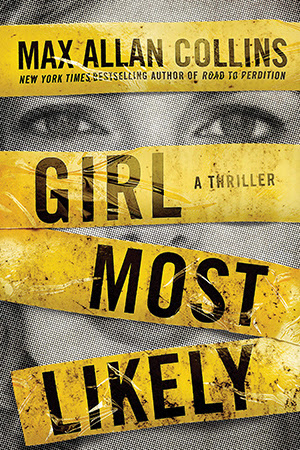
A High School Reunion and a Murder: Girl Most Likely by Max Allan Collins

Last week, I mentioned a new way to consume a story, via a Kindle ebook and its corresponding audiobook. The book in question was Girl Most Likely by Max Allan Collins. Well, I’ve finished the novel and here is the promised review.

The lead character is Krista Larson, a twenty-eight-year-old who serves as the police chief for Galena, Illinois, a small, Midwestern tourist town. This makes her simultaneously the youngest police chief in the country and the youngest female chief. As we’re told throughout the novel, her department consists only of a dozen people, herself included.

Her father, Keith, was also a cop, but one from a larger town across the river. They live together now in the wake of her mom’s passing. They have a good relationship, nothing like the oil-and-water relationships you see on TV or in other books.

Speaking of TV, Collins intentionally set out to write “an American variation of the [Kurt] Wallander novels, and such Nordic TV mini-series as The Bridge, the Killing, and (again) Wallander.” Being a fan of those programs myself, that was pretty much all it took for me to download the ebook and audiobook and start reading.

There’s a certain style of mystery—mostly thrillers, I guess—where there’s running on page one or a murder on page one and that sets the entire tale in motion. That’s here in this book, too, but via a fun writerly quirk: all the times the killer in on stage, Collins writes those scenes in second person, that is, from the killer’s point of view. It serves more the one purses. The obvious one is that you get a peek inside the killer’s mind, what drives the killer to kill. The other obvious thing is that Collins hides the identity of the killer. By the time a reader reaches the end of the novel and know who did, it’s fun to return to those chapters and see how the veteran writer spooled out the clues.

Other than the opening chapter, the bulk of the novel sets the stage via its characters and surrounding environment. It’s a day-to-day life of Krista and her friends as they prepare to attend their ten year high school reunion. We get nice portraits of the folks who never left small town life as well as those who return from bigger cities. As the title of the book indicates, there is one character—Astrid Lund—who is the girl most likely to succeed, and boy has she. Astrid (a nice nod to the Nordic) has blossomed into a stunner who works in TV broadcast news up in Chicago. She broke up more than one relationship back in high school and her presence at the reunion threatens those same people. Most everyone reacts to her in one way or another. She’s like the sun: her gravity either pushes or pulls all her classmates.

What I found particularly fun is how Collins weaves the characters in and out of the story in such a way that you almost wonder if you are merely reading a traditional drama rather than a murder mystery. You kind of have an idea of who is going to be killed, but you still wonder when it'll happen, but when it does, it's visceral. Three people end up dead in this story, so this small town police chief ends up having a triple murder investigation. She draws on her father’s experience as a homicide detective while keeping the investigation local and not calling in the state police.

As a writer, describing a character is always a challenge. How much do you give? How to you give it? Do you do it every time a character walks on stage? Collins does it nearly every time, but he usually dispatches the description in a sentence or two. Interestingly, he goes a step further and details their voice, usually in the form of a musical notation: his baritone, her soprano. Being a musician like Collins, I dug that and, frankly, it never even occurred to me to do that.

Like the BBC shows that inspired Collins to write this story, this is a full-on police procedural. Krista and her dad ask lots of questions and follow leads. You definitely have to be in a mood for this kind of story, and it’s where I have an issue with the sub-title: A thriller. I don’t consider this a thriller at all. Sure, there is the ending, but when I think thriller, I think lots of running and shooting and more running and reading so fast that you quickly start to turn the pages or increase the narration speed. Girl Most Likely moves forward in a determined manner where you know you’re being given some red herrings and try and decipher the clues before the characters.

I enjoyed Girl Most Likely quite a bit. It was exactly the type of story I wanted and it easily met my expectations. In fact, I liked it so much that I already downloaded both the ebook and audiobook of Girl Can’t Help It, the second novel featuring Krista Larson. And, since I enjoy reading “seasonally,” I was pleased to note Girl Can’t Help It takes place around Labor Day. I’ll give you zero guesses when I start the book.

Monday, August 8, 2022

A New Standard to Consume a Story?

Have y’all tried this?

Last month, veteran author Max Allan Collins offered a pair of books for $0.99 each, Girl Most Likely and Girl Can’t Help It. They feature Krista Larson, a twenty-eight-year-old woman who serves as police chief for a small Midwestern tourist town. Yes, this makes her the youngest such chief in the nation, but she’s able to draw on her father’s multi-decade career when a murder of a former classmate during a high school reunion lands in her jurisdiction.

In a blog entry, Collins discussed the two books, the inspiration behind the tales, and a peek into the business of writing. But what got me was that these two stories are his take on Nordic noir, “an American variation on the Wallander novels, and such Nordic TV mini-series as The Bridge, The Killing, and (again) Wallander.” Well, that’s pretty much all it took for me to head over to Amazon and drop a buck and buy the ebook.

But then I got a prompt: for an additional $1.98, I could purchase the audio version of Girl Most Likely. I’m already an Audible subscriber and I’m an avid user of my local public library and the audiobooks it has. I have read/listened to the same audiobook before, back in 2007 when I read all the Harry Potter books in a row. Back then, I found the paperbacks from used bookstores and checked out the audiobooks from the library. I’d listen during my daily commutes, flip pages in the book at night and read, and the next morning, fast-forward the audiobook to match where I stopped reading the night before.

But I was curious: I had never purchased an ebook and audiobook with the promise that everything would be synced. I gave it a go.

I started with the ebook and read a few pages on my Kindle Paperwhite. Then I clicked over to my Audible app. Hmmm, the book wasn’t there. That’s weird. Where was it?

So I checked the Kindle app on my iPhone and viola! There’s the audio. It’s toggled when you tap to bring up the table of contents. 

If you tap on the title at the bottom, the screen flips and you get a basic audiobook look and feel.


Probably the coolest thing is if you start the audio while still having the ebook on the screen, the app highlights text as the audio goes along.

Oh, and when I picked up my Paperwhite later that first day, I get a message: “Want to sync to where the audio stopped?” Yes. Boom!

This is a great way to consume a story. I could easily see this dual format become a preferred way some people to “read” books, although from a business perspective, I would image you’d get the ebook for a buck after you purchased the audiobook at full price.

A note about the audiobook: this is not some AI voice stumbling through onscreen text. This is the actual audio narration by Dan John Miller. It’s a win-win.

And the story itself? Well, I’ll review it when I’m done but I’m really digging it.

Monday, August 1, 2022

The Empty Nest Phase Begins

I experienced a momentous event last week: my son moved out of the house. 

On Wednesday, my twenty-year-old son into his first apartment to continue his education in audio engineering. He’s an only child and this is the only house in which he’s lived, so I know it’s a big deal for him. But it’s also a big deal for my wife and I.

Because of Covid, he stayed home after high school and got all his basic courses out of the way, so my wife and I got two bonus years, a fact we cherished. We got two extra years many parents don’t get. They came at a terrible, pandemic-induced cost, but we three got them nonetheless.

As New Year’s Day 2022 dawned, we three knew this was going to be The Year. We had to find him a new school to attend and we did. Thankfully, it’s across Houston…you know, so an hour of driving. But it’s only an hour. We drove home after meeting with his professors with the certainty that this was where he wanted to go to school.

But he didn’t want to commute across town every day. So that left the obvious alternative.

We knew Move Out Day was coming for months, but it was on some ambiguous date. Then suddenly the date crystalized and we prepared: movers hired, boxes packed, and last moments here at the house with him as a resident. One of the things he and I did was a nightly walk where we’d talk about music or the future or moving out or anything.

Move Out Day arrived and most of the day was filled with work: staying out of the movers’ way, unpacking boxes, setting up his stuff in his new place, a trip to the grocery store, and the first meal in his apartment.

The busyness of work was therapeutic, but it was not without emotions. Little by little, his stuff was unpacked and arranged. I broke down boxes and carried them to the car. But there there were little moments that shocked the tears right out of my eyes, like when I opened his box of clothes and his smell permeated my nose. He caught me then, actually, when I didn’t respond to something he said. I just shrugged, smiled, and kept hanging up his clothes.

Then my wife and I had to leave, and nothing prepares you for that moment…or the moment you come home to your house and see and feel his absence. The next day, Thursday, was the first day of the new phase of our lives: waking, working, eating, and living in our house without our son with us.

I know this new normal will become easier, that we’ll smile at a memory of his time here and not tear up, but these first days are all about the waves of emotions that are triggered at the slightest stray thought or vacant chair.

As parents, we intellectually know our children are bound for adulthood, for moving out and making their own mark on the world just like we did. But when that moment comes, it knocks your breath away. It’s incredible how emotions work, how you can simultaneously have your heart swell with pride that he is moving on but also have that very same heart contain an empty space because of his absence that’ll never truly be filled again.

So I wanted to share this moment with everyone because it is the one all-consuming thing of this week. Besides, since I’ve been writing these columns for thirteen years, I feel like we’ve come to know each other.

I’ve started reading about how parents deal with the empty nest. I know there are some readers who have already dealt with this transition and new phase of life so I’d love to learn about those experiences.

Monday, July 25, 2022

Extras for a Book?

I finally picked up a copy of Atomic Habits by James Clear this week. Well, my own copy, a hard back no less. I’ve been reading through it via my Kindle and my local library, but the book is in such a high demand, I only get 14 days to read it…and I’ve never finished. Now, I don’t have a countdown clock ticking and I’ll be able to finish the book.

Naturally for any new-to-me author, I check the website. JamesClear.com is laid out nicely, effortlessly guiding you through his introduction, the offer for his habit course, and a sampling of blogs and newsletters. You can sign up for his mailing list and get Chapter 1 for free. There’s a separate email list for a 30-day guide to building better habits.

In the footer, there is a link where you can see all the places you can buy the book and all the different formats and languages. What struck me was Step 2 of this process: Claim Your Free Bonuses. They don’t leave you in the dark as to your bonus content. You get a guide to how you can apply your atomic habits to business and parenting, a cheat sheet, a companion reading guide, and a habit tracker.

The only thing you had to do is buy the book and prove you bought the book. You do that via your purchase receipt.

I snapped a photo of the receipt on top of the book (to be doubly sure) and sent the photo to a unique email address. Within minutes, I received a confirmation email with links to the bonus content.

It was seamless and I felt I got more than I paid for when I bought the book at Target.

That got me to thinking about how to apply this concept of bonus material to fiction. I suspect there are a good number of authors who offer bonus content to readers, but up until now, I’ve only experienced it via Kickstarter.

The “How” of getting that bonus content is straightforward. I’ve done a version of it myself where I offered any reader on my mailing list a free copy of a book in exchange for an objective review. Done and done.

But what kind of content would a reader want from an author? Bookmarks? Shrug. Those are not always effective and you can’t spend $X.XX dollars to mail a bookmark to someone. Let me rephrase: what kind of digital content would a reader want from an author?

Some things jump to mind: A PDF of a particular chapter, an early draft all marked up with changes and edits. That would be interesting to see. Maybe a handful of chapters. What about research? Maybe a PDF of some research material an author used to write the book, especially if it’s an historical book. What about some peek into the internal process, like an early outline or a Beat Sheet a la Save the Cat.

As a reader, these would be interesting to see.

As a writer, would I want to divulge that kind of information? I don’t think I’d have an issue with it. The book’s done and published after all. But fellow writers, would you be willing to do something like that?

Monday, July 11, 2022

When Did Characters Become Meta?

When did characters in stories become self-aware of all the story tropes they are in and comment on those tropes during the story? In short, when did characters become meta?

I’m not quite sure how to pose this question so let me tell you how I got there.

In my SF book club this month, we discussed John Scalzi’s the Kaiju Preservation Society. It is a wonderful B-movie concept: there is an alternate earth where kaiju (i.e., giant creatures like Godzilla) developed and humans did not. The humans from our earth can travel between worlds and said humans study the kaiju and, well, preserve them.

The story takes place in early 2020 and is populated by a bunch of characters, most of whom are nerds. As such, they say and understand a ton of SF in-jokes, jokes that most of Scalzi’s readers will also get. Not a problem. It’s like writing for the choir.

But one of the book club guys made a point: at no time in the book did any of the characters have a Wow Moment, a sense of wonder moment reminiscent of that scene in Jurassic Park when the characters (and viewers) first see the dinosaurs. He went on to posit that basically up to the 1990s, many characters in movies (and books) seemed to exist outside of the present pop culture moment. That is, many characters didn’t have a handy shorthand list of references to speak about.

For example, in the Scalzi book, when something odd came up, all the characters in the book had to do was reference an existing movie moment and everyone (readers included) would know. (I did the same thing when I name dropped Godzilla a few paragraphs ago.) You could make the argument that Scalzi was not bothering to expound or explain something, but I actually don’t mind the shorthand at all.

We started commenting that many movies in at least the last decade+ are populated by characters like this and we tossed around the idea of when it started. Naturally, we arrived at the first Scream movie (1996) where all the characters knew all the tropes of horror movies and actually riffed on them and tried to overcome the killer by using those tropes. The movies of Kevin Smith are full of references like this, and some of the Marvel films reference Star Wars and other properties.

That got me to thinking about the mystery genre. Were there films, books, or TV shows that fit this type of story? The first thing that came to mind was the TV series “Only Murders in the Building.” I’ve not seen any of season 2, but season 1 had the characters basically do what Scream did for horror: narrate, in a meta way, the story they were in, commenting that in a normal true crime podcast cast, this is where a twist would occur…right before a twist in their own story happened. “Castle” had some of that mainly because the main character was a writer.

So, fellow mystery fans, I challenge y’all to help me out: what are some mystery stories of any medium where the characters basically comment on the story their in using tropes of the mystery genre?

Tuesday, July 5, 2022

Release Order is Best…Or Is it?

Over here in America, PBS just dropped the eighth season of Endeavour, the prequel series to Inspector Morse and its spin-off, Lewis. My wife and I have enjoyed this series quite a bit, especially the interactions between the two lead actors. Shaun Evans plays a young Endeavour Morse while Roger Allam plays his superior officer, Fred Thursday. Their chemistry is fantastic, really serving as the backbone of the entire show and cast. That the show is a period piece—1971 in this current season—just adds to my love of the show.

But we’ve never seen either of the original shows.

Which is completely fine. For whatever reason, we only arrived at these characters via this prequel a couple of years ago. But it wasn’t until this week that we both agreed that we’d like to circle back and give the original show a look.

I was the one who voiced what we were both thinking: which characters, if any, appeared in the original Morse show? It was actually in relation to the Fred Thursday character. I wondered if any of the 33 original shows ever had the older Morse visiting with an even more elderly Fred Thursday. A brief glance at the Wikipedia page for Endeavour likely proves the answer. No, Fred Thursday does not appear in the original program.

That’s too bad, but it gives me hope that with the upcoming ninth and final season, the writers will tidy everything up and explain why Thursday isn’t in the original series. There’s the obvious answer. Maybe that’s the arc of Morse’s character. In this current season, he’s drinking more and becoming more aloof, telltale signs that is probably how the older Morse acts in the original.

This got me to thinking about someone in my situation, coming into an existing universe of stories during a prequel. Most of the time, the creators have to invent some new characters and not just have younger versions of the older/original ones. Star Wars did that—a lot—and many of those prequel characters get their own spin-offs.

Star Wars is a special case, of course, but if anyone ever came up to me and asked me where to start, I’d say follow the release order of the films. In that way, there are Easter eggs and shades of what’s to come sprinkled throughout the prequels. I suspect there are more than a few Easter eggs in Endeavour that longtime fans of Morse and Lewis pick up on that we don’t. That’s just good fan service. I wonder if a Morse fan from the jump—the first season aired in 1987—would have told us to start there just like I how I would introduce Star Wars to someone.

Be that as it may, my wife and I finally arrived in the Morse Universe—that’s a thing, right?—and we’re glad we’re here, no matter the route we took.

Monday, June 27, 2022

All the Feels or All the Logic?

Why do you consume a story?

I use the word ‘consume’ because you could watch a movie or TV show, read a book, or listen to an audiobook or podcast.

My wife watches quite a bit of the true crime shows on TV and various streaming services. She likes to learn the intricate details of how the investigators discovered the culprit and, in most cases, land the perp in jail. She’s way more logical than I am and these shows give her a sense of order and justice. That drive for order is a large reason why she and I both enjoy BBC TV shows and other crime and mystery programs as well as books and movies.

But when it comes to established stories that have more than a twinge of nostalgia, I really enjoy the feels. How does the story make me feel?

I ran across this twice this week. The smaller version is my re-watch of the 1996 Mission: Impossible movie. My twenty-year-old son hadn’t seen it so we all watched it together. The way the movie is constructed—with its descriptions of how they’re going to break into various places and the spy stuff—is something I really dig. In fact, I found myself grinning like a goofball throughout the entire movie. Well, except for the vault sequence. Watching it again, I was in rapt silence.

By the end, I was buoyed by the story and ready to, I don’t know, hang by a wire from the ceiling. The story works, but the feels are fantastic.

The same is true for the Obi-Wan Kenobi finale this week. And spoilers are coming.

I’ve said it before but I think my favorite time of being a Star Wars fan is that initial era from 1977-1980. In those years, the galaxy was wide open and not some family drama. And I associate that feeling most with the first half of Star Wars, while the action centered on Tatooine. As such, I really enjoyed the Obi-Wan show.

From a logical point of view, the writers delicately threaded  this series through established canon and I think they did a great job. It’s a testament to how much I enjoyed the show that even though I knew who lived, I found myself constantly on the edge of my seat. Will young Leia survive? Will Obi-Wan be killed by Vader?

But the finale proved to be one of my favorite Star Wars things. We got an epic lightsaber battle between Obi-Wan and Vader, complete with Hayden Christensen looking out from a seared-open Vader mask. We go a neat and tidy button on Obi-Wan’s infamous phrase to Luke: Vader betrayed and murdered your father.

And we got some fantastic character moments, a feat especially impressive considering the action. In fact, it was the character beats in the final ten minutes that really struck me and brought the tears. Oh, and the inclusion of Princess Leia’s theme from Star Wars? Icing on the cake. That piece of music ranks as one of my all-time favorite themes in the entire franchise and it was used so well.

That last shot? [won’t spoil this one] Perfection.

So, with Obi-Wan, in my mind, I got the logic of the storytelling but I also got the feels. That’s what often sends a story over the top for me. It’s why I enjoyed Jurassic World: Dominion so much. It’s why I dig La La Land, Toy Story 3, any random episode of New Amsterdam, and John Scalzi’s book, Redshirts.

I want the feels, and any story that delivers is a winner in my book.

How about you? Do you want the feels or is logic more your speed?

by
Scott D. Parker

Why do you consume a story?

I use the word ‘consume’ because you could watch a movie or TV show, read a book, or listen to an audiobook or podcast.

My wife watches quite a bit of the true crime shows on TV and various streaming services. She likes to learn the intricate details of how the investigators discovered the culprit and, in most cases, land the perp in jail. She’s way more logical than I am and these shows give her a sense of order and justice. That drive for order is a large reason why she and I both enjoy BBC TV shows and other crime and mystery programs as well as books and movies.

But when it comes to established stories that have more than a twinge of nostalgia, I really enjoy the feels. How does the story make me feel?

I ran across this twice this week. The smaller version is my re-watch of the 1996 Mission: Impossible movie. My twenty-year-old son hadn’t seen it so we all watched it together. The way the movie is constructed—with its descriptions of how they’re going to break into various places and the spy stuff—is something I really dig. In fact, I found myself grinning like a goofball throughout the entire movie. Well, except for the vault sequence. Watching it again, I was in rapt silence.

By the end, I was buoyed by the story and ready to, I don’t know, hang by a wire from the ceiling. The story works, but the feels are fantastic.

The same is true for the Obi-Wan Kenobi finale this week. And spoilers are coming.

I’ve said it before but I think my favorite time of being a Star Wars fan is that initial era from 1977-1980. In those years, the galaxy was wide open and not some family drama. And I associate that feeling most with the first half of Star Wars, while the action centered on Tatooine. As such, I really enjoyed the Obi-Wan show.

From a logical point of view, the writers delicately threaded  this series through established canon and I think they did a great job. It’s a testament to how much I enjoyed the show that even though I knew who lived, I found myself constantly on the edge of my seat. Will young Leia survive? Will Obi-Wan be killed by Vader?

But the finale proved to be one of my favorite Star Wars things. We got an epic lightsaber battle between Obi-Wan and Vader, complete with Hayden Christensen looking out from a seared-open Vader mask. We go a neat and tidy button on Obi-Wan’s infamous phrase to Luke: Vader betrayed and murdered your father.

And we got some fantastic character moments, a feat especially impressive considering the action. In fact, it was the character beats in the final ten minutes that really struck me and brought the tears. Oh, and the inclusion of Princess Leia’s theme from Star Wars? Icing on the cake. That piece of music ranks as one of my all-time favorite themes in the entire franchise and it was used so well.

That last shot? [won’t spoil this one] Perfection.

So, with Obi-Wan, in my mind, I got the logic of the storytelling but I also got the feels. That’s what often sends a story over the top for me. It’s why I enjoyed Jurassic World: Dominion so much. It’s why I dig La La Land, Toy Story 3, any random episode of New Amsterdam, and John Scalzi’s book, Redshirts.

I want the feels, and any story that delivers is a winner in my book.

How about you? Do you want the feels or is logic more your speed?

P.S. I wrote this piece late afternoon on Friday. Later that day, I watched the new Baz Luhrmann "Elvis" movie. Add one more to the feels list. Except this one was tragic. My wife and I just sat there for a few minutes while the main credits rolled. We both had teared up at the end. So we just sat and listened and thought about the creative spirit of Elvis Presley. 

I don't know about you, but when I take in a story in which a creative person is tamped down or abused or taken advantage of, I feel my own creative spirit wanting to burst out and soar.