Showing posts with label Nostalgia. Show all posts

Monday, February 20, 2023

Springsteen, Showing Your Age, and Knowing Your Truth

“I’m getting a certain vibe here,” my twenty-one-year-old son said as I drove my car on the streets leading to Houston’s Toyota Center. With less than thirty minutes before showtime, the traffic crawled and the sidewalks were jammed with people heading to the arena to see the 2023 version of Bruce Springsteen and the E Street Band.

Yes, there was a vibe. Lots of middle-aged people, many with all-gray hair and loose, baggy clothes worn to hide bodies no longer as thin as fit as they were when The Boss ruled the airwaves in the Seventies and Eighties. Some wore concert t-shirts from ages past while others sported more modern Springsteen attire. A decent number of the concert goers were like me: attending the show with a younger person, hoping to introduce what it was like to see Springsteen the Showman fill an arena with sound and lead the fans in singing his songs. I chuckled as my son and I made our way to our seats. So many people my age and older crowded the hallways. Not like when he and I saw the band Ghost in early 2022. Then, I was in the age minority.

But there was a moment before the lights dimmed and the music started when I looked around at the people who sat near us and lots of the people we had seen coming into Toyota Center: they were old, or at least they looked old. But if they were old, that meant I was old, too. Right? I’m not one who takes my age into account on any given day. Looking out of my eyes, I’m like a perpetual twentysomething person. Looking in the mirror, I see the truth. Looking at all these older Springsteen fans, I see their truths.

And when Bruce himself got on stage and started the evening with “Night,” his face was broadcast on four screens hung over the stage. We had decent seats, but it was nice to have the professional camera folks giving us close ups of the Boss and the members of the E Street Band. When the camera often zoomed in on Springsteen’s face, you could see his truth as well.

The man is seventy three. Yes, he’s aged well. I hope I look as good as he does when I’m that age. Yes he has access to medical and dietary resources that help him age gracefully, but you can still see the age on his face, his eyelids, and the wrinkles around his face. You can tell that he’s not as animated as he used to be when he ran across stages, sliding on his knees, and leaping into the crowds.

But he was still thrilling, and he still put on a helluva show.

And yet I never expected to tear up at a Springsteen show. Well, I should have expected it, but when it happened, it actually moved me.

Every rock star I discovered in my youth, teens, and twenties have aged right along with me. Of course they have, you say. We’re all human. Yes, we are, but when you spin a record that came out in 1992 or 1982 or whenever, your mind can time travel back to that year and you can remember how you felt hearing those songs. In those moments, you can be that age again, even if you’re driving an SUV and taking your kids to band practice.

We got that sense of time travel on Tuesday evening with Bruce. So many of those songs are all time travel songs. That’s what they’ve become. Some songs never get old. “Born to Run”, sung at full volume with the house light up, everyone punching the air with upraised arms, will never, ever get old. But twice on Tuesday, mortality and truth entered the room and reminded us that time never stops.

In a long, spoken introduction to “Last Man Standing,” Bruce told us about he was the last person who was still alive from his first band, The Castilles. It was in this story that Bruce uttered a particularly great quote: “Death’s great gift is expanded vision.” None of us knows how many days we have, so it is necessary to make sure the lives we live are the best possible version.

The final song was just the two of us. By that I mean it was Bruce, on stage with an acoustic guitar and a harmonica, singing to everyone but, in reality, he was singing to each and every one of us like it was just him and us in a room together. “I’ll See You In My Dreams” is a song about mortality and aging and loss. But it’s also an inspirational ode, especially with the line “For death is not the end and I’ll see you in my dreams.”

On the record, it’s the last track and the last time he says those words, he talking, to us, individually and collectively. On stage, the same vibe could be felt throughout the arena as the crowd was mostly silent, listening to Bruce Springsteen tell us that he’ll see us—his fans, his friends—in his dreams. The implication is that when he finally calls it a day and stops touring, he’ll have dreams about the fifty-plus years he’s experienced life on stage.

And we’ll have memories of concerts like this as well.

When I listened to that song on the record back in 2020, I wondered if those last few words would be the last time I’d ever hear a new Bruce Springsteen song. I should have realized that his restless spirit will always create new material even if he doesn’t tour it.

When I listened to that song live in 2023, I wondered if that would be the last time I ever heard Springsteen in person. Maybe. Maybe not. But if it was, what a way to say goodbye, not with a loud, bombastic anthem, but a quiet, gentle song about aging and mortality yet filled with hope, joy, energy, and the truth that shows like this will last a lifetime.

Monday, November 28, 2022

When a Movie Stays the Same But You’ve Changed

For six years now, my family of three have watched “Planes, Trains and Automobiles” the night before Thanksgiving. And yeah, it is still a funny and heartfelt as it as always been. Heck, minutes before any given scene or line of dialogue shows up on screen, I’ll find myself laughing at it. Case in point: when that pickup truck driver arrives to drive Steve Martin and John Candy to the train station.

The other movie tradition is “Home for the Holidays,” the 1995 film directed by Jodie Foster. Holly Hunter stars as Claudia, a forty-year-old single mom who travels from Chicago back home to Baltimore for Thanksgiving. She’s just lost her job, her sixteen-year-old daughter matter-of-factory announced that she’s planning on sleeping with her boyfriend at her boyfriend’s family house, and she’s just counting the hours until she can get back on the plane and fly home. In between, she has to survive being with her empty nest, retired parents (Anne Bancroft and Charles Durning), her straight-laced, bitter older sister (Cynthia Stevenson), and her hyper, over-the-top, gay younger brother (Robert Downey, Jr.). Tagging along with her brother is Leo (Dylan McDermott) who Claudia assumes is with her brother but is actually there to meet her.

The family is dysfunctional and the first time I saw it, that dysfunctionality bothered me. You see, I’m not from that kind of family. I’m an only child of only child parents so growing up, if all the grandparents showed up, there was only seven people in the room. But even when I think about my extended family, I can’t think of any member who doesn’t get along with everyone else.

As the years have gone on and I’ve watched some truly wonderful acting, many of the film’s little moments stand out. It could be an off-hand remark Claudia says to her brother or Downey Jr.’s eyebrow raised to say more than words could say or Durning’s chance answering of the phone and hearing his son’s husband on the other end of the line and this straight-laced, old fashioned man summon up the words to congratulate him while softly touching his son’s face.

But on Thursday night, another scene just walloped me and I should have saw it coming. Late in the movie, on the morning after Thanksgiving when Claudia has to fly home, she walks down to the basement. There she finds her dad, sitting alone, watching his home movies. There, flickering on the white screen, are the images of his past, his children as kids, and he and his wife as they used to be. The film is made to look like it was shot in the Sixties, with slightly overexposed colors.

Her dad, having just experienced the latest in a probably long line of difficult Thanksgiving dinners with his adult children and their families, starts to give his daughter life advice. He recounts a day that he considers one of his best memories. It took place back in 1969 when his family watched as a 727 took off and he and Claudia watched with eyes wide open. They were fearless and that’s his advice to his adult daughter: be fearless and go after Leo.

The subtext of that scene is bookended by the home movies and the last words he says that ends the scene: “I wish I had it [that 727 moment] on tape.” Durning is a retired empty nester whose family has grown up, moved away, and changed. He can’t get back what he had, so he’s comforted with memories and home movies.

Last year when my family of three watched this movie, my son still lived with us. This year, he returned home from his own apartment to stay with us these few days. My wife and I are empty nesters now, and while that scene of this wonderful movie has not changed, we have. We all three have. Life always moves on.

So cherish each and every moment of your life for it won’t ever happen again. And take as many pictures and videos as possible to help you remember. Because one day, we’re all going to find ourselves watching home movies or flipping through a photo album (physical or digital) and remembering our favorite moments of life.

And always be fearless.

Thursday, March 31, 2022

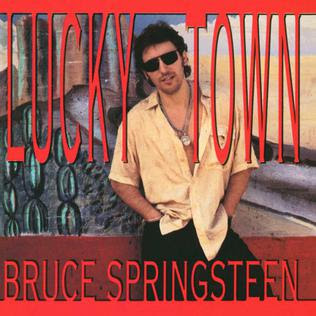
The Specialness of Firsts: Human Touch and Lucky Town at 30

You never forget your firsts. First day of school, first kiss, first breakup, first job, first child. You also never forget the first time you bought a new album by a new-to-you musician. Human Touch and Lucky Town are those albums for me, and it was when I officially joined the ranks of Bruce Springsteen's fans.

Background


In 1984, at the height of the Born in the USA frenzy, I flat out didn't like Springsteen. That was the only album I knew of him, and then, only the radio songs. But those tunes were everywhere, yet I hadn't figured out Bruce, who he was or what he was trying to say. Dancing in the Dark was okay, but that title track, with the bizarre decision to overlay the studio song on the music video from his live performances (thus, making them out of sync), was a song I enjoyed hating and mocking. Yet I never bothered to read the lyrics.

Cut to 1987 when I discovered Stephen King, starting with Pet Semetary. This was the spring, my senior year in high school, and college life beckoned. Many times, King quoted Springsteen's lyrics. Seeing the words in text without Bruce's singing, I took a new interest in them. Not the music, mind you, but the lyrics.

When Bruce's 1987 album Tunnel of Love came out, lead single "Brilliant Disguise" turned out to be...not bad. In fact, I kind of liked it. Then, a friend gave me a cassette copy of that album (it was one of those 12-albums-for-a-penny things from Columbia House). I listened, and I liked. With open eyes and a more mature sense of music, I circled back to Born in the USA.

Whoa. This is actually pretty good, lyrics and music combined. Sure, Born in the USA was still a fun song to mock, but I slowly worked my way through the back catalog, mostly in reverse order. I quite liked The River, especially the live version with that extended introductory story Bruce relates on the box set. Took some time to get used to Nebraska, and I think I stopped at Born to Run, letting those first two Springsteen albums be that last old ones I discovered. And just like that, I was a Springsteen fan.

The Spring of 1992


It took me five years to get through college (by choice; double major) so by the spring of 1992, my eyes were focused on grad school, ideally at a university in close proximity to where my then-girlfriend would be attending medical school. I had already dipped my toe in the wonder of all those non-album tracks. I stumbled onto his song from the We Are the World album because I had already bought it for the non-album song by Chicago. My one and only time I ever called a radio station and asked about a song was when KLBJ, the local rock station in Austin, Texas, played "Roulette" and I simply had to know the song title and then go buy the CD single of the then-current song "One Step Up" to get it.

When you're graduating from college, one phase of your life is ending. Granted, I'd spend the next six years in grad school but I didn't know that in the spring of 1992. I was growing up. I was in my early twenties. My entire life was before me and I was ready for it.

Turned out, Springsteen himself was entering a new phase of his life as well. After the much-publicized marriage and divorce to Julianne Phillips, Bruce had fallen in love with Patti Scailfa, a singer in his band. I barely knew about this having never seen him live at that point and, well, no internet. Be that as it may, his new love and new status as a father permeated all the new songs he wrote during the time after Tunnel of Love. Finally, when the news broke that there was going to be new Springsteen music released, imagine my overwhelming joy to learn there would be not one album, but two.

The Albums


Two albums of material. Twenty-four songs: fourteen on Human Touch and ten on Lucky Town. On that bright spring morning thirty years ago, I woke, drove to the record store, bought the CDs, and quickly returned to my apartment. I saw in front of the stereo and just listened.


The cool sounds of Human Touch washed over me. Frankly, the title track sounded like he had not missed a beat from the sonic tapestry of Tunnel of Love. The second track, "Soul Driver," seemed to be a kindred spirit from "Cover Me." "57 Channels" was interesting, to be sure, and has reached ironic status in the age of multiple streaming channels here in 2022. "With Every Wish," with it's muted, soaring trumpet, and evocative, storytelling lyrics, has always been a favorite, and the theme of the song-With every wish, there comes a curse-is always good to keep in mind. "Roll of the Dice" and its glockenspiel is the first old-school Springsteen song of the entire record. And "I Wish I Were Blind" is a gorgeous ballad tinged with the anguish we all feel when we see an ex with someone else. If Springsteen ever records an album with an orchestra, I hope this one is in the setlist.

Human Touch is not without its weak songs. I rarely listen to album closer "Pony Boy." While "Real Man" may not be his best song, the pure joy in his words and voice is palpable. I appreciated it at the time, and very much appreciate it now.

If you assume that "Born to Run" is the best song Springsteen ever wrote, then Lucky Town opens with what has become my favorite song: "Better Days." Its exuberant optimism in where he finds himself is tempered only by the scars it took to get there. This song is one I have never forgotten, and turned to its lyrics over the years as my own life has gone through its ups and downs. In fact, verse 3 contains some of my favorite poetry Springsteen has ever penned, especially that last couplet.

Now a life of leisure and a pirate's treasure
Don't make much for tragedy
But it's a sad man, my friend, who's livin' in his own skin
And can't stand the company
Every fool's got a reason for feelin' sorry for himself
And turning his heart to stone
Tonight this fool's halfway to heaven and just a mile outta hell
And I feel like I'm comin' home

The words of "If I Should Fall Behind" resonate constantly, especially in the shows from this century when all band members take a turn at singing various lines. "Leap of Faith" is a great song anyone pondering big life decisions when dealing with a potential spouse and those wondering thoughts of whether or not you're making the right decision ring in your head. Ditto for parenthood in the lyrics of "Living Proof" and the realization that so many of the things that hold us back are self-inflicted.

You do some sad sad things, baby
When it's you you're tryin' to lose
You do some sad and hurtful things
I've seen living proof

But he returns in the very next verse to show a way out:

You shot through my anger and rage
To show me my prison was just an open cage
There were no keys, no guards
Just one frightened man and some old shadows for bars

What also runs through both of these albums is the redemptive power of love and music. I'm no deep Springsteen scholar but I think it's with these two albums that the spiritual language Springsteen now uses to great effect started. "The Rising" carries it forward (that's my third favorite song of his) and it keeps going through the Pete Seeger album, Western Stars, and Letter to You.

What the Albums and Era Mean to Me


I listened to those albums constantly back in 1992 and the years after. While I was driving by myself on the highways of central Texas, visiting potential schools to start my graduate studies in history, it was these twenty-four songs I blasted from my car, windows down, hair blowing in the wind. These songs had me constantly looking to a bright future, but they also foretold the inevitable: life is never straight with zero potholes. It is a jagged road, with the highest of highs and the lowest of lows. It is fraught with everything you might imagine-and some you couldn't.

In the past thirty years, these albums have fallen out of favor by Springsteen fans and Springsteen himself. Famously, he lamented that when he tried to write happy songs, it didn't go over well, which always struck me as odd. Don't we want our musical heroes to be happy and write songs in that vein? In fact, "Happy," a song from the Lucky Town sessions that didn't make the album, has also become one of my favorites, even making its way onto the playlist of songs at my wedding reception.

But Human Touch and Lucky Town have never lost their luster with me. I'll admit that had Springsteen whittled down the twenty-four songs to a single, albeit long, album, the result might've been stronger. But I didn't care then and, frankly, don't really care now. I gravitate to Lucky Town a tad more, but I always bring in more than half of Human Touch's songs into various playlists over the years.

It's not lost on me the place Human Touch and Lucky Town have in my Springsteen fandom. I'm the oddball. When I witnessed my first Springsteen show in December 1992 in Dallas with a couple of fellow grad students, they told tall tales about the 1984 and 1987 concerts. All those stories sounded great-and I've since discovered them and have come to enjoy those shows-but the Human Touch/Lucky Town Era is special. It's where I officially joined the entourage of Bruce's loyal fanbase. I've stayed with him ever since.

Sure, there are albums I rarely listen to-The Ghost of Tom Joad and Devils and Dust-but I bought them on day one and spun them. I was ecstatic when 1998's Tracks came out and I had four new-to-me Springsteen albums to hear. And I finally got what it was like to have the E Street Band backing him with all the hoopla surrounding The Rising when Bruce was everywhere on TV. We got the sublime Western Stars and the poignant Letter to You and, with Springsteen, you know there will likely be a new album, maybe even this year.

But on the thirtieth anniversary of Human Touch and Lucky Town, I think back to the young man I used to be, hearing these songs for the first time, and the middle-aged man I am today, when these songs have embedded themselves in the fabric of my being. Both versions of myself love and appreciate these two albums, but for different reasons. The younger me found himself inundated with joyous songs of love and redemption, with his life unfolding before him, little knowing it was about to change. The middle-aged me, the me who is about a decade older than Springsteen was when he wrote these songs, the me who is a father and husband, feels these songs differently. He's lived them, through thick and thin, and come out okay.

With lifespans being what they are, I'm more than halfway to heaven. But the music of Bruce Springsteen, and specifically Human Touch and Lucky Town, have been with me for thirty years now, and I'm so thankful for their companionship.

Saturday, January 15, 2022

YouTube and Old Music: Where Memories and People Meet

Do you ever get lost reading YouTube comments? No, not those. I don’t read those either. I’m talking about the other ones. The good ones. [And yeah, there is a book-related comment at the end.]

There is a fantastic YouTube channel if you enjoy old music. I’m talking stuff from the 1940s-1960s. It is curated by Jake Westbrook (that’s the name of the channel as well) and he collects songs for different moods. Last fall, I discovered him and listened not only to the “Vintage Autumn Music” but thoroughly enjoyed his Halloween playlists. One of the best, interestingly, was his Thanksgiving playlists. He’s got ones for Route 66, summer, and many others.

What I particularly enjoy is reading the comments. If you need a dose of goodness, check these out. More often than not, the commenters praise Jake for the curation, but more importantly, they praise the music. Some are from younger people who never lived when this music was on the radio or TV. They marvel at how good the music remains and lamenting modern music.

A particularly nice sub-set of these comments are from folks who have lost parents or grandparents or other family members. The commenter usually relates a memory this music evokes. One really got to me. It was of a grandchild who played these vintage songs as the grandparent was bedridden. The music calmed the older person, letting them get lost in their memories as they passed from this life into the next.

Cut to more modern music. I’m a huge fan of Frontiers Music. This is a great record label that releases new music by new artist who still like melodic rock as well as older artists who no longer have a home in the big music companies. Think Enuff Z’Nuff or LA Guns. Their hashtag is their motto: #RockAintDead.

Anyway, yesterday, the weekly email featured videos of new releases and one of them was for The Alan Parsons Project’s (with a full symphony) song “Don’t Answer Me.” I LOVED that song as a teenager. It was prompted me to buy the album.

Yet, I hadn’t heard it in a long, long time. Naturally, I clicked on the link and heard a newer rendition with the Israel Philharmonic Orchestra. Oh my was it gorgeous. But that prompted me to return to the original and it’s fantastic pulp-style video.

But it was in the comments associated with the original 1983 version that I again got lost in. Unlike Jake Westbrook’s playlists, I was among the generation who experienced this song when it was new. Now, so many of the comments relate to “I’m 21 and I just found this song and it’s so good” kind of vibe. Or, as you can imagine, ones in which younger people discovered the song in the mom’s stack of CDs or their dad recently passed away and this is the song that helps the commenter remember a recently deceased parent. I went down an Alan Parsons Project rabbit hole, but I also experienced the memories of all the commenters. It was a wonderful trip.

But then I got to thinking about books. While there is certainly not a YouTube for books, where is a site for comments like this? Where is the site where grandchildren can talk about how they read their grandfather’s favorite book as he lay on his deathbed and the grandchild realized how good an old book was?

That is a site I’d love to visit.

Monday, September 27, 2021

Chicago 18 at 35

For any fan, there is always the first, that one special album, and Chicago 18 is the one for me.


My Journey to Chicago 18


I was introduced to Chicago by my friend, Chris, in the summer of 1985 when he loaned me a cassette copy of Chicago IX with the memorable phrase “You'll probably know half the songs and like the rest.” Well, I knew none of the tunes, but fell in love with the band on first listen.


What came next was obvious: I started collecting Chicago albums. Chicago 17 was the obvious next choice as it was ending its year-long run on the charts. Chicago 16, featuring its famous ballads, soon followed as did Chicago II. It was with that latter, 1970-era album that I discovered why the new album was named “17” and learned the band had quite a number of styles to its name.


But this was 1985. I was smack dab in the middle of high school and I didn't get all the political stuff featured on those early albums. I loved the music. Well, most of it. At the time, I didn't take too kindly to songs like “Free Form Guitar” or “Liberation” by this guy, Terry Kath, who was no longer in the band. In fact, without the internet, I can't even remember how I learned his fate, but I knew the fate of Peter Cetera, the seeming front man for this new band I loved.


He was leaving Chicago.


What the heck? I had just joined Chicago's fandom and the lead guy's leaving? What would that mean for the future of the band? Would there even be a next album, presumably titled “18”? Without social media or the internet, my high school band group, all of whom loved Chicago, would just have to wait.


The New Single (which was an old song)


Flash forward to August 1986. My love of Chicago had done nothing but grown. I can't remember all the albums I owned by that point, but by scouring used record stores, I had expanded to include III. I even put the poster on my wall, the one of the band sitting in the military cemetery.


I had purchased the single (either the actual 45 or the cassette version) of “25 or 6 to 4,” a remake of a classic tune. During a break from summer band rehearsal, Chris, our friend Richard, and I piled into my 1973 Dodge Dart and I slipped in the song to the cassette deck. Out came the first new Chicago song for any of us since 1984 (Chris already had Chicago 17 and none of us had yet purchased the We are the World album with “Good for Nothing” on it). More importantly for me, this was the very first new song I had heard by this new-to-me band.


I remember us digging the tune quite a bit, but there was still a slight hesitancy. As horn players ourselves, we wondered if the famous Chicago horns would be featured more like the old days or relegated to the background like on the two most recent records. Well, all we had to do was play the flip side. “One More Day” blared through the speakers and, almost as one, we three shouted “Now that's Chicago!”


Buying That First New Chicago Album


Wikipedia tells me that the official release date for Chicago 18 is 29 September 1986 (a Monday), but I can assure you I bought it on a bright and sunny Saturday, 27 September. How can I remember it so clearly? Well, life events seared this date and this album into my own personal memory.


By 1986, I had gone something like three years with weekend trips across Houston to visit my grandpa, have breakfast with him, mow his lawn, have some lunch, and have him overpay me for my efforts. Isn't that what grandparents are supposed to do? After lunch, I headed over to the Sound Warehouse near his house and there it was, Chicago 18, on cassette.


Now, my fifty-two-year-old brain is trying to sift through memories. I own the 1986-era CD version but I no longer own the cassette. I’m pretty sure I bought the cassette that September day thirty-five years ago, so we’ll just go with that. But later, when I bought the CD that came in the longbox, I cut up the cardboard and used it to decorate my room and, later, dorm room walls.


The Music


With only two songs on the initial single, that meant I had eight brand-new songs to hear. I had pretty much internalized both the new “25 or 6 to 4” and “One More Day” by 27 September so I had an inkling of what to expect. Right out of the gate, the new guy gets to shine.


“Niagara Falls” opens the album with that triplet rhythm. The sound is soaked in Peak 80s synth, something I loved at the time. Probably at the behest of producer David Foster, Jason Scheff sounded more like Peter Cetera than he, Scheff, probably wanted to, but that was the gig in 1986. Danny Serephine’s drums are also largely programmed as was many of the percussion in the mid-80s. Complimenting Scheff’s initial vocal is veteran Bill Champlin, then on his third Chicago album.


In light of my commentary on the sequencing of Chicago XIV, it’s interesting on listening to Chicago 18 all the way through for the first time in a long time that Champlin doesn’t have a lead vocal until track 7, and then only two on the entire album. But by 1986, all the main hits Chicago had in that decade featured the high tenor of Cetera, with “Hard Habit To Break” being the only exception, so it makes sense. It also points to the next album where Champlin would finally get the spotlight on him.


“Forever” is Robert Lamm’s first song of the album. Much like nearly every Lamm-penned tune over the band’s fifty-four-year history, Lamm’s soaring vocals are always complimented by the Chicago horns. It also features not only the first extended horn break of the album, but a fantastic tenor sax solo by Walt Paraziader.


“If She Would Have Been Faithful” comes in a track 3, the usual first single spot for many an 80s album. A power ballad the likes of which Foster and Chicago are renown for, Scheff and Champlin shine on their vocal delivery. The guitar work—especially that short solo before the bridge—is stellar, the horns, and the overall orchestral vibe make this a standout. I always loved that little stinger towards the end before they start repeating the chorus, and Scheff’s high vocals on “missed out on you” are great,” but one of the best things on Chicago 18 is how this song ends and the next begins.


With no silence between tracks, “25 or 6 to 4” begins on the downbeat right after the last note from “If She Would Have Been Faithful” concludes. I enjoy this reimagining of the then sixteen-year-old song. The brass additions are fun, but that metal-like guitar solo is fantastic.


When it comes to arranged songs by Chicago, “Will You Still Love Me?” is arguably one of the best. There is an ethereal quality to Scheff’s vocals that would work well had this song been played by an orchestra. Champlin again compliments with his deeper baritone. One of my favorite ballads the band has ever done.


Lamm opens Side 2 with “Over and Over,” another song with Lamm singing long, lofty notes over the rhythm. Again, Champlin serves as a sideman here, throwing his vocals judiciously, making this one of two (?) songs—“Only You” being the other—where Champlin and Lamm co-sing.


Finally, with “It’s Alright,” Champlin gets to sing lead. It’s a fun song with a group chorus that is primed and ready for in-concert audience sing-a-long.


Horn players James Pankow (trombone), Lee Loughnane (trumpet), and Parazaider probably became irritated as they were sidelined in the 1980s in favor of the hornless or horn-lite songs, so they threw on “Free Flight,” as a short interlude to remind listeners about the thing that make Chicago unique on the rock landscape. Yet it leads directly into another ballad, the first Scheff-penned song for the band. “Nothing’s Gonna Stop Us Now” is a good tune that features the horns, Scheff’s excellent bass playing on the upper frets, all coated in that Foster-mandated synth gloss.


Speaking of 80s-era synth sounds, “I Believe” is drenched with it. Champin’s second lead vocal also serves as the first true duet with Scheff. Taking nothing away from the Cetera/Champlin or Cetera/Kath, but the vocals of Champlin/Scheff seem to meld together a bit more seamlessly. Now, one might argue that this similarity lends itself to a listener wondering when one guy stops singing and the other guy starts (see “Bethlehem” from the second Christmas album), but I have always enjoyed how well these two vocalists sing together.


Speaking of singing together, Chicago 18 boasts one of the few triple-vocals in the entire discography. “One More Day” not only has Lamm, Champlin, and Scheff trading off singing, but it’s got a great horn break. It also brings back some of that social consciousness so prominent in the early days. Just like that afternoon in August 1986 when my friends and I heard this tune for the first time, this is classic Chicago circa 1986.


It took years for me to learn this, but there was one more song recorded for Chicago 18 but never released. In fact, I heard it first on Lamm’s 1995 solo album Life is Good in My Neighborhood. “When Will the World Be Like Lovers?” is another triple-vocal tune, co-written by Lamm, with lyrics lamenting the state of the world. A kick-ass short guitar solo leads to an outro laced with horns and a lyric callback to the song “Beginnings”. I loved this tune as soon as I heard it and wished it would have landed on the official album. Back then, however, when you had three formats available, the LP still dictated how long an album could be. Not sure there was space enough for an eleventh song or if Foster thought this song was too similar to “One More Day,” but WWTWBLL went unreleased. You can find it online.


The Verdict and What Chicago 18 Means to Me


As the years have passed, my infatuation with the sound of music from the 1980s has waned. I’m talking the synth-fueled pop tunes of that decade versus the hair metal or heavier songs. I don’t dislike those kinds of songs, but I also never seek them out either. Over time, my favorite Chicago album of the 1980s has become Chicago 19, largely because the band had parted from David Foster and his style and sound of producing. It gave the guys in the band, especially Scheff, space to breathe and try something a bit different, and that difference mattered to me. Sure there are ballads on 19, but they just sound a bit edgier than those from 16-18. The horns are higher in the mix on 19, and Champlin simply shines. That album also features my favorite 80s-era song, “You’re Not Alone,” a hornless rocker the irony of which is not lost on me.


Chicago 18 has fallen out of my Top 10 favorite Chicago albums. Even in 1986, I still had new albums to discover in their back catalog. I honestly can’t remember the last album from the older discography I finally bought, but I think it was either XI or XIV. As you can imagine (or even remember in your own journey of discovery of Chicago), with each new/old album you hear, it jockeys for position in the Top 10. Eventually, I enjoyed more albums to a greater degree than Chicago 18 and it never recovered. The truth of that fact is that, in preparing for this piece, I listened to the album all the way through for the first time in forever.


But I still love a core set of tunes from Chicago 18 and I have eight of the eleven (I include WWTWBLL on my iTunes) songs on my phone’s playlist (NF, NGSUN, and IB don’t make the cut). Side 1 is all but perfect. Heck, every album from 16-19 has a great Side 1. Just imagine if those four sides were packaged as a double album.


Circling back to my personal history with Chicago 18, you might remember that I know for certain I bought this album thirty-five years ago today. Not sure how Sound Warehouse put the album out early (if Wikipedia is to be trusted) but they did.


September 27 is my mom’s birthday and it’s always good to remember your mom’s birthday. But that September weekend in 1986 was also homecoming. My first girlfriend and I had been dating well over a year by that point. As a senior, it was my last homecoming game as a student. I had my eyes set on attending the University of Texas at Austin and joining the Longhorn Band (done and done) and becoming a lawyer (not done, much to my happiness). How awesome was it to have homecoming, Saturday morning with your grandpa, your mom’s birthday, and the new Chicago album all released on the same weekend?


Well, it was great, until Sunday morning. That was when my girlfriend’s mom informed her the family was moving from Houston to Pittsburgh in a week. Thankfully, the mom had kept that news from her daughter and me so that homecoming could be celebrated without that dark cloud hanging over everything. But after the news broke and our hearts were ripped out of our chests, songs like “Forever” and “Will You Still Love Me” took on a greater meaning.


I can listen to these tunes now and not think about that time. Thirty-five years of additional life memories will do that for you. But it also marks the double-edged significance this album holds for me. In fact, in a recent 2021 interview, I experienced something similar. Trombonist James Pankow dropped the news that the band used the pandemic lockdown to get in the studio and record new songs for a brand-new Chicago album. The elation that erupted through me—complete with a yell of triumph heard throughout the house—instantly grew somber as he went on in the next sentence to state that’ll it likely be the band’s last album. It’s understandable for a band that’s nearly fifty-five years old featuring founding members in their seventies, but the news still stings.


Yet the music of Chicago 38 will live on, just as the music of Chicago 18 has lived on these past thirty-five years. Happy birthday mom, and happy anniversary to my first-ever new Chicago album.

Monday, July 26, 2021

I Finally Watched Masters of the Universe: Revelation

By the power of geekdom, how can folks not like Masters of the Universe: Revelation? I'm not sure, because it is an epic, summer blockbuster movie in five episodes with one massive cliffhanger.

My (Lack of) Background with MOTU

I have none. Zero. While showrunner, Kevin Smith, and I are both from Generation X, I'm two years older than he is. As such, back in 1983 when the original cartoon debuted, I had just aged out of the target audience for He-Man and his toy line. I was a Star Wars kid who owned a ton of those toys, but I was just not interested in MOTU. Even when Return of the Jedi landed in theaters, I didn't buy a single ROTJ toy. I had just graduated from middle school. I was heading into high school in the fall of 1983. I was, I suppose, growing up, and leaving toys behind.

That said, I knew a few things. I knew that the hero was He-Man, his lady friend was She-Ra (literally thought that was her name until I started watching Revelation), and his enemy was Skeletor, a dang cool-looking villain. And I knew the setting was Grayskull which, when you looked at the name and the visuals, I just assumed was where Skeletor lived. Other than that, I knew next to nothing about MOTU and never bothered to learn. I didn't even see the live-action movie with Dolph Lundgren. Even when He-Man made an appearance in DC Comics alongside Superman, I probably just shrugged and waited until the next issue. Needless to say, I barely gave MOTU any thought.

My Background with Kevin Smith

I had never seen any of Smith's films until 2019 when I saw all of them. For me, he was a podcaster, the host of Fat Man on Batman. I loved his deep dives into Batman, the comics, and all the things that excited him because they also thrilled me. I wrote a blog series back in 2019 where I finally watched and reviewed all his films (and my favorite often surprises people) leading up to Jay and Silent Bob Reboot's release. (Every post began with "I Finally" so I kept it here, too, even though MOTU: Revelation is brand-new.) I saw it at a special screening here in Houston with Smith and Jay Mewes in attendance. It was a great night.

Along the way, writer Marc Bernardin joined Smith as a cohost for Fat Man on Batman that morphed into what it is now: Fatman Beyond, a podcast where Kevin and Marc talk about geek news, take questions from the audience, and generally weigh in on all things geek. Over the years, however, the writing lessons of Marc and his in-depth commentary on movies and story, have become an education for anyone who cares to listen. He has a way of cutting through all the clutter and getting down to the crux of a story and why it ticks or doesn't. I started transcribing Marc's comments into a quote folder. While I am very much like Kevin when it comes to emotionally reacting to various things (audience reaction videos to the end of Avengers: Endgame get me every single time), I grew to love Marc's pronouncements on story. It's helped my own writing immensely.

Enter MOTU

Having 'caught up' with Smith's filmmaking, I was in the bag for anything he'd do next. I watched his TV episodes when he directed The Flash and Supergirl, but I wondered what his next big thing would be. When he and Marc announced that it would be an update to MOTU, I likely screwed up my face and uttered a "Why?" aloud for no one to hear. Seriously? He's gonna do an animated show about that toy line back in the 1980s that I didn't care about then or now? 

Yes he was. And the more he talked about it, the more I listened. It wasn't like I could fast-forward through one of the podcasts. Well, I could, but who knew how long it would take for notorious talker Smith to stop talking about MOTU and get on talking about Batman, Marvel movies, or anything else I knew about.

So I listened to everything. And what came through was Smith's boundless enthusiasm. But a key to this excitement for the franchise was not merely the thing he was hired to do. It was enthusiasm for the franchise itself. He loved MOTU and it came through in his voice. It would be something he genuinely wanted to see even if it he wasn't the showrunner. Over time and multiple podcasts, he wore me down. 

When I watched those trailers, I recognized what he and the entire creative team had done: update the visual look from the original Filmation version to a 21st Century sensibility. I started to get excited for this franchise I had never seen.  I knew that whenever MOTU: Revelation dropped, I would watch it. When he indicated Marc would write an episode, that was just icing on the cake. 

MOTU: Revelation Is Epic

Note: Spoilers abound from here on out.

Treating the show like a Saturday morning cartoon, I settled in to watch this new show this past weekend, but I made one crucial decision, the same decision I made when I watched Smith's films back in 2019: I did no pre-watch research. I merely watched the episodes, one after the other, reading no background or reviews. All my reactions to the show would be mine alone.

Thankfully for a newbie like me, the opening of Episode One gives an overview and immediately I realized my error about Castle Grayskull. It's not Skeletor's house. Yet another revelation was He-Man himself. I never realized that was a secret identity. He-Man's basically a super-hero, Shazam-like in that the scrawny Prince Adam bulks up to become the buff and powerful He-Man. I'm down for that.

Speaking of super-hero-type things, during that Episode One battle between Skeletor's forces and the heroes, Skeletor uses his magic to conjure various things, like a giant fist he swings at He-Man. My DC Comics-loving self took a note that said, “Oh, Skeletor’s like Green Lantern." Still good so far. Heck, all of the events of Episode One, which Smith wrote, was all it took for me to instantly be enthralled with the show. The animation was fantastic, the more adult tone was on point, and the action was exactly what I wanted: over-the-top and with stakes. Seriously, what's not to like?

The Music is More Than I Expected

But there was one aspect that I noted more than once in my note-taking: the music. As a guy who considers the soundtrack to a movie just as important as the movie itself, I loved it. When I listen to many of the soundtracks I own--be they from John Williams, James Horner, or others--I can "see" the movie in my mind as I hear the score.

Bear McCreary composed the music not for a mere cartoon. He took to heart the mantra the Mattel folks gave Smith during the creation of the show: make this franchise feel epic and Shakespearian. McCreary delivered. Not only did we get a huge, sweeping orchestral score, but he threw in metal-like guitars in many of the action sequences. That was awesome.

Yet McCreary didn't just compose bombastic music. He wrote the smaller, quieter parts equally as good. You know how seconds after a show ends, Netflix's app prompts you to either skip the credits and jump to the next episode or stay for the credits? I stayed for the credits just to hear McCreay's music. The end piece for Episode One, with its single French Horn mournfully playing after the titanic events that close that episode is a wonderful piece of music that reminded me a little of how Princess Leia's theme from Star Wars (1977) sounded.

The Quest Starts With Lots of Fun References

Naturally, after both He-Man and Skeletor "die" in Episode One, we have the what comes after. Teela (not She-Ra, thank you very much) and everyone else have moved on. So, too, has Eternia, this time, with technology. Science fiction geek that I am, I loved the tech in the next four episodes. And I especially appreciated how it was used in the show. Magic failed Eternia, so tech filled the void. Excellent take and historically accurate analogy (for our world). 

I appreciated how we start with Teela and then revisit every other character and what they've been doing in the years since the magic died. So, too, did I love the little references thrown in for the benefit of the audience, the “if you know, you'll know parts.” "Sorry about the mess," line from Teela was an obvious one, but I also dug the "Certain death? Most likely.“ line as a callback to Disney's The Emperor's New Groove. 

In a nod to the old shows, it was fun to see adventures from back in the day. I'm not sure these were actual episodes remade in the modern style or untold new adventures by our heroes, but I'm game to see them nonetheless. But I thoroughly enjoyed how Episode Three started with a cold open showing a past adventure and when He-Man uttered a cheesy line, the episode flipped back to Teela's new friend, Andra, openly questioning Teela's retelling. It enabled the writer of that episode to acknowledge the source material and the nature of 80s cartoons in general. That writer? Marc Bernardin.

Orko's Speech and Marc Bernardin’s Writing

By Episode Three, Teela has gathered a small team to search for the two halves of the Sword of Power, and that includes Skeletor's former sidekick Evil-Lyn. I only casually watched Game of Thrones but of the handful of episodes I watched, Lena Headey commanded the screen every time she stepped in front of the lens. Her casting as Evil-Lyn was marvelous, especially over the course of this episode as she begins to question all the bad things she did alongside Skeletor. Headey only gives a vocal performance, but you can hear all the cracks in her personal armor start to chip away as she shares times and the quest with the former heroes.

I knew from his commentary in the podcast that Bernardin was a gifted writer. It was his episode for which I most looked forward. And man did he deliver. He gave us humorous lines like "She's the only one with a Skeletor in her closet." Later, when our heroes have dispatched the Mer-Man, Andra says, "Something fishy about that guy." When all look to her, she says, "What? We were all thinking it." Yet for all the funny lines, he supplied some of the most heartfelt moments in all five of these episodes. Evil-Lyn's lament about her early days with Skeletor—"Instead of fulfilling my destiny, I spent a lifetime trying to fulfill his.”—is particularly moving.

But the most poignant lines of this episode were delivered by a character I recognized as being from MOTU but never knew his name: Orko. Griffin Newman voices the diminutive Trollan probably like the old episodes--in a squeaky voice--but still manages to convey tiredness and hopelessness as we first meet him. With the magic gone from Eternia, Orko is slowly dying, being kept alive by magic water delivered to him by Man-at-Arms. When Teela comes calling for Man-at-Arms, she finds Orko as well, and he implores her to take him with her. "I had the best times of my life with you," Orka says via Bernardin's words. "And that's the only thing that can help me right now. More life. But life is out there. So bring me on an adventure. Like you used to. Just this one last time. I won't let you down like the old days. I promise I'll be good." For a newbie like me, those few lines told me all I needed to know about this character. 

But then Orko delivers this speech to Audra:

"I spent years fighting alongside Eternia's greatest warriors. And now, I forget more than I remember. All my memories just blur together. So, if you're gonna lead the life of an adventurer, Andra, you might want to keep a journal. And write down everything you ever do, even the silly stuff you think is forgettable. Because when the adventures are over, that's all you're left with. Good friends and happy memories."

Bernardin is a middle-aged man. So, too, am I, Kevin Smith, and a large majority of the audience who grew up with MOTU. The die-hard fans probably have all the episodes of MOTU on DVD and have memorized many passages. I can do that with Star Wars, Star Trek, Indiana Jones, and others. We've got those collective memories seared into our brains via countless viewings. But how many of us can remember the nuances of childhood, what it was really like to be a youth in high school, the little moments when we met our spouses, or those first months after our children were born. Bernardin, through Orko, is reminding us of what's really important in life: experiences with family and friends.  Orko's sentiment is all the more powerful after he finally has his big moment and sacrifices himself to save his friends. 

The Big Cliffhanger

Speaking of sacrifices, Roboto also gave his life to reforge the Sword of Power. He's at peace with it, however, saying, "I was no mere machine. I was a miracle." Isn't all of life a miracle? Yes, it is. I know these episodes were written in 2019 and into 2020 and I can't help but consider how the pandemic influenced some of this writing. 

Our heroes finally find Prince Adam and discover he's living in heaven with other heroes of Eternia. It's a story beat you knew was coming but still gave you chills when it came to pass. So, too, was Adam's natural decision to return to Eternia and abandon heaven, knowing he could never return. It's what heroes do and, after all, he's He-Man. 

But just as Adam never truly died, neither did Skeletor. His soul, like the Horcruxes of Voldemort in Harry Potter, was stored in Evil-Lyn's wand, and he reemerges just in time to stab Adam as he's about to utter that famous line. In the final moments of Part I, it is Skeletor, voiced by Mark Hamill, who gets to utter the "By the power of Grayskull" line--probably a first for the character--and become the Master of the Universe.

And now, like at the end of Avengers: Infinity War, we have to wait for Part II to drop. Let's just hope it's not another year.

The Subtitle is the Roadmap for Those Who Care to See It

It was only after I watched and thoroughly enjoyed all five episodes that I jumped online (to ensure I got the details of this review correct) and learned about the vitriol being thrown at Smith. Granted, he's used to being criticized for his own movies, but it still surprised me. This wasn't a situation where one company bought another franchise and then made movies divorced from the original creator. Mattel sought out a kindred MOTU spirit and found it in Kevin Smith. He, in turn, recruited folks who loved the franchise and gave it their all, be it in words, music, animation, or voice. 

And Mattel wouldn't have greenlit the project if they disagreed with Smith's vision. They could have stopped it at any time if they didn't like the choices Smith and company were making. But Mattel didn't. They recognized that this is a show created with reverential love and appreciation for the source material. It is a continuation of the story not from the perspective of the corporate suits who made the original but fans who loved and grew up with MOTU and are now in positions of power to say yes to a project like this. 

It seems like much of the fan reaction focuses on He-Man and him not being in every minute of the story. They point to the original title—“He-Man and the Masters of the Universe”—as proof this new iteration is just plain wrong. But it's right there in the title: Masters of the Universe: Revelation. It's not just a He-Man story. It's a story about everyone else, too. Because why not? I'm guessing all those old shows either didn't delve into the characters much or, if they did, it was only He-Man and Skeletor. 

And just as the opening of Episode One revealed the staircase below Castle Grayskull (seemed like this was a new thing), so, too, will it be likely be revealed that He-Man isn't the only person capable of being a Master of the Universe. There were those other heroes now in heaven. And now there's Skeletor. There's a good chance we'll see someone else utter that famous line and have the power. I'm betting it'll be Teela. Heck, it could even be Evil-Lyn (because I think her time with the heroes has changed her). 

But the subtitle is probably forecasting the future. It will all be revealed when we have the entire story. Because let's be honest: we’ve seen only half the story. People are losing their minds with only half the information in their grasp. Seriously, folks. You can't judge Star Wars having only seen A New Hope and The Empire Strikes Back. Ditto for Star Trek (after Wrath of Khan) or Harry Potter (after any book/movie after Goblet of Fire) or Lord of the Rings (after The Two Towers). We don't know the entire story yet.

Fandom Should Grow and Evolve

Besides, what’s wrong with change? Was there an uproar when Frank Miller made Robin a girl in The Dark Knight Returns? How about when Lois Lane discovered Superman’s secret identity? Or when Battlestar Galactica’s Starbuck became female? Or Sherlock Holmes’s Watson followed suit? Or when a young woman welded Skywalker’s lightsaber in The Force Awakens? 

Oh, wait, yeah there was. What’s the common denominator? Female empowerment. Why is there a subset of fandom that thinks only white dudes can lead franchises? True, back in the day, they all did because it was white dudes making all the choices. But fandom has evolved to be more inclusive. Back in my day, we geeks sought out each other because most every other clique thought us weird. We collectively bonded over our shared geekdom. Now those geeks have grown up and are making shows like MOTU: Revelation not only for us veteran geeks but for the young ones as well. And those young ones are living in the 21st Century, a world that’s different from the ones we lived through. 

So, from a purely business standpoint, it makes sense to have Teela and Andra and Evil-Lyn be the stars and carry the heavy load because the fandom should be more inclusive. But just by including some doesn’t mean we’re excluding others. The tent is bigger now, more diverse, and with opinions to match. That is a great and healthy accomplishment if we allow it to be.

The Verdict

Back to the marvelous first half of this epic movie (for that’s what it is, just in ten 24-minute installments), this newbie MOTU watcher loved being introduced to the franchise. I was swept away by the scope of the story, the broadness of the music, the excellence of the voice actors, and the modern animation style. It is one of the best things I've seen in 2021 and will likely rank in my Top 5 for this year.

I may be late to the party, but this stuff is really cool and I can’t wait for Part II to drop. In the meantime, however, I think I'll find out where the original series is streaming and dive in.