Showing posts with label BBC. Show all posts

Monday, August 15, 2022

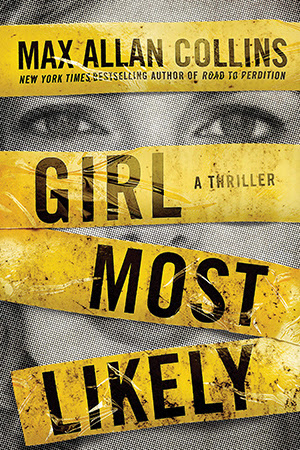
A High School Reunion and a Murder: Girl Most Likely by Max Allan Collins

Last week, I mentioned a new way to consume a story, via a Kindle ebook and its corresponding audiobook. The book in question was Girl Most Likely by Max Allan Collins. Well, I’ve finished the novel and here is the promised review.

The lead character is Krista Larson, a twenty-eight-year-old who serves as the police chief for Galena, Illinois, a small, Midwestern tourist town. This makes her simultaneously the youngest police chief in the country and the youngest female chief. As we’re told throughout the novel, her department consists only of a dozen people, herself included.

Her father, Keith, was also a cop, but one from a larger town across the river. They live together now in the wake of her mom’s passing. They have a good relationship, nothing like the oil-and-water relationships you see on TV or in other books.

Speaking of TV, Collins intentionally set out to write “an American variation of the [Kurt] Wallander novels, and such Nordic TV mini-series as The Bridge, the Killing, and (again) Wallander.” Being a fan of those programs myself, that was pretty much all it took for me to download the ebook and audiobook and start reading.

There’s a certain style of mystery—mostly thrillers, I guess—where there’s running on page one or a murder on page one and that sets the entire tale in motion. That’s here in this book, too, but via a fun writerly quirk: all the times the killer in on stage, Collins writes those scenes in second person, that is, from the killer’s point of view. It serves more the one purses. The obvious one is that you get a peek inside the killer’s mind, what drives the killer to kill. The other obvious thing is that Collins hides the identity of the killer. By the time a reader reaches the end of the novel and know who did, it’s fun to return to those chapters and see how the veteran writer spooled out the clues.

Other than the opening chapter, the bulk of the novel sets the stage via its characters and surrounding environment. It’s a day-to-day life of Krista and her friends as they prepare to attend their ten year high school reunion. We get nice portraits of the folks who never left small town life as well as those who return from bigger cities. As the title of the book indicates, there is one character—Astrid Lund—who is the girl most likely to succeed, and boy has she. Astrid (a nice nod to the Nordic) has blossomed into a stunner who works in TV broadcast news up in Chicago. She broke up more than one relationship back in high school and her presence at the reunion threatens those same people. Most everyone reacts to her in one way or another. She’s like the sun: her gravity either pushes or pulls all her classmates.

What I found particularly fun is how Collins weaves the characters in and out of the story in such a way that you almost wonder if you are merely reading a traditional drama rather than a murder mystery. You kind of have an idea of who is going to be killed, but you still wonder when it'll happen, but when it does, it's visceral. Three people end up dead in this story, so this small town police chief ends up having a triple murder investigation. She draws on her father’s experience as a homicide detective while keeping the investigation local and not calling in the state police.

As a writer, describing a character is always a challenge. How much do you give? How to you give it? Do you do it every time a character walks on stage? Collins does it nearly every time, but he usually dispatches the description in a sentence or two. Interestingly, he goes a step further and details their voice, usually in the form of a musical notation: his baritone, her soprano. Being a musician like Collins, I dug that and, frankly, it never even occurred to me to do that.

Like the BBC shows that inspired Collins to write this story, this is a full-on police procedural. Krista and her dad ask lots of questions and follow leads. You definitely have to be in a mood for this kind of story, and it’s where I have an issue with the sub-title: A thriller. I don’t consider this a thriller at all. Sure, there is the ending, but when I think thriller, I think lots of running and shooting and more running and reading so fast that you quickly start to turn the pages or increase the narration speed. Girl Most Likely moves forward in a determined manner where you know you’re being given some red herrings and try and decipher the clues before the characters.

I enjoyed Girl Most Likely quite a bit. It was exactly the type of story I wanted and it easily met my expectations. In fact, I liked it so much that I already downloaded both the ebook and audiobook of Girl Can’t Help It, the second novel featuring Krista Larson. And, since I enjoy reading “seasonally,” I was pleased to note Girl Can’t Help It takes place around Labor Day. I’ll give you zero guesses when I start the book.

Tuesday, July 5, 2022

Release Order is Best…Or Is it?

Over here in America, PBS just dropped the eighth season of Endeavour, the prequel series to Inspector Morse and its spin-off, Lewis. My wife and I have enjoyed this series quite a bit, especially the interactions between the two lead actors. Shaun Evans plays a young Endeavour Morse while Roger Allam plays his superior officer, Fred Thursday. Their chemistry is fantastic, really serving as the backbone of the entire show and cast. That the show is a period piece—1971 in this current season—just adds to my love of the show.

But we’ve never seen either of the original shows.

Which is completely fine. For whatever reason, we only arrived at these characters via this prequel a couple of years ago. But it wasn’t until this week that we both agreed that we’d like to circle back and give the original show a look.

I was the one who voiced what we were both thinking: which characters, if any, appeared in the original Morse show? It was actually in relation to the Fred Thursday character. I wondered if any of the 33 original shows ever had the older Morse visiting with an even more elderly Fred Thursday. A brief glance at the Wikipedia page for Endeavour likely proves the answer. No, Fred Thursday does not appear in the original program.

That’s too bad, but it gives me hope that with the upcoming ninth and final season, the writers will tidy everything up and explain why Thursday isn’t in the original series. There’s the obvious answer. Maybe that’s the arc of Morse’s character. In this current season, he’s drinking more and becoming more aloof, telltale signs that is probably how the older Morse acts in the original.

This got me to thinking about someone in my situation, coming into an existing universe of stories during a prequel. Most of the time, the creators have to invent some new characters and not just have younger versions of the older/original ones. Star Wars did that—a lot—and many of those prequel characters get their own spin-offs.

Star Wars is a special case, of course, but if anyone ever came up to me and asked me where to start, I’d say follow the release order of the films. In that way, there are Easter eggs and shades of what’s to come sprinkled throughout the prequels. I suspect there are more than a few Easter eggs in Endeavour that longtime fans of Morse and Lewis pick up on that we don’t. That’s just good fan service. I wonder if a Morse fan from the jump—the first season aired in 1987—would have told us to start there just like I how I would introduce Star Wars to someone.

Be that as it may, my wife and I finally arrived in the Morse Universe—that’s a thing, right?—and we’re glad we’re here, no matter the route we took.

Saturday, October 2, 2021

The Challenging Season 1 of Tin Star

It’s probably just me.

The wife and I finished up season 1 of Tin Star, the BBC show, created by Rowan Joffé. All three seasons are now available on Amazon Prime.

Tim Roth stars as James Worth, a former London police detective with some shady ways of doing things, especially when he’s [shocker] he’s drunk. When inebriated, James reverted to his more violent Mr. Hyde-type self, Jack, a personality he used while working under cover.

As the show starts, James is assuming his new job as the Chief of Police of Little Big Bear, a small town in Canada. In tow are his wife, teenaged daughter, and Petey, his five-year-old son. They don’t seem too happy to be moving, but with a mysterious past, it’s a good idea to get away.

Complicating things in the small town are the local deputies. Denise is a First Nation officer trying to navigate her responsibilities to her job, the local populace, and the increasing erratic behavior of the new chief. Deputy Ryan is having none of it and often calls out James for his behavior.

But that’s not all. North Stream Oil is in the area, aiming to take as much resources as possible while simultaneously doing whatever it takes to exercise its control over the town, including the police force. Louis, the head of security, seems always to know what’s going on and which screws to twist to protect the company.

Christina Hendricks plays Elizabeth, a PR specialist, who, over the course of this first season, slowly uncovers some of the company’s more unsavory history.

Then there are the trio of bad dudes who have followed the Worth family all the way from Britain. It is one of them who, in the first episode, pulls the trigger on the fleeing family and sets into motion most of the first season’s events.

The Character Challenges


Let’s start at the top. James Worth is an extremely difficult person to root for. Now, Tim Roth is excellent in his portrayal of the erratic James, but the actions he takes as the ten episodes play out are hard to understand at time. The more decisions he makes, the more I look over to my wife and ask why? One great (?) thing and Roth’s James Worth is his decisive decision making. If he makes up his mind to do something—like find the people who pulled the trigger in episode one—he’s a bulldog. His choices are basically crystal clear, even if you don’t agree with them. They build up over the season, so much so that by the end, you are left wondering will he or won’t he.

A hard man to like. But there are few in this show that garner genuine empathy. The two local deputies I like, and Ryan—who always got the short end of the stick most of the time—became someone with whom I could see myself.

But for all the irritating things these characters do, the actors portraying these character are all working at the top of their game. Late in the season, there’s an extended flashback scene, and what the young actor is called on to do is a heavy lift, but he does so well.

Christopher Heyerdahl as the head of security is super creepy and enigmatic (as the true reasons he does what he does is never truly revealed). Granted, it’s all to protect the company, but as Hendricks’s Elizabeth asks, why does a multi-billion dollar company care what a small town cop says.

Then there’s James’s daughter, Anna. The path her character takes is interesting. Not likable, mind you, but interesting. And it all leads up to the final seconds of the season and the instant cut to credits.

When those credits started rolling on Thursday night, I asked my wife why she made me watch this show. She sort of smiled and said I could have stopped at any time.

True, I didn’t, because the story is compelling enough that I wanted to know what happened next, but it’s so irritating that I’m following and wondering about characters the likes of which I wouldn’t want to invite to my house.

Will I watch season two? Probably. Will I enjoy it? To be determined.

Have you seen Tin Star?

Saturday, August 21, 2021

Two Observations on Storytelling: Stephen King and “Unforgotten”

Two things struck me this week about the power of storytelling and the ability to weave a good tale. The first is not spoilerific—I haven’t finished the novel yet—while the second is very spoiler-heavy. Be warned.

Stephen King’s Billy Summers

I started King’s new novel this week. I’m listening to the audiobook from my local library via the awesome Libby app (y’all’ve got that app, right?). I was an avid reader of King’s novels from about 1987 (when I graduated from high school and entered college) all the way through the late 1990s and into the early 2000s. If he wrote a book, I read it or listened to it.

Somewhen over the 2010s, however, I started slowing. He didn’t, but I did. Don’t really have a reason. It just happened. In fact, the last King book I can remember listening to was Joyland. 


When Billy Summers was published, I decided to give it a try. In the story, Billy Summers is a former sniper now hired killer. He poses as a writer and, knowing those folks who hired him are monitoring his activity on the MacBook they supplied him, Billy begins to write his memoirs.

As soon as I heard that, I rolled my eyes. “Yet another story within a story thing from Stephen King? Really?”

Really.

It’s a thing King has done more than once. It’s particularly effective in Misery, but there are other examples. In that book, the font changed to indicate the story-within-the-story. In the audio of Billy Summers, narrator Paul Sparks slightly changes his voice so you can tell what part of the novel you are listening to.

Being an audiobook, yes, I can fast-forward but I would have no way of knowing when the ‘autobiography’ part stopped and the ‘Billy Summers’ part began. So, I did what the author wanted me to do: I listened.

And dang if the story-within-the-story part became almost as compelling as the main novel. There are whole sections of the story-within-the-story and I found myself really getting into that part. Then it would stop and I’d be reminded about the main story.

As if anyone ever needed any more examples of how good a storyteller Stephen King is, I’ll go ahead and submit this one into evidence. Like his stories or not, think they might be too long or not, you cannot dispute Stephen King is a modern master of the writing craft. I have known that ever since I read my first King novel—Pet Semetary—but I just needed a reminder. I got one this week.

The Ending of Unforgotten, Season 4

[Spoilers, folks]

Here in American, Masterpiece aired episode 6, the finale of Unforgotten, season 4, last Sunday. I’ve written about this BBC series before (how season 4’s opening episode instantly grabbed me) but season 4 did a couple of remarkable things for me.

One involved actor Andy Nyman. Before Unforgotten, I only knew Nyman as the comedic actor he is in Death at a Funeral. He is hilarious in that 2007 Frank Oz film and it took a little bit of time in episode 1 not to think of that funny character every time he appeared on screen. 

But by the finale, I earned a whole new respect for his acting prowess. He was wonderful, nuanced, and my favorite actor outside of the core group.

Speaking of the core group, Nicola Walker and Sanjeev Bhaska play partner who solve cold cases. I’ve written about how much they are a breath of fresh air in detective shows. They’re not raging alcoholics or any of the usual tropes we see in TV cop shows. They are just normal people doing a dirty job the best that they can. They respect each other, but there’s not a hint of “will they or won’t they?’ in their relationship. They are friends and partners who deeply care for a love one another.

So it came as quite a shock to my wife and I as we watched the final moments of episode 5 when Walker’s character, Cassie Stuart, was driving and someone broadsided her car. In the previews of episode 6, we saw her in a hospital bed and all the other characters reacting to the news. We looked at each other and, other than wondering which of the suspects did the deed, wondered how Cassie was going to recover.

Spoiler alert: she didn’t. The character died. 

For older shows (Unforgotten aired on the BBC earlier this year), I do not do any research while I’m watching for the first time. News items can ruin big things that way. So I had no way of knowing what was coming.

It’s not every day when a main character is killed off on a popular TV show. I don’t know the ins and outs of Walker’s contract or any behind-the-scenes stuff so I don’t know why she left. But her leaving enabled a show that features normal people doing a troubling job the opportunity to show how those same normal character deal with the death of a friend and partner and commanding officer. It was stellar. 

The director also made a nice storytelling technique as well: for almost the entire last episode, Walker only appeared in the hospital bed. Only toward the end did we get to see Cassie leave the voice mail her father listens to over and over again, giving us viewers one last look at a beloved character.

And we also got a moving soliloquy from Bhaska’s Sunny. Just as the shock of Cassie’s passing took my breath away, Sunny’s little speech opened the waterworks.

Great storytelling.

Monday, July 19, 2021

That Last Minute of a BBC Series Premiere: Unforgotten

BBC shows are a unique thing, and I always find them fantastic.

No matter how tranquil or gritty they might be, there has to be some secret story bible because many of them start the same way. We are shown the detectives, usually in a station or finishing up the last case, chit-chatting with fellow officers. We get to see the victim but we don’t yet know what to feel about him or her other than an untimely death. Then there are all the characters that we’re going to meet and be part of the case.

Yes, I know this is elementary storytelling, but with BBC shows—especially the wonderful Unforgotten—you don’t have anything else to go on. You just see these random characters and not only do you not know who they are, but you also don’t know why they’re important.

Unforgotten, which began its fourth season here in America this past Sunday on PBS, is a cold case show. Interesting timing considering my wife and I just started watching the old CBS show Cold Case just a few weeks ago. What I appreciate most about Unforgotten is the "normalness" of the characters. No typical detectives here (i.e., raging alcoholics with ghosts of the past), just normal people—anchored by Nicola Walker’s DCI Cassie Stuart and Sanjeev Bhaska as DI Sunny Khan, complete with backpack—doing a dirty job, looking into cold cases. Season two was particularly great.

But it has a wonderful way of hooking you, and it all leads up to that final minute of the series premiere. Other than the cops doing their job, uncovering a thirty-year-old crime, there are the other main characters, including Andy Nyman. Now, I know you’re not supposed to laugh at a show like Unforgotten, but my wife and I both started cracking up when Nyman showed up on screen. We know him best from the up roaringly hilarious film, Death at a Funeral, the 2007 film directed by Frank Oz (trailer here). Nyman played a hypochondriac who had some unfortunate fecal issues. I know Mr. Nyman would like a couple of Yankees know he’s more than that character in that movie, but Death at a Funeral is one of the funniest films I’ve ever seen. I’m guessing Nyman’s role in Unforgotten will help us add a layer on his acting credentials.

Anyway, back to that last minute. We’ve seen five random folks, each with their own lives and individual problems. Then, as the camera shows us those five people going about their lives, the detectives are briefed on the case. A crucial piece of evidence has been discovered and you realize…well, it’s a spoiler, right?

Yeah, it is. The show’s only had two episodes aired so you can easily catch up. The premiere is available via your local PBS station and Amazon Prime. 

But suffice it to say the BBC shows have a unique way of hooking the audience’s attention and glueing us to our screens. And I’ve always loved how they do it and I can’t wait to find out more.

Saturday, June 6, 2020

Year of an Indie Writer: Week 23 - Discovering the Hinterland TV Series

Since most of us are still spending most of our time at home, I thought I'd pass along a new-to-me TV series: Hinterland.

My wife discovered this Welsh series via Netflix and started watching. I didn't watch at first mainly because of time. Each of the 25 episodes is 90 minutes and, with everything going on, I'm down to about an hour of TV a day. To watch Hinterland meant I'd have to carve out an additional thirty minutes. So I begged off.

But she continued through the four episodes of season 1, liking each episode more than the last. The story centers on Detective Chief Inspector Tom Mathias (Richard Harrington) as he tries to pick up the pieces of his life in the small town of Aberystwyth, Ceredigion, Wales. The something isn't really explained, but that's not really the issue. He is partnered with Detective Inspector Mared Rhys (Mali Harries) and a couple of subordinates.

The Big Town Cop who goes to a small town thing is common in many TV shows and books so there's nothing new here. But Harrington is remarkable at playing Mathias as simultaneously troubled and brilliant, invasive and compassionate. He genuinely cares for the victims he encounters and wants to help them reach a resolution, even if doing so is not exactly according to the letter of the law.

As his partner and local girl, Harries plays Detective Rhys as a good-hearted person, trying her best to raise her teenaged daughter on her own. The pair of detectives on the team--Alex Harries as Detective Constable Lloyd Elis and Hannah Daniel as Detective Sergeant Siân Owen--serve their purpose to find clues and pass them on to Mathias and Rhys. And there is Chief Superintendent Brian Prosser (Aneirin Hughes) who took on Mathias but might have a different agenda than he's letting on.

My wife kept pressing me to watch the series. She played a couple of trump cards: Hinterland reminded her of Wallander (Kevin Branagh) and The Missing (Tchéky Karyo). With that kind of recommendation, I started watching at episode 1, season 2.

And I was hooked.

Everything she said about Mathias is dead on. I was instantly drawn to his character, especially the compassionate part. The stories are engrossing and rarely did I see the ending coming.

I have to comment on the landscape. Wales is an interesting place and half the fun of watching this show are the long shots when you see a car driving along the roads. It also looks quite cold. Interestingly, this show is part of an initiative to bring more Welsh shows on TV. Every scene is filmed twice and the actors perform in both English and Welsh. Which brings up another fun side project: seeing which scene doesn't need to be re-filmed.

Literally, as I write this, I have NOT seen the last episode. After the penultimate episode--which features a remarkable secondary character in the form of an elderly woman out on a farm--my wife highly suggested I watch episode 1, season 1 (which is seemingly to play into the series finale). I did that last night. Heck, I'll probably watch the other three episodes of season 1, too.

So, Hinterland, no matter how the series ends, gets a high recommendation from me.

Have you see it?

Update: 


Last night, I watched the series finale. Just like The X-files or Castle, there is a larger, over-arching thread that runs through the entire series...and it paid off in the last episode. There was a moment, two actually, in which Mathias's personal character is mentioned. The first is when he learns the truth. The second is something another character commented on. It comes toward the end of the episode and it speaks directly how and why Mathias does what he does when being a detective. 

Wonderful show, wonderful ending. I told my wife that I almost wish Hinterland were an American show because then we'd get at least twenty episodes. I definitely would love more from this character and series. Alas, with the third series now four years in the past, it is unlikely to happen, but we have a marvelous show to watch. 

Not sure what our next show will be. Any suggestions? 

Saturday, September 21, 2019

Year of an Indie Writer: Week 38

by
Scott D. Parker

I was told there'd be no math in writing.

Turns out, there is, and it's telling.

The Math And Nothing But The Math


My wife is learning a new art technique: paint pouring. It involves putting various amounts of paint and other synthetics in a receptacle (cup, colander, anything really) and pouring it on the canvas. Then you manipulate the canvas in your hands until you find your work of art.

Let me give you an example.


But here's the thing: at almost any stage, you can literally scrape all the paint off and start over.

Every so often, veteran writer Dean Wesley Smith likes to do the same kind of thing with the writing business. This week, it's with math. Specifically the math involving the money one makes as a traditionally published author vs. the money one makes as an indie writer. The post was prompted by a traditionally published author's piece on Medium. Dean didn't want to comment on the author, but I actually found it. Wasn't difficult considering Chuck Wendig also offered a response, albeit from a traditionally published author's point of view.

Dean has done math posts before, mainly from a word count point of view. Here he examines the finances. It's sobering. I read his post first when it was published on Wednesday. As an indie writer, I'm part of the choir. But when I discovered the original post and read it, I was sobered even further. How many of us would, more or less, do the same thing? The answer is likely somewhere north of lot of us.

The biggest caveat to Dean's outlook is time. His view is long term. His way takes time. It'll likely end up making more money, but it'll be stretched out over years. For folks who intend to make a living writing as their sole income, they'll need money right now. For someone like me, who holds down a day job with hopes and dreams of writing fiction full time, I have the time to wait. Ain't always fun, but it's good steady work with writing on the side.

If you read the comments, you'll see me in there. I asked Dean about advertising and how we should factor in an advertising budget into the cost of a single book. His response was one, while it makes sense, I don't necessarily agree with 100%. "Let your books build," was his response. Over time, I should get the 42 books sold per month average he uses to make his case for the indie life. Sure, that's something, but I probably should have posed the question about promotion. How is the best way to promote out books? The age-old question, isn't it?

Here's Dean's post. Here's Chuck's response. Here's the original post that prompted everything.

BTW, Dean does a follow-up. It's here.

Definitely food for thought. What are yours?

Unforgotten TV Show


My wife and I enjoyed Season 3 of this BBC show earlier this year via our local PBS station, Houston's KUHT. The characters are a nice counterpoint to traditional cops in TV shows, even traditional cops in BBC police procedurals.  Neither DCI Cassie Stuart (Nicola Walker) or DI Sunny Khan (Sanjeev Bhaskar) are from the standard mold. Neither are troubled. Neither are raging alcoholics with some vague past that threatens to rear its ugly head. They're just ...people. Granted, people whose job it is to crack cold cases, but their just a couple of folks who care for and respect each other and get the job done.

And it's so refreshing.

That doesn't mean this pair is dull. Far from it. But they are refreshing in their mundane-ness.

Of the three seasons, the second really hits home partly for the story and plot, but mainly for the acting. There are a trio of folks Cassie and Sunny zero in on during their investigation, and those three actors--Mark Bonnar as Colin Osborne; Badria Timimi as Sara Mahmoud; and Rosie Cavaliero as Marion Kelsey--are fantastic. There is a moment in the last episode where Bonnar has a particular scene, that, as my wife and I sat watching, we were utterly spellbound. When the scene shifted, I realized I had involuntarily held my breath for a bit, so engrossed was I in what he was saying and the spectacular delivery. Turns out he won a BAFTA for the role.

You watched the show?

Saturday, February 10, 2018

The Night Manager TV Series

If you read the rumors about whom might replace Daniel Craig back in 2016, you would have heard Tom Hiddleston’s name bandied about. And, Daniel Craig returns for his fifth and final bow as 007, we viewers have been treated to a glimpse of what a Hiddleston-as-Bond might be like in BBC’s “The Night Manager.”

Based off a 1993 John Le Carre novel, The Night Manager has been updated to modern times. The six-episode series opens with Hiddleston serving as the night manager in a Cairo hotel during the Arab Spring. Most of the action takes place outside the doors of the hotel, but a fetching woman, Sophie, the mistress of local big shot Freddie Hamid, asks Hiddleston’s Jonathan Pine to copy some documents. A former soldier, Pine is horrified to read a list of weapons, including chemical weapons, as sold by Ironlast, the front company for notorious arms dealer Richard Roper (Hugh Laurie). Pine sends the list up to London and where Oliva Colman’s character, intelligence operative Angela Burr, sees it and realizes this is a vital clue to bring down Roper. Unfortunately for Sophie, Hamid believes her to be the leak and she is killed.

And Pine drops out of sight for four years. When next we meet him, he is working in Switzerland hotel and is tasked with welcoming none other than Roper and his moll, Jed Marshall (Elizabeth Debicki). He can barely stomach the man, but puts on a professional face. Until Angela Burr approaches him about going under cover. To do the right thing. Of course Pine says yes or else we wouldn’t have enough to fill up six hours.

What follows is mostly standard fare for spy shows, but the three lead actors help carry The Night Manager above other movies or TV series of its type. The lengths Pine goes to in order to get inside Roper’s inner circle had me asking if I could do it. Likely not. But Hiddleston’s charm in on full display in every scene. He may not be Bond, but he would have been a decent one, probably a little harder edged than Pierce Brosnan but not as masculine as Craig or Sean Connery. Speaking of Bond, the opening title montages is straight out of the Bond playbook as is the music.

Hugh Laurie was a nice surprise for me. I never watched his TV show, “House,” or most of his other movies. In fact, the only thing I can truly remember him in is the live action “101 Dalmatians.” But he plays a bad guy very well. He’s eerie calm, which makes him all the more dangerous. And when he stares at Pine or other characters, silently studying them, it’s a penetrating, withering stare.

The Night Manager is full of tropes and, for the most part, the show steers away from all but the most obvious choice. The one trope that I constantly wonder about is the villain inviting the hero into the evil inner circle. Why do that? Is it born out of excessive suspicion? That isn’t the case with Roper and Pine but it still made me wonder.

What are y’all’s thoughts on The Night Manager? Did the tropes bother you?

Saturday, January 13, 2018

River - TV Series

Hot on the heels of watching the excellent Broadchurch, my wife and I decided on yet another program she discovered. The one aspect of this six-episode series (really, just a six-hour movie broken up into six parts) that got her attention was the star: Stellan SkarsgĂĄrd. I first saw SkarsgĂĄrd in The Hunt for Red October back. He's a good actor, but not on my list of actors of whom I will see anything they do. This was likely off my radar but, again, I'm so glad it found its way onto my Netflix cue.
If you’ve seen the trailer or read the description, it’s giving nothing away to relate the basic gist of this story. SkarsgĂĄrd plays DI John River, a man whose partner, DS Jackie "Stevie" Stevenson, was recently murdered. He is haunted by the event, but also by Stevie’s ghost…because River can see her and interact with her. And not only her but other ghosts—“Manifests” as he dubs them—all the time. What is fascinating is the more he digs into the truth about Stevie, the more he realizes there were shades of his former partner about which he never knew.

The plot could come across as rote or mundane, but the acting, especially SkarsgĂĄrd, allows River to rise above other television programs of the same. It’s not just a crime story; rather, it’s more a nuanced examination of the character and how one violent moment—the murder of his partner—can have such profound impacts on his life. SkarsgĂĄrd is excellent in this role. More than once, River would be in some dark place, like punching a wall he thinks is a ghost, only to have the character turn on a dime and smile like nothing’s wrong. It’s a bit disorienting for us viewers to say nothing of the supporting characters, especially Adeel Akhtar, who plays Ira King, River’s new partner. We viewers felt for King in the beginning, but he, like us, began to adjust to River’s bizarre behavior. I’d go so far as to say that King is the grounding character River needs to keep one foot on this side of sanity. While King doesn’t necessarily have an arc, he comes across as very sympathetic the longer the story goes on.

Lesley Manville, who plays Chrissie Read, River’s superior officer, also shines. Halfway through the story, it dawned on me that in many of these BBC shows I’ve watched, there are women in powerful positions. Prime Suspect, Broadchurch, The Fall, and Fox’s The Killing. The thing is, in these shows, it’s no big deal. It’s refreshing. Watching Manville’s character react to the events of this story is fantastic.

This is a show of nuances. Little facial tics or a half smile. Of small moments of growth or pain or a character willing to open up a part of themselves.  When you watch this—and you should—do not be distracted by your phone or anything else. If you want to find out just where you know Eddie Marsan from—Sherlock Holmes and Little Dorritt for me; there; I helped you—wait until the end of an episode. Devote your full attention to “River” and you will be justly rewarded.

Recommended

Saturday, January 6, 2018

Broadchurch: One of the Best Things I Watched in 2017

Some series arrive out of the blue and land your radar that you wonder how it is you never heard of it. Chances are good that the reason I never knew about Broadchurch was that I am not—as yet—a Doctor Who fan.
Someone correct me if I’m mistaken but it seems to me that Broadchurch must have been written by Chris Chibnall with star David Tennant in mind. He plays detective Alec Hardy, a grizzled veteran recently assigned as lead detective to the police station down in Broadchurch (a fictional town Dorset, England) largely to get away from a case that had gone badly. He immediately ruffles the feathers of detective Ellie Miller (the brilliant Olivia Colman) who had just returned from a vacation with the full expectation that she would land the job of lead detective. You can imagine her chagrin at not getting the post, but all of that is subverted when the body of a young boy is found on the beach, below a massive cliff.

What makes Broadchurch the series so utterly compelling is how the death of the boy affects the residents of Broadchurch the town. The first season (all seasons are eight episodes) zeroes in on the family of young Danny Latimer. The Latimers—father Mark Latimer (Andrew Buchan); mother Beth Latimer (played by future Doctor Who Jodie Whittaker); and sister Chloe—are understandably beside themselves with grief. They are also good friends with the Millers—Ellie’s son was friends with Danny; Ellie is best friends with Beth—and that relationship is stretched from time to time as the investigation drags on.

As in most great mysteries, we viewers see certain characters doing things that casts shades of guilt over them. The mystery is compelling, but the acting is superb. This counts as my first exposure to Tennant and if he brings this kind of gravitas to Doctor Who, I’m so there. I saw myself in Whittaker and Buchan, as the grieving parents, and wondered if I would do anything much differently. But the true breakout star (for me) of this series is Colman’s Ellie. Indeed, she won a BAFTA for Best Actress. Over the course of season one, she quickly grew to be my favorite character and she stayed that way all the way to the series finale. Her humanness at what she witnesses is compelling and draws you in more and more. Colman’s ability never to hide her true feelings is refreshing in a TV detective, and her strength, while tested, remains strong. I’ve not watched an episode of “The Crown” but as soon as I learned Colman would assume the lead role, I put that show on my list.

Word of advice: do not watch season one and read up on the series on the internet. You will spoil the reveal of the true culprit.

Season two of the series focuses on two plot threads: the trial of the person responsible for Danny’s death—and what it does to the town—and the old case Tennant’s Hardy failed to solve that eventually led to his assignment at Broadchurch. Where many second seasons and sequels tend to go over the top, with Broadchurch, you merely get additional layers peeled away. Colman continues to shine as my favorite character, but the actions and motivations of the Latimer parents take a prominent role. We get a bit of backstory with Tennant’s Hardy here, especially as he asks Ellie to review and re-investigate the previous case which has landed again in his lap.

Again, do not read up on this season, but stay to the very, very powerful ending that will have you asking if you could do it.

The third and last season jumps forward in time about three years. Hardy is back in Broadchurch and he and Ellie investigate the brutal rape of a woman at a 50th birthday party at a nearby mansion. Like the previous two seasons, the detectives investigate folks and we see them not only doing something that makes them look suspicious but also outright lying to the investigators. Season three uses this story to say a few things about modern culture, not all of it good. As you have come to expect, the acting is superb and Colman shines, as does Tennant.

This is an excellent series and is one of the best things I saw in 2017 (we finished a few days shy of 2018). All the episodes are on Netflix. I’m not a binger, but I started to be as this series progressed. Season one was a one-episode-per-night thing. Season two had a couple of nights where my wife and I watched two episodes. Not so with the third season. Most nights were two episodes each. I ended up finishing the series sooner than I would have liked, but it is so good I didn’t really care.

Broadchurch: Seasons 1-3: Highly Recommended

P. S. Happy Birthday, Sherlock!