Monday, November 26, 2018

Superman the Movie: A Forty-Year Appreciation


"You’ve got me! Who’s got you?”

Is this the best line in a superhero movie? Forty years on, when I think of SUPERMAN: THE MOVIE, this is the first thing that comes to mind. And the helicopter rescue sequence associated with it. I waited in rapt attention for this scene because it is likely the quintessential Superman moment. It did not disappoint last night. In fact, as the goosebumps rippled over my arms, I got a tad emotional.

This was Superman.

The tagline of the movie was “You’ll believe a man could fly.” Here’s the thing with Christopher Reeve’s performance: You’ll believe he really is Superman. Maybe it was my ten-year-old self seeing this hero on the big screen for the first time, but of all the actors who have played Superman, Reeve is the one who made me believe it was actually a man from another planet. Who was also from Kansas. And it did it all with acting. No CGI. No special effects. Just Reeve, in costume, changing his voice and posture, making you believe Clark Kent and Superman were different people.

Speaking of Clark, Reeve sells himself as the bumbling country boy from Kansas to a T. I really loved his sly winks *to himself* when he, say, catches the bullet or when he shows up, as Clark, in Lois’s apartment after flying over the city with her as Superman. There’s a reason Reeve’s version of Clark is also probably the best out there…although Henry Cavill, if given a chance, could have done it well. But, again, he would be channeling Reeve, too.

He and Margot Kidder exudes chemistry. I really appreciate how she, in 1978, portrayed Lois Lane as a modern woman, smoker, working in a newsroom which had been a mostly males club for so long, but one who still needs a little help when she’s hanging out of a helicopter. She’s always out for the hustle, making sure she’s on the front lines. The rooftop interview scene is so good. You even get Superman basically falling in love with Lois on screen. Heck, both of them. And he’s not saving her from some giant robot. They are just talking and acting. Let’s be honest: in this day and age, when you have lots of side projects on TV, how cool would it have been to have had a Lois Lane TV show with Kidder?

I’m not sure who made the call—actor or director or scriptwriter—but, for my money, having Lex Luthor be humorous is genius. Yes, it’s likely a product of the times, but Gene Hackman’s portrayal of Luthor is probably the best. The only other one I truly enjoy is Clancy Brown’s sinister version in Superman: The Animated Series. But Hackman’s Luthor is sinister in his own way. When he delivers the line “By causing the deaths of innocent people,” you honestly believe it. I enjoyed seeing him make deductions and use his intelligence to figure out Superman’s weakness. Lastly, In an age when every aspect of a franchise has its own backstory, I don’t always need a backstory. But I would enjoy at least learning how Luthor and Otis got together.

Oh, is Ned Beatty’s Otis the only henchman in superhero movies who has his own theme song? It reminded me of the theme for Jabba the Hutt which would arrive five years later.

The music. John Williams was at the height of his powers in 1978. Star Wars and Close Encounters and Jaws were already under his belt. So were three Oscars. I haven’t heard the entire score is so long that it came out of the speakers fresh and new. Look, I know his Star Wars theme, his Raiders of the Lost Ark theme, and the ET flying theme are all good and light and positive, but is it possible to hear the Superman March without a grin on your face? I don’t think so. The Krypton music is eerie and otherworldly. The love theme is lush and romantic. And in sitting through the credits listening to the music, I found myself awash in greatness. I know there are folks who think Superman is the best soundtrack of Williams’s career. While I still hold Empire Strikes Back as my personal favorite (with Star Wars and Raiders close behind), I can certainly see their point.

On the subject of Krypton, I was again reminded of the very 70s-ness of it all. I have a great fondness of 70s SF films pre-Star Wars. The Krypton sequence fits perfectly in that pocket. Ditto for the flying sequence as Kal-El rockets off to earth. Oh, and the training montage.

As the opening credits rolled, I leaned over to my friend and said Superman: The Movie hit the jackpot with casting. Marlon Brando, of course, but Terrence Stamp, Glenn Ford, Jackie Cooper, Hackman, Beatty, Valerie Perrine, and Susannah York. To say nothing about then newcomers Reeve and Kidder. I can’t think of a single character who needed to be recast.

The first hour of the show is near perfection. We see Krypton, the trial and banishment of Zod, Ursa, and Nan (and the setting up of Superman II), and then the destruction of the planet. Now, forty years later, as a parent, the longing and desperation of Jor-El and Lara sending baby Kal into the void with only the hope that he would be safe is poignant. But the Smallville scenes? Holy cow. Those hit me. And those shots of Clark and Jonathan, his death, the funeral, and then Clark and Martha out in the field? You honestly forget you’re watching a superhero movie. Brilliant stuff.

Alas, the movie is not without its flaws. With an additional forty years of consuming stories—including writing my own—much of the latter half of the film is disjointed. It would have been so much better if there were words on screen like “Three week later…” or some such. As it is, the film comes off as almost happening in the same day. Which it doesn’t, but it feels that way.

But all that is nitpicking, especially when you get the best of both worlds: you get to see Superman doing super things—helping the bus on the bridge; making sure the railroad doesn’t derail; making a new dam—but then he turns back time and it’s all good. And with Luthor’s intelligence, you ever wonder if he figured out Superman changed time? Or would he merely realize his plans were foiled? Ditto for the other characters, too.

But that’s neither here nor there. They’re just fun things to ponder.

Forty years. Hard to believe and, yet, not. I was ten when I saw it in 1978. I’m nearly fifty now. Lots of life, lots of events, lots of other Superman stories, both in print and on screen. But this film remains a gold standard in superhero films and Superman films in particular. I’m keen on finding and watching the Donner cut of Superman II. I’ve never seen it, but always enjoyed Superman II. Superman The Movie is that perfectly placed film and story that straddles two eras: the Golden and Silver Age (and a little Bronze) of comics before the current era we’re in. It’s like a love letter to all that came before. From the vantage point of forty more years, it’s stature grows even more. Heck, as the credits rolled last night in the theater, applause erupted from the gathered few—young and old alike.

We now live in a golden age of superhero films. There’s nothing filmmakers cannot do when you couple their imagination with computer technology. Make no mistake: it’s awesome when we get to see Cavill’s version of Superman fly or punch Zod or slam into Doomsday. And I really enjoy The CW’s Superman as played by Tyler Hoechlin. And I watched Lois and Clark loving it…mostly. Didn’t watch Smallville.

But I think we can all agree that when you think of a live action Superman, one name comes to mind: Christopher Reeve. He was and is and will forever be Superman. He made me believe a man could fly in 1978. Forty years later, he still made me believe he’s the best Superman. And, despite its flaws, Superman The Movie is the best version of Superman on film.

Saturday, November 17, 2018

NaNoWriMo 2018 – End of Week 2 – Mid-Book Revamps Are Okay


As of today, all NaNoWriMo writers have reached the end of the second full week. And we have reached the halfway point in the month. By the numbers, as of today, all writers should be around 28,000 words in their 50,000-word novels. First of all, if this is where you are, Congrats! You are more than halfway through the month of November and more than halfway through your book. It’s an awesome feeling, isnt’ it? Just wait until you type “The End.” That never gets old, no matter how many books you write.

I experienced an interesting bit of serendipity this week. On my current non-NaNoWriMo novel (started 1 October and aim to finish by 30 November), I hit a snag. I’m halfway through the story and I found myself a bit adrift. Unlike previous books, I’m writing this without an outline. Writing into the dark, as Dean Wesley Smith does. Every now and then, I get backed into a corner and I have to think my way out of it. What that entails for me is to put a halt to writing the current scene and ask myself a few questions about the scene, why I’m even writing it, and where do I think the story is going from there. Naturally, this process puts the kibosh on new words, but it also opens the door to the next scene.

So that’s what I did this week for my current book. A mid-book brainstorming session. Complete with notes on a whiteboard. This book is the sixth Calvin Carter novel. The first will be published in January 2019 and this one won’t be published until November 2019, but I wanted all six complete before I start publishing so I can use the various covers in marketing material. I had a fun opening sequence, but I didn’t know why the mystery men stole the MacGuffin of the story. I knew that was an issue, but I kept writing ahead, confident the true reason would manifest itself. It did, but it took a mid-book reset to do it. Now, I at least know the next quarter of the book.

What is serendipitous about this process in 2018? Well, I encountered the exact same problem in 2015 when I participated in NaNoWriMo 2015. Each week this month, as I prepare for these posts, I revisit my own daily updates from 2015. I reviewed Day 11 through Day 17 of 2015. Guess what I (re)discovered? I hit snags back then, too. Of the seven days back in 2015, five of them involved not only writing but reviewing the scope of that novel. It seemed I was writing scenes that kept affecting subsequent scenes and I just had to keep going. Two things happened back then. One, I had my best day of writing at that point with 3,538 words. Two days later, I experienced my worst at 1,703.

Writing a novel is not a short process. It is long. There will be good days and there will be bad days. The key factor is to keep going. Just keep moving forward. You can do it.

And the theme for this week is simple: if you have to stop or slow down and reassess your novel from the vantage point of the middle, do it. What’ll happen is that you will likely open the floodgates for the rest of the book.

But here’s a more down-to-earth, nuts and bolts piece of advice: If you are truly stuck, finish the scene/chapter you are currently writing. Look no further than that. Just finish this scene, and trust your creative subconscious to help you along. Chances are good you will see light at the end of the tunnel.

So, NaNoWriMo folks, how are y’all doing?

Saturday, November 10, 2018

NaNoWriMo – End of Week 1 Encouragement – Stay Flexible

Look, I know where you are because I’ve been there.

Today marks Day 10 of NaNoWriMo 2010. It’s also the end of the first full week of writing 1,667 words a day on a novel that’s aiming to be 50,000 words. If you want to think of it this way, 1-3 November of this year (last Thursday through Saturday) was the ramp up. The prelude if you will. I’m a person who likes to view the calendar in weeks. So basically, you have nearly four full weeks to write a novel.

Yes, you can do it.

I’ve been right where you are now. Yes, even there. Let me show you.

Back in 2015, when I successfully completed my first NaNoWriMo, this was my daily line item: Day 10: 2023 (22,193 total; 27,807 remaining). I’ll admit I jumped way ahead on the first three days, writing 3,464, 2,325, and 2,637 words respectively. Here’s what I wrote about Day 2 back then: “First NNWM day on a work day. Rose at 5:00am. Wrote 1,244 words before work on the laptop. Wrote additional 796 words on the iPod at breaks during the day. I finished off the night with another 285 to round out a chapter.”

So I had some cushion. Which was great considering Day 4 back in 2015. I only wrote 1,709 that day. What happened? Technical issues. Here’s a note I wrote back then:

“The theme of today was flexibility. This morning’s writing session was interrupted when my Mac wouldn’t start. So, I shifted to connecting my iPod Touch with my Apple keyboard. I managed 1100 words or so, but knew I needed to make up the deficit. I wrote some on the iPod at the day job, but deadlines and meetings ate up all my break time. Not much writing done during the day.

Throughout the day, my mind wondered if I had lost all my data. I diagnose the problem, fixed the drive–took apart my laptop and extracted the drive to repair it–and got it working again. Finished the day at 1709 words.”

If there’s one thing you must keep in mind as you write your story this month is to stay flexible. Writing a novel is not a sprint. It is a marathon. Yes, I know writers who can craft a novel in a week. That’s not me. But I can write one in a month. I know because I’ve done it numerous times.

And you can, too.

Just stay flexible.

Don’t get too bogged down in the daily weeds. Maintain the overall goal: 50,000. Some days, you’ll blow past the 1,667 mark. Others you may fall short. You can make it up. Don’t lose sight of the end goal: a completed story. In the end, it won’t matter if you didn’t reach your daily goal for a third of the days and exceeded it on the rest. All that matters is a 50,000-word completed novel.

Let me know how it’s going. And tune in next week for another pep talk.

Saturday, October 27, 2018

The Haunting of Hill House - The Best Thing on Netflix?


I never saw this show coming and it totally blew me away.

We live in a golden age of content, especially television content. There is just so much that we can’t realistically be expected to watch it all. Even as an avid Netflix consumer, I didn’t know the re-imagined version of “The Haunting of Hill House” was even a thing. My wife, did, however. She read about it in ENTERTAINMENT WEEKLY and then it popped up on her Netflix account. We had just finished Amazon’s brilliant "The Marvelous Mrs. Maisel," it was October, so why not? It was a short, 10-episode series--movie, really--so it wouldn’t take up too much time if it proved to be bad or if I proved indifferent.

All I needed was the first episode.

Specifically, the last minute or so. Well, no, let me backtrack: the steller cast, the adept direction, and the fantastic writing of the first episode got me to swallow the hook. The last couple of minutes set the hook. “I’m in,” were the words out of my mouth as soon as the credits rolled. Truth be told, I was already in.

The Haunting of Hill House, as re-imagined by director/writer Mike Flanagan, tells the story of the Crain family in two different phases of their lives. In flashbacks, we see Hugh Crain (Henry Thomas; yes, that Henry Thomas) and his wife, Olivia (Carla Gugino) move into Hill House with their five children. In the present day, the children are now adults, Hugh is now played by Timothy Hutton, and Olivia isn’t around. The central mystery of the show is what happened to her and to the family at Hill House.

Taking his cue from any number of modern examples of non-linear storytelling, director Flanagan expertly weaves in and out of both times, revealing just enough here while intentionally not showing you something there. I knew what he was doing, and I didn’t care. I became so enthralled in the story and the way it was presented that I came close to the desire to binge it all. The closest we got was two separate days of two episodes each. Most of the time, however, it was an episode per day. But the beauty of watching the show in this manner was the ability to mull over the story and the characters.

And mull it over I did. Numerous nights and even throughout the days, snippets of the show would float back into my head. My wife and I discussed various aspects of the show, and I even played the age-old game of trying to guess what was going to happen next.  Thankfully, I was wrong on nearly everything except one crucial aspect. And, no, I can’t tell you what it was because it is fundamental to the story. (see below)

Billed as a horror show, it lives up to that reputation. Yes, there are jump scares. Of course there are jump scares. But, for me, Hill House was less a horror show than a supernatural suspense, eerie type show. There were some moments in the show that I was glad I was watching in the day time. And most of those are quiet moments you didn’t see coming.

Flanagan--whose work I don’t know--did a marvelous job at directing and pacing. I’m no film geek, but even I realized some of the tricks he used to great effect. One was the just-out-of-range blurring of a background character. He did this often, and it really worked well. Camera movement was pitch perfect. Probably the thing getting the most buzz is episode 6, “Two Storms.” The story content is stellar and pivotal to the series, but the direction is what will earn this episode award nominations. Even as we watched it, we could tell it was shot in multiple long-takes, with the camera moving this way and that, revealing a nothingness behind one character in one second only to reveal something behind the very same character when the camera pulls around again. Excellent work.

An excellent director with an excellent story can only get you so far. If you don’t have excellent actors, you get something sub par. The casing director of Hill House needs an award today. Let’s start with Henry Thomas. Seeing as I didn’t look up or know anything about this show ahead of time, it was during the first episode I realized he was the “E.T.” kid. I haven’t followed his career at all, but man did he deliver in the various flashback scenes. The chemistry Thomas has with Gugino and the five child actors is so good, you’d think they were a real family. Speaking of Gugino, she had the difficult task of conveying Olivia as a loving mother and wife, but as someone also haunted by things not often visible, sometimes even in the same scene. When she was comforting a scared child, she was honest and sincere. When she was facing something else, she was just as scared as you were in that moment.

In any movie starring kids, you might get less-than-good actors who deliver less-than-good performances. The five children--especially Julian Hilliard (young Luke) and McKenna Grace (as young Theodora)--gelled on screen as if they were truly siblings. They really inhabited their characters well. Not to be outdone, the adult actors playing these characters also knocked it out of the park. There was one scene in particular where Theodora--who has a special talent--does the thing she does to use her talent (like how I’m obfuscating?). With modern technology and CGI chicanery, Flanagan could have conjured up anything for a scary moment. Instead, he lets Kate Siegel’s face be centered on the screen. When she “sees” what she sees, Siegel screams a scream so bloodcurdling your mind is the thing conjuring up the horror. So well done.

I questioned why Flanagan didn’t just put Henry Thomas in older make up but rather cast Timothy Hutton as the older Hugh. Visually, the two actors are not too far off, and stylistically, they created mannerisms for Hugh each actor mimicked. But in keeping with the obvious recasting of the kids, the choice for a second actor for Hugh was a good one. I’m not too familiar with Hutton’s work, but as the series propelled itself to the end, his gravitas carried his scenes and I was ultimately satisfied with both actors playing the same part.

Oh, one other thing about the cast: each one of them get what I call a “Robert Shaw in Jaws” moment. You know the scene in Jaws where Shaw, as Quint, tells the story of the U.S.S. Indianapolis and the sharks. Best dang scene in the movie. Well, the adults get their version, but none was better than of Robert Longstreet as caretaker Horace Dudley. When he says what he says in the manner he does it, Flanagan keeps the camera on Longstreet. The actor delivers that story with so much depth and emotion that I immediately called it a “Robert Shaw in Jaws” moment. Incredible that a piece of a show like this by a side character could be so compelling.

I could go on and on, but I'm going to halt here. I’ve seen some great stuff this year, but The Haunting of Hill House is easily in the Top 3, maybe even Top 2. I cannot recommend it highly enough.

P.S., I’m stopping the main review here. If you want to avoid spoilers, stop and watch then return. For those of y’all who want to continue, you’ve been warned.

-

-

-

-

-

-

The one aspect of the show I did see coming was Episode 5, “The Bent Neck Lady.” At that moment, I nearly thought the secret of the house was an alternate dimension.

What I didn’t see coming was the ending.

Holy moley. Who in the world saw it coming? Who in the world would have predicted the ending of a showed billed as a horror show could have such a genuinely emotional ending? I don’t know about y’all, but I was bawling my eyes out when Hugh--first as Hutton then as Thomas--talked to Steve and explained the situation. He told his son why and how the house needed to be saved. And then the instant transition from Hutton to Thomas? Lost it. My wife did, too. Maybe it’s my age, maybe I’m just so emotional about family, but The Haunting of Hill House delivered not only genuine scares, creeps, and thrills, but also a deep, heartfelt emotionally resonant ending. I couldn’t be happier about it.

Saturday, September 29, 2018

The Importance of Awards and The Marvelous Mrs. Maisel

If it weren’t for the Emmy Awards, I would never have watched “The Marvelous Mrs. Maisel.”

I’ll admit: I barely watched the actual awards show. I stayed long enough to see Henry Winkler earn his first (!) primetime Emmy award (and his wonderful speech*) I also saw two actors from GODLESS win: Merritt Wever and Jeff Daniels. Loved that he thanked his horse.

The next day, I read through the rest of the winners. What struck me was this show on Amazon that won not only Outstanding Comedy Series and Outstanding Lead Actress in a Comedy Series. In fact, I think it won the most awards of the evening, taking home five trophies.

But what was this show about? My wife and I were intrigued, so we pulled up Amazon and gave it a look.

NOTE: The show is eight episode long. As of this writing, I have not seen the last episode, so I’ll be basing all my thoughts on the first 7 episodes. But that is enough.

Rachel Brosnahan stars as the titular character, Miriam “Midge” Maisel, a Jewish housewife who inadvertently discovers she has a talent for stand-up comedy. The show is set in 1950s New York, and Midge lives with her husband, Joel, and their two kids in an apartment a few floors below her parents’ apartment. Tony Shalhoub plays her father, Abraham, and in a bit of “Whoa, maybe I really am getting old”, her mother is played by Marin Hinkle. You might not know the name, but she starred as Jon Cryer’s ex-wife in “Two and a Half Men.” She’s a mere two years older than me...and she’s a grandmother!

As the show opens, it’s Joel who tries his hand at stand-up. He’s not good, but Midge dutifully takes notes during his performances, compiling a notebook full of ideas and lessons learned. After a particularly bad night in which he bombed, Joel informs Midge he’s leaving her for...his secretary. She gets drunk, wanders the streets, and ends up in The Gaslight Club, the very venue Joel just stank up. She gets up on stage, overcoat covering her nightgown, and proceeds to let it all out. Susie Myerson, playing a worker in the Gaslight, sees what Midge is capable of and convinces her to give stand-up comedy a serious go.

In what could have easily been a rote-type comedy, The Marvelous Mrs. Maisel vibrates with a joy not seen on the small screen in a long time. It’s a very New York show, complete with lots of Jewishness and talk about the town and society in the 1950s. This historian part of me loved it all. The clothes, the formal dinners, the evident ‘caste-like’ system is portrayed very well.

But what really sends this show over the top is the whip-smart dialogue. This TV show could easily have been adapted to a stage play, but the better comparison is the comedies of the 1930s movies. Think of the Thin Man movies or any of those films where the characters deliver their lines in a rat-a-tat fashion, always with the perfect comeback and precisely the best time. You will, um, marvel at how well these actors do their thing.

Brosnahan is a dream as Midge. Not only does she deliver the normal dialogue well, but when she gets behind the microphone to deliver her stand-up routines, she comes across as a natural. It makes me wonder if she’s ever had any desire or experience being a true stand-up comic. If not, she should definately try.

Tony Shalhoub is hilarious. I laughed out loud multiple times. And the chemistry he has with Hinkle is so palpable that you might wonder if they are not secretly married. Joel’s father is played in a wonderfully over-the-top fashion by Kevin Pollak. I know him best as the third person on Tom Cruise’s legal team in A FEW GOOD MEN, after Demi Moore. He all but steals every scene he’s in.

Every actor in this show is at the top of their game. I rarely binge, but there were a couple of nights when we’d finish one episode and, after a quick check of my watch, rolled right into the next one.

Awards are sometimes derided as things given within a group of people to bolster all those egos. I’ve never thought that. Awards, no matter the group, are intended to showcase good, quality things--in this case, TV shows--and let the world know some examples of good stuff.

I so enjoyed this show...and I never would have likely given it the chance were it not for all those Emmy wins. Well deserved, and highly recommended.


*Henry Winkler, upon winning his first primetime Emmy said, among other things, this fantastic line: “If you stay at the table long enough, the chips comes to you. Tonight, I got to clear the table.”

Let’s hear it for perseverance. And for continuing to show up.

Tuesday, September 25, 2018

Magnum PI (2018)


As a fan of the TV show CASTLE, I loved that the pilot episode of MAGNUM PI (2018) started with the characters reading the exploits of themselves in a book. It explained how it was we first saw Thomas Magnum in space, skydiving into North Korea.

And served as a teaser for what was a perfectly fine hour of television, especially on a Monday night.

Now, I’m of an age where I remember the original with Tom Selleck. However, I was not an avid watcher of the program. I knew the basics: Magnum was a veteran who lived in Hawaii, had a job as a private investigator, and lived in the home of Robin Masters, a mysterious figure we never saw and the only connection was Higgins, the caretaker of the estate. In the original version, HIggins was played by Texan John Hillerman, doing a great British accent. With Magnum were two pals from his time in Vietnam and they shared in Magnum’s adventures.

Magnum PI 2018 is pretty much the same thing except we get a real British person playing Higgins, Perdita Weeks (sister of Honeysuckle Weeks of Foyle’s War). The gender swap will likely lead to some romantic tension between the two characters. Yes, that will change the dynamic, but that isn’t a bad thing. While I pretty much envision Magnum and Higgins to pair up after awhile, they could always go the route of TV’s ELEMENTARY, where Sherlock Holmes and Joan Watson respected each other but never hooked up. It can happen.

The pilot episode showed what was updated and what wasn’t. The coolest thing that was kept was the theme song and the typical 80s-era credits sequence. I dug it. Now, Magnum and his three friends are veterans of Afghanistan. It was when one of their number is kidnapped and killed that Magnum--played by Jay Hernandez--Rick (Zachary Knighton) and TC (Stephen Hill) join forces and bring the bad guys to justice. In addition to the gender swap, Higgins is also former MI-6 (disavowed), so she called in favors to help locate a missing truck, and she kicked some bad guy butt along the way. Natch. The action was fun and over-the-top, but what were you expecting?

I expected a fun, light romp to replace the Monday night vacancy voided by ELEMENTARY last week. Magnum PI might not be everyone’s cup of tea, but as someone who doesn’t remember much of the material from the original, I’m good with the show.

Tuesday, September 18, 2018

Forty Years with KISS and the Solo Albums

It was forty years ago today…

The year 1978 was dominated by a few things: Star Wars. Comics. KISS. And more Star Wars. Yeah, Star Wars was like a pop cultural supernova that, in my distant memory, seemed all consuming. But KISS was right up there. I have no memory of what or how I first got interested in the band. I suspect it was the comic book--with real KISS blood! For a comic book geek like me, super hero rock stars were right up my alley.

But what was my musical alley? In case you didn’t know, I’m an only child, so I didn’t have any older sibling passing me LPs and telling me to listen. Up until 1978, my music consisted of the Star Wars soundtrack, my parents’ Roger Miller album...and little else. Maybe the Village People. Maybe the Bay City Rollers. So when I dropped the needle on Double Platinum, KISS’s first greatest hits collection, the drums of “Strutter ‘78” greeted my ears and likely shaped much of my musical tastes from that moment on.

The haziness of memory won’t let me remember what order I purchased subsequent albums. But the ones I had were the debut, Alive, Destroyer, and Alive II. Now, the big obstacle for my KISS fandom was the knights in satan’s service stuff. My parents were good, however. They reached what I suspect was some sort of compromise: I could keep listening to KISS, but my purchasing of new albums was limited.

So, by September of 1978, when the four solo albums were released, I suspect I had to pick only one. While my album consumption was limited, I consumed all information about the band I could find. That meant constant trips to U-Totem and 7-Eleven looking for magazines like Circus, Hit Parader, and such. I bought lots of trading cards, both comics, and even a few posters. I had one of those monster posters, measuring at 3 feet by 4 feet on my wall. The fall of 1978 was destined to bring four new albums (!) as well as a TV movie. It was, even looking back now, arguably the high point of KISS fandom...until 1996 when we did it all again.

Which album to get? Well, one was immediately off the table, likely by parental decree. Gene Simmons, the Demon himself, would not be found in my house. The little drip of blood on the cover pretty much secured that fact. Okay, what next? KISS was my first rock band so I had no preconceptions about drummers, but I don’t think I seriously considered Peter’s record. Paul or Ace? Well, being the science fiction fan I was, I think the choice was pretty obvious: I bought Space Ace’s album. Plus, I was a follower: “New York Groove” was on the radio and I wanted that song.

I was a music novice so all the songs were good to me. I had no clue about what Ace was singing about, but that didn’t matter. His album sounded like SF so I was good. Poster on the wall. Album spun over and over.

I have a distinct memory of a friend who lived down the street. He arrived home one day and, as he passed me in his dad’s car, simply put the Gene Simmons record up to the window for me to see. Lucky guy. I think he may have had all four. What never occurred to me at the time was to record the other three albums on cassette. If I had, my history with the solo albums would have been different.

The last new KISS album I was allowed to buy was Unmasked. I did--and still do--love that album. But, for whatever reason, KISS faded from my attention until 1983. Of course, I was fascinated by Lick It Up and the real unmasking, but didn’t purchase the album. It wasn’t until 1988 and the release of Smashes, Thrashes, and Hits reminded me of my first rock and roll love. The girls in my high school group of friends loved the sexiness of Paul, but I remembered fondly the make-up years. It wasn’t until Revenge was released that I picked up my first new KISS CD in over eleven years.

And I never looked back.

Cut to 1997 and the CD remasters. Those are the ones I own. Naturally, the albums that beckoned me most was Music from the Elder (never heard it) and the other three solo albums. By that time, I was nearing thirty, had decades of music listening under my belt, and knew music. What would those albums sound like?

Well, at the time, I immediately gravitated to Paul Stanley. His album was the most KISS-like. It became and has remained my favorite of the four. Gene Simmons was ...interesting, but nothing like I expected, even in 1997. Then there was Peter Criss. By 1997, my other favorite band--Chicago--had planted roots in my life, so I was actually cool with Peter’s record. It wasn’t KISS, but that was okay.

Over these last twenty years, I kept listening to the four solo albums. Paul’s remains my favorite. You can’t argue with the pure rock and roll swagger of this album. “Wouldn’t You LIke to Know Me” is all but perfection. “Tonight You Belong to Me” is the kind of song you’d end a concert with, while “It’s Alright” and “Goodbye” are so good. This might be the first record in which the vocal brilliance of Paul Stanley really shines. Peter’s is now my second favorite. I think Paul’s musical stylings line up perfectly with KISS, so his record sounding KISS-like was a natural. But so was Peter’s. His R&B vibe, complete with brass, was who he was. I have grown to appreciate this album more and more. “You Matter To Me” is a dang fine song. The album is admittedly filled with “Beth”-like songs, but “Easy Thing,” “I Can’t Stop the Rain,” and “Don’t You Let Me Down” are much better songs. And the vibe of “Hooked on Rock ‘n’ Roll” is just plain good old fashioned rock and roll. The same, however, cannot be said about Gene’s. Yes, “Radioactive” is a good song and I really enjoy “Mr. Make Believe” and “See You Tonite” but most of the other songs are just this side of good. He, like Peter, took chances. I applaud him for that, but the material is not to my liking.

Forty years is a long time to be a fan of anything, but I’m really happy to have discovered KISS when I did. Why? Because the solo albums were smack in the middle of it all. What a remarkable, bold feat. Were all the songs good? Nope, but much of the 40 (?) songs were pretty good to gold standards based on the vocalist.

What are some of my favorite songs? I’ve listed some. All of Paul’s, most of Peter’s and Ace’s, and a few from Gene. A few years ago, the PodKISSt folks did a “What if KISS made an album in 1978?” episode and used the solo album songs plus the five studio cuts from Alive II. It remains my favorite single episode. I was fascinated that the top 9 songs were all the same. It’s a great episode by the godfather of all KISS podcasts.

Forty years. Man, has it been that long? Yes and no. Yes because we can look at Paul, Ace, Peter, and Gene and see the years their faces. Heck, all we need to do is look in the mirror and we’ll know it’s been forty years. I was a nine year old boy when I bought Ace’s album. Now, I’m forty nine, and still loving this band.

A memorable moment in my KISS fandom was last year in which I took my son to see his first KISS concert. It all comes full circle.

It’s difficult to escape one’s first love. It gets embedded in our souls like few things rarely can. Star Wars. KISS. Those were the things I loved as a boy in 1978. They are still the things I love in 2018. And the KISS solo albums are a part of that legacy.

Happy anniversary, Paul, Peter, Ace, and Gene. Thanks for making those albums so long ago.

Saturday, September 15, 2018

Let Your Creativity Shine: The Inspiring Message of Brad Meltzer

Sometimes, a guy is exactly who he seems to be.

I’ve enjoyed Brad Meltzer’s work as a comic book writer and as the author of adult thrillers. His blend of history and exciting, page-turning books is right up my alley. His latest novel, THE ESCAPE ARTIST, is one of my favorite books of the year and has one of the best hooks I've ever read. Here’s my review. Meltzer is also a fantastic interviewee, especially when he deep dives into the stuff he loves. I wrote about one particular interview back in 2015.

This past Thursday, I finally got to meet Meltzer when came to Houston (at Katy’s Books-a-Million) to promote his latest book, I AM NEIL ARMSTRONG.

It is the latest entry in his series of children’s books featuring heroes from history from which we can learn. The genesis of the ongoing project was to remind his own children who were the real heroes. They were ordinary men and women who sought truth, justice, and to achieve something never before accomplished. Here’s one of the quotes from his website: ““These aren't the stories of famous people. This is what we're all capable of on our very best days.”

It is an admirable goal. It is also one that seems to be seeping through. There were something like eighteen kids there. Most held a copy of one of Meltzer’s books in their hands, and not just the Neil Armstrong book. A few had written him letters or drawn him pictures. All because of the stories he told in his books and were illustrated by Christopher Eliopoulos.

Speaking as a Houstonian, I’m very glad Eliopoulos captured the moment when President Kennedy declared the moon as the ultimate goal of the 1960s. You see the background? That’s Houston’s Rice Stadium.

In his his 30-minute talk, Meltzer talked about the genesis of selecting Neil Armstrong. I appreciated his history talk, especially the comment about heroes. In the Depression, when all looked bleak, Superman burst onto the scene. In the months after 9/11, the first Spider-Man movie arrived. I wore my Aquaman shirt (and stood next to a dad wearing a Flash t-shirt) so we had a little of the Justice League present and accounted for.

But heroes don’t always wear capes and tights. Heroes are like Armstrong who did something no other man had ever done. Heroes are Jackie Robinson and Lucille Ball, people who also accomplished things for the first time. And Meltzer—always cognizant of the children sitting on the floor right in front of him—kept reminding them that they could write their own story, be the heroes of their own stories, and make the world a better place. In fact, he uttered a sentence so inspiring I took out my notebook and wrote it down:

“You can use your creativity to put good in the world.”

Frankly, it made me want to get home as soon as possible and work on my stories.

After the talk, we all got back in line and waited for a chance to meet the author, get him to sign anything we brought, and snap a photo with him. The kids went first, of course, and Meltzer treated each one of them like they were the only kid in the store. Actually he did that for everyone, adult and child alike.

In the meantime, I struck up a conversation with some of the folks standing in line around me. All were women, and all were avid readers. We pointed at some of the books lining the shelves and talking about them. We talked about audiobooks. We talked about ereaders like the Kindle (I was the outlier). But there was a funny moment when one of the ladies asked the deadly serious question: do you bend down the corners of pages. Like a rousing chorus, all of them said no. It was so good to stand and chat about books with avid readers. I discussed my books, but like a dunce, I didn’t have any of my business cards with me. [Shakes head] But I got to meet Meltzer, let him know how much I enjoyed his thrillers, his comics, and how glad I am that Scott Brick—my favorite audiobook reader—is the narrator of his adult books.

Let me circle around back to the quote I captured: “You can use your creativity to put good in the world.” Think about that today. Then follow through.

Best News of the Week
Here at the Parker house, we got great news this week. My wife, Vanessa—jewelry artist extraordinaire!—is featured in HoustonVoyage Magazine. Here’s the link with her interview and some spectacular photos of her work. Need a hint at how good her work is? Here you go.

Monday, September 3, 2018

Batman Summer Spectacular 1978

To commemorate the end of summer 2018, let’s take a trip back forty years.

The summer of 1978 was smack dab in the middle of one of my favorite pockets of my life. You see, Star Wars had debuted the year before and it consume much of my imagination. It had awakened in me a love for all things science fiction and I sought out as much as I could, eventually discovering Edgar Rice Burroughs’s A PRINCESS OF MARS. I had discovered the rock and roll superheroes known as KISS through their albums, comics, and trading cards. And every issue of Circus or Hit Parader magazine I could find.

And, of course, there was the constant: comic books. I have memories of certain issues—where I bought them; what kind of day it was—but not all. Interestingly, as summer 2018 wound down, I was drawn to a forty-year-old comic of which I have no memory buying at the time. But I also have no memory of buying it in the years since, so it’s a logical conclusion that my ten-year-old self forked over a dollar bill for this unique issue.

Officially issue fifteen of the DC SPECIAL SERIES, the 1978 Batman Spectacular boasted of 68 pages of content and no ads. In reality, you get to 68 pages by using both interior covers. This issue is a true gem of my favorite era of Batman’s history: the Bronze Age. More or less, the Bronze Age of comics ran from 1970 to 1985. For Batman, the Bronze Age started with the pairing of writer Dennis O’Neil and artist Neal Adams in the early 70s to the publication of Frank Miller’s seminal THE DARK KNIGHT RETURNS. In the 1970s, Bruce Wayne moved out of Wayne Manor and the Batcave and took up residence in the Wayne Foundation building. He was a detective, a creature of the night, and, most importantly, still a man. He could be hurt, both emotionally and physically, and he was, including this book.

The Batman Spectacular features three tales. The first, “Hang the Batman,” was written by David V. Reed and pencilled by Mike Nasser. The story centers on the death, by suicide, of a famous author, Archer Beaumont. But Beaumont believed it was possible to communicate from beyond the grave, a belief given new relevance when various signs start popping up around Gotham City. A cryptic note admonishes the Dark Knight Detective to solve Beaumont’s murder or Batman himself will meet death. He investigates, gets into fisticuffs, and, no spoiler here, solves the case.

Reed’s writing is crisp, fast-paced, and typical of the type of story from the 1970s. He provides all the clues the reader needs to solve the crime along with Batman. But it is the visual way Nasser (now Netzer) drew the panels that really set this story apart. His Batman is lithe yet muscular. He rarely treats a single page with traditional panels and borders. He visualizes the entire page as a canvas, seeking out new ways to tell the story. And he gives you interesting angles. I read this tale twice in a row I was so enthralled by his art.

The second story is by Dennis O’Neil and drawn by Michael Golden. It features Batman’s (likely) best nemesis, Ra’s Al Ghul, and Batman’s unwitting and unwanted marriage to Talia, Ra’s’s daughter. O’Neil co-created Ra’s with Neal Adams and this is a perfectly serviceable story, but it seems rather small. Ra’s is best when he’s trying to take over the world or do something for which he sees as right. Here, he’s just trying to steal some diamonds—in a manner fitting a James Bond villain. Golden’s art is as realistic as you could get from art in the 1970s, and helps elevate this story.

O’Neil redeemed himself with the third tale of this issue. Advertised as “Something New..Something Bold!”, “Death Strikes at Midnight and Three” is a Batman story told in prose by O’Neil and illustrated by the great Marshall Rogers. All three artists are fantastic at creating interesting visual storytelling. Rogers drew a series with writer Steve Engelhart many consider to be among the best Batman stories every told. The scenes he draws for O’Neil’s story are, like Nasser’s very visually interesting and almost minimal despite the exquisite detail.

But that’s okay, because the real stars here are O’Neil’s words. Free from a traditional comic book story, O’Neil’s prose is lavish in detail and is spun like a magician. And the details provided give a glimpse of a Batman rarely seen on comic pages. In one scene, Batman confronts a brute who thinks he can best the Caped Crusader. “The Batman shrugged. ‘Take your best shot.’” I loved the noncommittal nature of Batman here, the hero who knows he’ll win, the hero who has confronted countless thugs who think they’ll be the one to take down Batman.

As a writer, I especially appreciated how O’Neil didn’t always conform to proper grammar to paint his pictures with words. “The footfalls stopped. Snick of lighter. Odor of tobacco.” That’s it. Sure, you could write a paragraph, but why when a short few words will do the trick. The way he describes Gotham City is also splendid.

It is a monster sprawled along 25 miles of eastern seaboard, stirring and seething and ever-restless. Eight million human beings live on streets that, if laid end-to-end, would stretch all the way to Tokyo, crammed into thousands of neighborhood from the fire-gutted tenements of Chancreville, where rats nestle in babies’ bedclothes and grandmothers forage in garbage cans,to the penthouses of Manor row, where the cost of a single meal served by liveried servants would support an immigrant family for a year. It is countless chambers and crannies and corners in bars, boats, houses, hotels, elevators, offices, theaters, shacks, tunnels, depots, junkyards, cemeteries, buses, cars, trains, terms, bridges, docks, sewers, parks, jails, mortuaries—the shelters of living and dead, millionaires and bums, fiends and saints.

Napoleon’s armies could search for a lifetime and leave places unseen.

An exceptionally energetic investigator could visit the likely ones in a month.

The Batman had less than sixty minutes.

Come on! You can see that as clear as any artist. O’Neil’s love of old pulp fiction, especially The Shadow, bleeds off the page. And how’s this description of Batman emerging to take on a couple of crooks in front of a movie screen: “The Batman, stark and implacable against the expanse of white, a grim figure congealing from the shadows.” So, so good.

I highly encourage you to seek out this issue. The entire thing has not been republished elsewhere. The Ra’s tale you can find in Tales of the Demon. The prose story is reprinted in The Greatest Batman Stories Ever Told, Legends of the Dark Knight: Marshall Rogers and in Batmam: The Greatest Stories Ever Told.

Saturday, September 1, 2018

The Movies of Summer 2018

 With the arrival of Labor Day, the season of summer movies is over.

Now, I don’t know about you, but I really love summer movies. It is an annual thing for me and (most) of my family to see nearly all the summer movies. The big ones. The tentpole movies. The loud films where you need giant speakers to fully get the experience. Thinking about it, many of my favorite all-time movies debuted in the summer: Star Wars (and Empire and Jedi), Raiders of the Lost Ark (and Temple of Doom and Last Crusade), The Dark Knight (and the entire Christopher Nolan trilogy), When Harry Met Sally, Guardians of the Galaxy (and many other Marvel films), Batman ’89, Die Hard, many Pixar films, and the list could go on. Yeah, that’s a bunch of a certain type of movie, but it’s the kind of movie I love.

Back in mid April 2018, the slate of films to come out in Summer 2018 was massive. Heck, “summer” started on 27 April when Avengers: Infinity War was released. So, to commemorate the end of Summer 2018, I’m going to chat a little about some of my favorite films. They are in chronological order with, ironically, the last one being my favorite. The only ones I haven’t yet seen are CHRISTOPHER ROBIN (likely on Labor Day itself), the Mr. Rogers documentary, and CRAZY RICH ASIANS.

AVENGERS: INFINITY WAR - Really, what’s not to love? It’s a giant team-up movie with nearly every Marvel hero on screen. And they broke out into various smaller teams, which I always a treat in the comics. Giant spectacle, great action, more humor than you’d expect, and some genuinely heartfelt moments (Spider-Man’s last scene). The audience was also fantastic, with gasps and shouts to the screen.

SOLO: A STAR WARS STORY - A perfectly fine film that would have done much better at the box office had it debuted December 2018 rather than a mere six months after last year’s THE LAST JEDI. It was a movie I didn’t particularly want or need, but it was enjoyable. An odd thing to say about a Star Wars movie, but if they keep churning them out, then the sense of “this is an event!” will fade and you’ll just have another Star Wars movie. The reveal at the end, though: great!

INCREDIBLES 2 - Wonderful film! Really, really enjoyed it. Laugh out loud moments and pure domestic emotions all usually within five minutes of each other. THE INCREDIBLES was, arguably, one of the best superhero movies of all time. The sequel doesn’t quite reach that level, but it is heads and shoulders above many, many other superhero films. And the Michael Giancchino soundtrack? Golden! He even leans harder into the James Bond-ian hooks. Funny note here: while driving back home after seeing this film, I commented we only had a week until the next blockbuster. My wife looked at me askance. Nevertheless, the following week, we saw…

JURASSIC WORLD: FALLEN KINGDOM - And, frankly, have forgotten most of it. The one image instilled in my memory was of the gentle brontosaurus lowing at the departing boat, doomed to die a fiery death. Oh, and Bryce Dallas Howard’s non-high heeled shoes. Other than that, not as exciting as the first Jurassic World movie, and nowhere near as good as the original Jurassic Park.

ANT-MAN AND THE WASP - Three years ago, the first ANT-MAN debuted and it was a breath of fresh air in the superhero genre. A funny one. Intentionally funny. And Paul Rudd was so not like every other chiseled hero out there. Now, with the sequel, it is still a darn good time at the movies. Rudd plays Ant-Man as a real human, with real emotions. The movie is really entertaining with some great laugh out loud moments.

Now, all of those movies are good and ones I really wanted to watch. But there was one movie that was so darn entertaining, thrilling, funny, and more that I actually saw it twice. Moreover, I spent over seven hours listening to director Christopher McQuarrie deep dive about the movie on the Empire podcast. Yes, I’m talking about my favorite movie of the summer…

MISSION IMPOSSIBLE: FALLOUT - I’ve already devoted an entire blog about it and another about the McQuarrie interviews. A phenomenal film. The first time, I grinned like a goofball, wholly entertained about what I was watching. The second time, having heard McQuarrie discuss this and that scene, I enjoyed it for the piece of film making it is. And it is still just as enjoyable the second time around. Even the audience for that second viewing—about a dozen or so folks—gasped in wonder at what was transpiring on screen. I’m now looking forward to the DVD where there will be even more behind-the-scenes material…and I’ll get to watch the film a third time.

So, those were my favorite summer movies of 2018. What were yours?

Monday, August 20, 2018

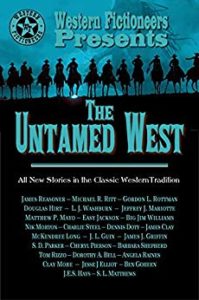
The Untamed West + "Gunmen Can't Hide" Excerpt

I can't tell you how excited I am to be listed among the great writers and stories in this new anthology from Western Fictioneers. This is a book I'd buy no matter what. Just read the names in the description.

A collection of twenty-nine tales of the Old West featuring previously unpublished stories by such classic Western writers as James Reasoner, Douglas Hirt, McKendree Long, and Michael R. Ritt. Edited by award winning author, L. J. Washburn. Western Fictioneers is the only writers’ organization devoted solely to traditional Western fiction, and this huge collection will take readers from the dusty plains of Texas to the sweeping vistas of Montana and beyond.

Western Fictioneers was founded in 2010 to promote the oldest genuine American art form, the Western story. Its worldwide membership includes best-selling, award-winning authors of Western fiction, as well as the brightest up-and-coming new stars in the Western field. The organization*s third anthology features original stories by Big Jim Williams, Easy Jackson, Jeffrey J. Mariotte, McKendree Long, Michael R. Ritt, S. D. Parker, James Reasoner, J. L. Guin, J.E.S. Hays, James J. Griffin, Jesse J Elliot, Ben Goheen, Barbara Shepherd, Nik Morton, S. L. Matthews, James Clay, Keith Souter, Tom Rizzo, Matthew P. Mayo, Dorothy A. Bell, L.J. Washburn, Angela Raines, Gordon L. Rottman, Charlie Steel, Douglas Hirt, Dennis Doty, and Cheryl Pierson.

You can purchase the ebook from Amazon, Kobo, or Barnes and Noble today. The paperback is also available from Amazon.

***

Now, I'm equally as thrilled with the story I submitted. "GUNMEN CAN'T HIDE" is probably my favorite story I've written this year. It features a new character that I enjoyed so much, I'm already working on a sequel or two.

Here's a brief description of my story and a short excerpt.

Uriah, Blake, and Orim Brink are outlaw brothers. They are cooling their heels in Laredo, Texas, after their most recent bank robbery. And murder. Uriah, after winning at poker and pocketing his money, goes upstairs to celebrate with a woman. But what he finds up there will make him wish he would have lost it all…

"Gunmen Can't Hide" Excerpt:

Not waiting another moment, Uriah reached out and slid all his winnings in front of him. His heart slammed in his chest with the thrill of the win. It wasn’t the same as robbing banks and shooting lawmen, but it was the next best thing. He arranged all the coins in stacks of five and evened the greenbacks. He tossed his cards to the ranch hand on his left and was ready for the next hand when he noticed Orim approaching.

The youngest of the three Brink boys, Uriah knew what Orim was going to do even before his brother put a gentle hand on his shoulder.

“Why don’t you take a break, little brother,” Orim said. “The bartender told me there’s someone special waiting.” He paused for emphasis. “Upstairs.”

Uriah was about to open his mouth in protest, to say he was back on a streak of luck, but caught the look in Orim’s eyes. It told him all he needed to know. Do what I say. Just like always.

To maintain some semblance of choice to the other members at the table, Uriah made a show. He inhaled deeply, drained the last of his warm beer, and collected his winnings.

“Wait a minute, señor,” Rodrigo said. His hands balled into fists on the table. “I want a chance to win back my money.”

Uriah stood and sneered. “It ain’t yer money anymore.” He nodded to the two ranch hands, scooted the chair back with his legs, and pocketed the coins. The jangling sound was music to his ears.

Orim put a hand on his brother’s shoulders. “Upstairs, third door on the left.”

The thought of what awaited him instantly got Uriah excited. He had just won back his money. What better way to celebrate than in the arms of a woman. A grin spread across his freshly shaven face, a touch Orim had insisted on. The better to hide in plain sight.

Uriah stepped away from the table and made his way across the crowded saloon. It didn’t matter he was going to pay for the woman’s services, he nevertheless tucked his shirt in and smoothed out the front. He looked around for the third Brink brother, Blake, yet saw no sign. No, there he was, leaning on the bar top, hand curled around a beer mug, talking to a man dressed in nice clothes. Uriah wondered if Blake was trying to get another job or just passing the time.

He ascended the stairs and reached the second floor. He opened the door at the end of the stairs, entered the hallway, and closed the door behind him. The general chatter from downstairs mixed with the piano player’s tunes were muted up here, but what wasn’t muted were the sounds coming from behind the closed doors. His heart quickened with the knowledge he’d soon join the chorus.

Uriah counted three doors and then softly knocked. He heard movement, the gentle sashing of flowing fabric.

“Uriah Brink?”

The woman’s voice was soft and sultry. Images flashed in Uriah’s mind as he imagined the type of woman who would possess such a sweet voice.

“Yeah,” he said. His voice cracked a little despite himself. He cleared his throat and repeated himself.

“Come on inside. I’m ready.”

Uriah reached out and gripped the door knob. He turned it and the door opened. He pushed it wide. The room was small. A brass bed was centered in the room. A bedside table held a lamp turned low. A mirror off to the left was next to a chest of drawers. Lavender permeated the room and he inhaled deeply. He detected perfume.

But he didn’t see the woman.

With slight concern, Uriah stepped inside the room and closed the door.

Something hard struck Uriah Brink on the back of his head. He saw stars. He blinked rapidly, trying to clear his vision. Whoever hit him was behind the door. Uriah tried to turn and confront his attacker, but something swiped at his ankles. He fell forward, feebly reaching out a hand to stop his fall. The wooden floor rushed up to his face. In another couple of seconds, he only saw black, but not before he noticed the deep red of a woman’s dress.